
 +1 915 229 3004 (U.S.) |
  +44 7452 242832 (U.K.)
+1 915 229 3004 (U.S.) | +44 7452 242832 (U.K.)

The 4K Satellite Broadcasting market reached a valuation of USD 26.8 billion in 2022 and is anticipated to exhibit a Compound Annual Growth Rate (CAGR) exceeding 13.60% from 2023 to 2032. The escalating demand for premium content plays a pivotal role in propelling the industry forward. As technological advancements continue and consumers increasingly crave immersive entertainment, there is a surge in the desire for content that maximizes the capabilities of advanced television displays. This burgeoning demand creates lucrative opportunities for displays boasting 4K resolution and beyond, promising superior picture quality, enhanced details, and vibrant colors.
Consumer investments in 4K televisions and home theater systems are driving the quest for visually stunning and immersive content. Consequently, satellite broadcasters face the challenge of delivering high-quality 4K content to meet these heightened consumer expectations. The demand spans various genres, including movies, sports, documentaries, and TV series, necessitating a robust broadcasting platform, including satellites, for widespread content transmission and distribution. Moreover, the 4K satellite broadcasting market is witnessing driving trends fueled by the increased adoption of UHD/4K panels and the burgeoning popularity of streaming devices. The demand for UHD/4K
panels is pushing broadcasters to expand their repertoire of 4K programming, while the prevalence of streaming devices is reshaping consumer viewing habits, with viewers seeking convenient access to 4K content through platforms like streaming services.
· Increasing demand for high-quality content
· Global transition from analog to digital broadcasting
· Advancements in satellite technology
· Global expansion of satellite broadcasting services
· Government initiatives for the telecommunication industry
· Bandwidth limitations
· Competition from alternative platforms
The COVID-19 pandemic led to increased demand for at-home entertainment due to lockdowns and restrictions, resulting in heightened viewership and subscription rates. The shift to remote work and virtual events also increased the reliance on satellite services for online meetings, conferences, and live streaming. However, the pandemic caused delays in content production, leading to a shortage of fresh programs, reduced advertising budgets, and operational challenges. Despite these hurdles, the industry found new opportunities, with satellite broadcasters delivering real-time information and educational content, highlighting the reliability of satellite broadcasting as a content delivery platform.
The adoption of cloud-based infrastructure offers scalability, flexibility, and cost efficiency for satellite broadcasters. Utilizing cloud services allows broadcasters to store and process large amounts of content, optimize bandwidth usage, and deliver services more efficiently. Cloud-based workflows enable remote production and collaboration, streamlining operations and reducing infrastructure costs.
The 4K satellite broadcasting market is segmented into Direct-to-Home (DTH) satellite broadcasting, Direct Broadcast Satellite (DBS), and cable headends. The DTH satellite broadcasting segment is expected to grow at a CAGR of around 11% during the forecast period. DTH broadcasting, involving the direct transmission of television signals to consumers' premises through satellites, offers several advantages, such as a wide range of channels, high-quality picture and sound, and the ability to reach remote or underserved areas. The growing penetration of digital television and the global transition from analog to digital broadcasting contribute to the increasing demand for DTH satellite broadcasting.
The 4K satellite broadcasting market is divided into residential and commercial segments. The residential segment, valued at over USD 19.1 billion in 2022, reflects the increasing demand for ultra-high-definition content delivered through satellite broadcasting. As households adopt 4K televisions and home theater systems, content providers respond by offering 4K channels and programs. The rising popularity of streaming services and DTH satellite services caters to the residential segment's demand for diverse and high-quality content, driving the expansion of the 4K satellite broadcasting industry.
The Asia Pacific 4K satellite broadcasting market held a dominant business share of over 40.10% in 2022. With a large population and a rising middle class, there is a growing demand for high-quality entertainment experiences. Consumers in the Asia Pacific region are adopting advanced technologies, including 4K televisions and home theater systems, fueling the demand for 4K content. The expansion of satellite broadcasting services in the region, offering a wide range of channels and programs in 4K resolution, is further boosted by the popularity of major sporting events, movies, and TV shows.
· Key players in the 4K satellite broadcasting market include Arqiva, ATEME, DirecTV (AT&T), DISH Network, Encompass Digital Media, Ericsson, and Eutelsat. These industry leaders, with their extensive experience, advanced infrastructure, and strong market presence, contribute significantly to the global market's growth.
· In industry news, TVP, a public broadcaster in Poland, relaunched its Ultra HD channel, TVP 4K, in November 2022, providing coverage of the Qatar World Cup. Additionally, 3 Screen Solutions (3SS) and Skyworth Digital announced the launch of next-generation digital satellite and terrestrial Set-top Boxes (STBs) for simpliTV services by ORS, Austria's national broadcast network operator.
· The comprehensive 4K satellite broadcasting market research report covers the industry in-depth, providing estimates and forecasts in terms of revenue (USD Billion) from 2018 to 2032 for broadcasting platform, content type, service provider, end-use, and region.
The 4K Satellite Broadcasting market reached a valuation of USD 26.8 billion in 2022
The global market is projected to grow at a CAGR of 13.60% during the forecast period, 2023-2032.
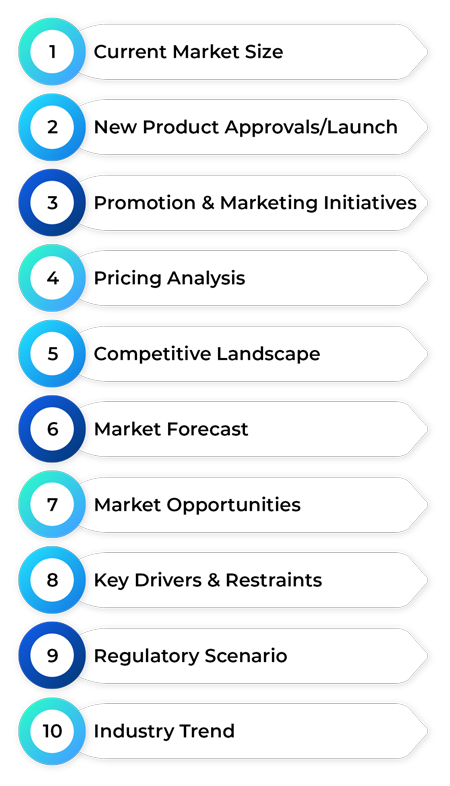
Research on the market is done by industry professionals who provide personalized insights on the industry structure, market segmentation, Type assessment, competitive landscape (CL), along with penetration, and emerging trends. In addition to years of professional experience in their various fields and sectors, their analysis is largely based on primary interview (60%) and secondary research (40%) as well as years of professional experience. In addition, our researchers forecast the market's direction over the following seven years by examining past trends and the market's current position. Additionally, various trends of segments and categories that are geographically portrayed are studied and estimated using primary and secondary research.
The key level executives (VP, CEO, Marketing Directors, and Business Development Managers) of the major industry participants who are active and prominent as well as mid-scale businesses operating in this market were interviewed in-depth for this supply-side report by overall Global Market Research.
Extensive primary research was conducted to gain a deeper grasp of the market and industry. Both primary and secondary research, as well as years of pertinent professional experience, are used to support the analysis. By analyzing past and present market patterns, our experts were able to forecast the market's course over the following seven years. For the geographically offered categories in the list of market tables, it differs per category. In connection with the Global Market research report, we also conducted a number of primary interviews with senior level executives (VP, CEO's, Directors, Marketing Directors, Business Development Managers, CFOs, Technical Consultants, Key Opinion Leaders, Industry Experts, Decision Matrix Authorities, and other crucial individuals) of the key industry players who dominated the Global market.
The primary purpose of secondary research was to gather, identify, and validate the information necessary for the thorough, technical, market-focused, and commercial analysis of the global market. With the use of this study, it was also possible to classify and segment the market in accordance with market trends, geographic markets, and regional considerations linked to market type. Analysts have gathered data in the Distribution Channel for the study of the market from reliable sources including annual reports, journals, white papers, corporate presentations, company websites, international organizations of Energy and Power manufacturers, credible paid databases, and many others to gather reliable intel.
Both top-down and bottom-up methodologies were employed to assess the accuracy of the global market size. The market for as a whole was estimated using these methods for a number of different dependent submarkets. Secondary research was used to address the major industry players, and primary and secondary research was used to calculate their market shares in the various regions. This complete intellectual process includes reading the annual and financial reports of the top market participants and conducting in-depth interviews with top industry executives (VP, CEO, Marketing Directors, and Business Development Managers) to gain important industry insights.
Through reliable secondary sources and validated primary sources, the classification of the global markets and their geographic percentage splits were established. To obtain the final qualitative and quantitative data, all relevant variables that might have an impact on the market under investigation have been taken into consideration, inspected in great depth, verified through primary research, and assessed. This information was collected, added to, and thoroughly examined by professional analysts before being provided in this report. The process used to estimate the overall market size for this study is depicted in the following image as an example.


Report Code :
RL65414
Published on :
Upcoming
Request a Free Sample Report

 Speak to Analyst