
 +1 915 229 3004 (U.S.) |
  +44 7452 242832 (U.K.)
+1 915 229 3004 (U.S.) | +44 7452 242832 (U.K.)

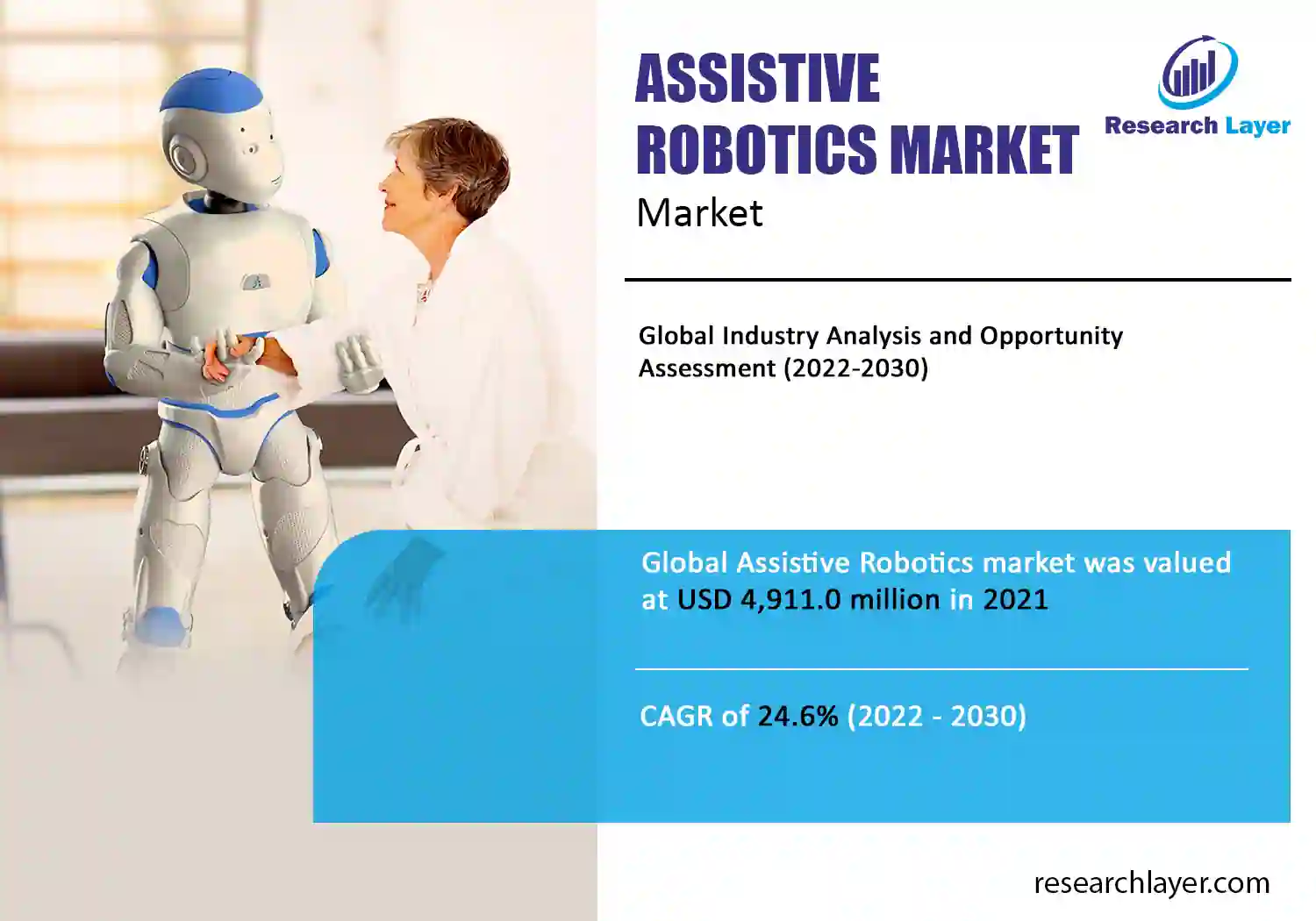
The Global Assistive Robotics Market was valued at USD 4,911.0 million in 2021 and is anticipated to register a CAGR of 24.6% between 2022 and 2030.
Download Free Report Sample to learn more about this report.
An assistive robot performs a physical task to benefit a person with a disability. It is a tool that can sense, process sensory data, and carry out activities to help the elderly and others with disabilities go about their daily lives.
In the post-COVID era, across surgery & treatment sectors, research & development activities were seen to get on track with new inflow of investments. However, though investments started flowing again, COVID-19 cases started to surge again in most countries and the situation worsened, resulting in countries being again locked down. The nations where the pandemic had been managed by the governments were again stuck by the subsequent COVID-19 waves. Following the rise in number of COVID-19 cases, international restrictions on travel were expected to be still on board for few months, further hampering the global healthcare, robotics technology, and research & development sectors.
Assistive Robotics Market Drivers:Ongoing Technological Advancements
Technological advancements are the key to success in the assistive robot sector. Technologically sound assistive robot with high efficacy grabs the higher assistive robotics market share and brings about the growth to the overall assistive robot market. Looking forward to the booming demand for assistive robot, manufacturers of assistive robot are heavily investing in research and development and AI. Investments for research and development enables a room for improvement in the technology of assistive robots, which is expected to boost the overall growth of the global assistive robotics market. Companies are getting involved in partnerships and collaborations for the development of assistive robots, which is considered one of the most effective ways of creating assistive robots with high efficacy.
Europe has more than 32,000 medical technology companies, out of which 95% of the companies are small and medium-sized companies (SMEs) with an employee size of 50 people. Most of these companies are based in Germany, followed by Italy, the U.K, France, and Switzerland. Europe is technologically sound, and it is reflected in the assistive robot manufactured in Europe, which is supporting the global assistive robotics market during the forecast period.
Rising Number of Surgical and Non-Surgical Procedures
Across North America, Asia Pacific, South America, Europe, the Middle East, and Africa, number of surgical and non-surgical procedures performed is increasing year over year. The number of corrective and repairing surgeries across the orthopedic, cardiac, and neurology sectors have increased tremendously, which in turn is expected to drive the global assistive robotics market. With the rise in number of surgeries, adoption of highly effective and technologically advanced assistive robot with long term functionality is on peak currently in the international market
Surgeries, minimally invasive in nature, are currently trending in the assistive robot and medical diagnostics field. These assistive robots are being widely used in the preventive and corrective surgeries of chronic & life-threatening injuries and infectious diseases. The minimal invasive nature of the surgery allows fast recovery, minimal pain, and the least hospital stay, ultimately boosting demand for AI-enabled assistive robots for such surgeries, fueling the global assistive robot market growth.
Assistive Robotics Market Restraint:Funding and Lack of Business Model
The potential of artificial intelligence and assistive robots in the global health care industry is being hampered by financial difficulties. Due to the fact that AI technology is still in its infancy, numerous organizations and players are still in the R&D stage regarding its integration into their products and services. In such a way, enabling AI in assistive robots depends on funding and technological advancement. Other factors hindering the growth of assistive robot is ‘lack of clarity over appropriate business models for AI development and deployment. These issues could be reflective in early stage indulgence of the assistive robot which may hamper the global assistive robotics market growth.
Download Free Report Sample to learn more about this report.
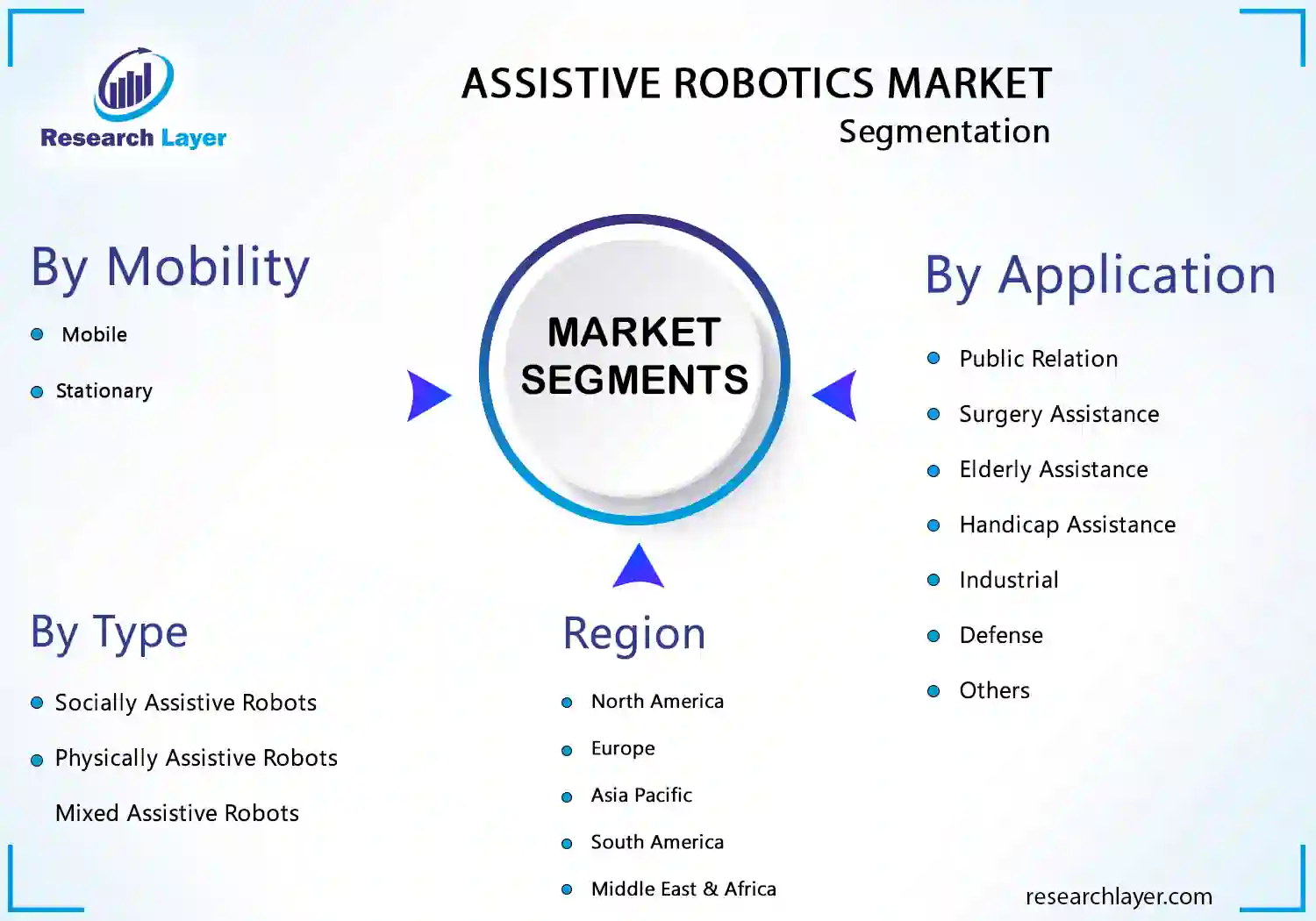
Based on mobility, the global healthcare assistive robotics market is segmented into mobile and Stationary. A robot gets more workspace due to the mobile base. It can also perform several tasks. The ability of mobile robots to locate themselves on a map and carry out the work that has been set for them will enhance their use in the upcoming years. High healthcare costs, expanding public awareness of creative and advanced robotics applications, and rising rates of stroke and neurological illnesses are some of the causes boosting the mobile market'smobile segment's expansion.
Based on type, the global healthcare assistive robotics market is segmented into socially assistive robots, physically assistive robots, and mixed assistive robots. More and more, people with impairments are using robotic assistance technology to increase their freedom and quality of life. Robotic feeders, smart-powered wheelchairs, autonomous mobility robots, and socially assistive robots are just a few examples of the devices that are becoming more therapeutically relevant. The need for rehabilitation professionals to be knowledgeable about accessible systems and ongoing research initiatives is becoming more and more important. This article's objective is to outline the developments in assistive robotics that matter to professionals who work with people with impairments. The categories of Assistive Robotic Systems, User Interfaces and Control Systems, Sensory and Feedback Systems, and User Perspectives are used in this review to group pertinent advancements. Both clinicians and researchers must be aware of the way that assistive robotics is heading.
Support of the socially assistive robots ranges from telecare/smart homes and proactive service systems. Interactive and socially assistive robots cooperate with people through bidirectional communication and provide personal assistance with everyday activities such as reminding older persons to take their medication, help them prepare food, eat, and wash. These technologically advanced robots collaborate with nursing staff and family members to form a life support network for older persons by offering emotional and physical relief.
Based on application, the global healthcare assistive robotics market is segmented into public relation, surgery assistance, elderly assistance, handicap assistance, companionship, industrial, defense, and other applications. Personal robots work in residential units, including nursing homes and homes. They have become a part of our everyday life. Consequently, these robots are designed to have the ability to interact like humans or at least like pets. Any robot developed in this manner as a social entity, and possibly able to communicate with users, will fall into the category of social robots. Social robots are able to participate in social interactions and developing public relations. Moreover, the critical role of social interaction and public relation is effectively handled by assistive robots.
Handicap Assistance, Assistive mobile manipulators (AMMs) are mobile robots that physically manipulate the world in order to provide assistance to people with disabilities or for handicap assistance. AMMs are not like assistive systems, as they work while staying remote from the user. They do not need doffing and donning. They do not directly interfere with the user. General purpose AMMs can help with a variety of jobs, can help people with a range of ailments, and can help people who are ambulating, in a wheelchair, or in bed. An AMM might work well as a shared resource for a number of users who live together.
Download Free Report Sample to learn more about this report.
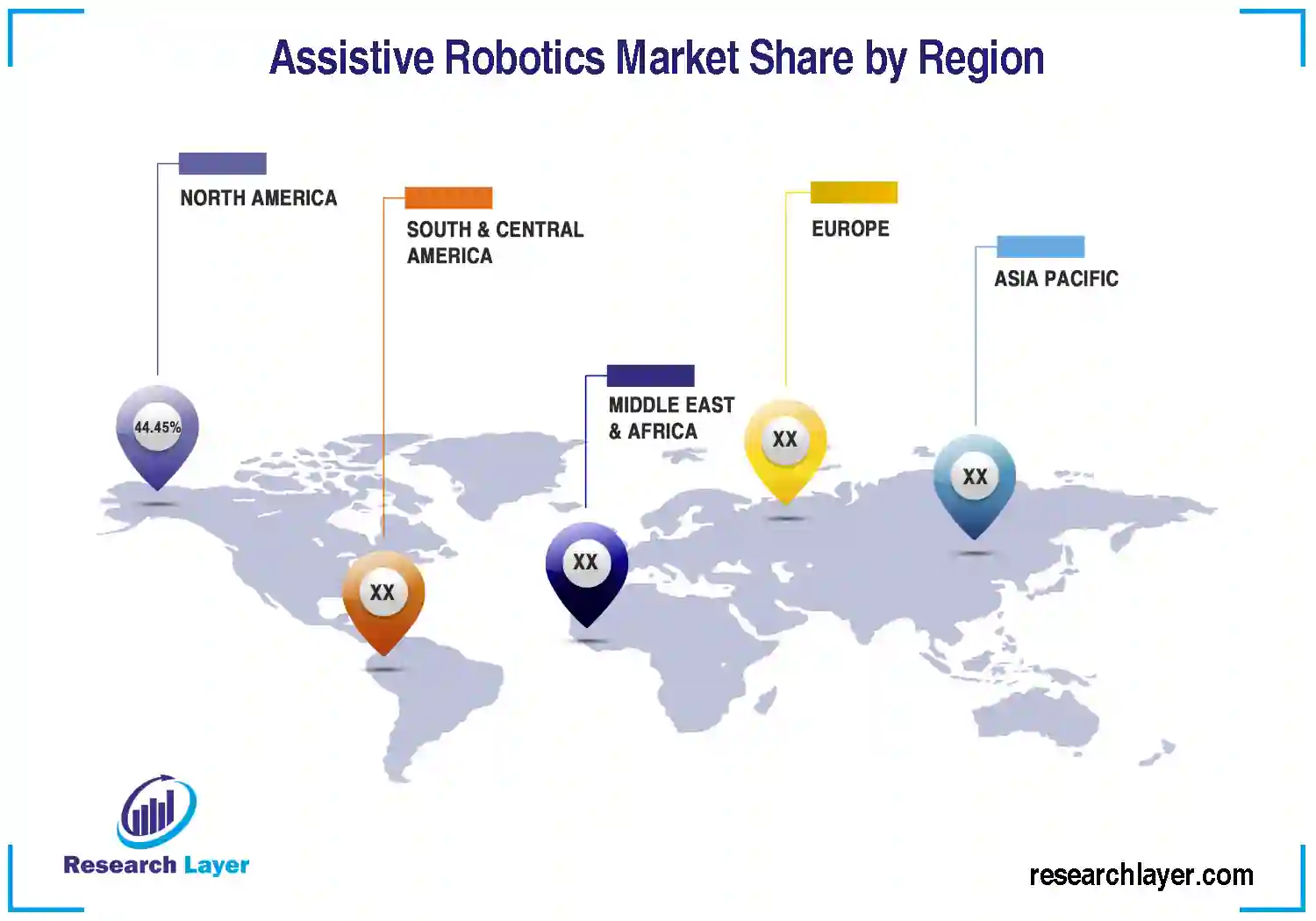
Regionally, the global assistive robotics market is segmented into North America, Europe, Asia Pacific, South America, and the Middle East & Africa. North America excels in terms of technological advancements and adoption of new technology. With further development of healthcare infrastructure across North America and Europe, adoption of assistive robots is expected to rise.
North America
North America includes the U.S. and Canada. In the present market scenario, North America is estimated to be the largest market for assistive robot owing to technological advancements and early adoption of artificial intelligence platforms in developed countries such as the U.S. and Canada. North America is one of the most technologically advanced application markets for assistive robots due to the active involvement of tech giants in the field of artificial intelligence. Moreover, high adoption rate of assistive robots in North America coupled with development & growth of research & development activities and investments by government and private organizations in the biotechnology and pharmaceutical organizations promoted the market growth. Software-based companies are building their own AI & assistive robots platforms and integrating it with cloud for the benefit of assistive robots. Along with this, the organizations are collaborating with healthcare companies and start-ups to obtain benefits of the emerging technologies.
Furthermore, increasing prevalence of various chronic, metabolic, infectious, and life threatening diseases has boosted demand for novel treatment therapies and technologies through assistive robot, fueling the overall North American assistive robotics market.
South America
With vast inequalities in healthcare services in the region, evident lack of trained healthcare clinicians and infrastructure, and low government spending on healthcare, South America is one of the regions across the globe with the most area for innovative, sustainable, and scalable healthcare technology to improve lives. There is uneven ratio of skilled researchers to physicians in the region. In such scenario, assistive robots is an effective solution to tackle this by making researchers more skilled at their jobs and assisting them for drug discovery and overall R&D by providing them with high quality HTS service, rising efficiency, and minimizing errors in the drug discovery process.
Technological innovation is proving to be useful in drug discovery and other healthcare sectors. Major pharmaceutical and biotechnology companies are also exploring AI & assistive robots opportunities in drug discovery in the region. Government is also supporting the adoption of AI enabled assistive robots in drug discovery practices and are helping in fund raising.
During the study, Research Layer analyzed some of the major players in the global Assistive robotics market who have contributed to the industry growth. These include Softbank Robotics, Focal Meditech, Cyberdyne, Intuitive Surgical, Ubtech Robotics, Rewalk Robotics, Hyundai, Kinova Robotics, Ekso Bionics, Stryker, Hocoma, Ubtech Robotics, Barrett Technology, Blue Frog Robotics, DreamFace Technologies, and Others.
The Global Assistive Robotics Market was valued at USD 4,911.0 million in 2021 and is anticipated to register a CAGR of 24.6% between 2022 and 2030.
As per Research Layer expected CAGR for Assistive Robotics Market is 24.6% between 2022 and 2030.
Key players in the global Assistive Robotics Market are Kinova Robotics, Softbank Robotics, Focal Meditech, Cyberdyne, EKSO Bionics, Intuitive Surgical, Ubtech Robotics, Rewalk Robotics, Hyundai.
By Mobility, Type, Application and Region segments are covered in Assistive Robotics Market Report.
Key Market Drivers of Assistive Robotics Market are Ongoing Technological Advancements And Rising Number of Surgical and Non-Surgical Procedures.


Report Code :
RL6518
Published on :
Nov 2022
Request a Free Sample Report

 Speak to Analyst