
 +1 915 229 3004 (U.S.) |
  +44 7452 242832 (U.K.)
+1 915 229 3004 (U.S.) | +44 7452 242832 (U.K.)

Global Automotive Air Conditioning Market Size was valued at USD 32.4 Billion in 2022. The Automotive Air Conditioning market industry is projected to grow from USD 34.4 Billion in 2023 to USD 55.2 Billion by 2032, exhibiting a compound annual growth rate (CAGR) of 6.24% during the forecast period (2023 - 2032). Rising consumer income, a growing middle-class population, increased demand for a better cabin experience, and quickly evolving lifestyles are all significant causes, are the key market drivers enhancing the market growth.
Download Free Sample to learn more about this report
Source: Secondary Research, Primary Research, RESEARCH LAYER Database and Analyst Review
A rise in thermal comfort demand and an increase in safety brought on by the use of HVAC systems are expected to support the long-term expansion of the automotive HVAC industry. A decrease in system size and weight may aid market expansion in the ensuing years. Due to the cheaper integration of electronics, sensors, and automatic climate control features, the use of HVAC systems in passenger vehicles is rising. Modern comfort and safety features will likely be more thoroughly integrated as vehicle electrification increases. As a result of technical developments and large investments in R&D initiatives, players' offers and technological skills are anticipated to improve. Additionally, eco-friendly refrigerants and the development of less expensive HVAC systems provide companies in the vehicle HVAC market with significant growth opportunities. To counteract minute particles in the cabin, major manufacturers are installing state-of-the-art HVAC systems in automobiles.
With the increased demand for private car rental services like Ola, Uber, and Lyft, it is projected that the need for the product to enhance the client experience will rise. Furthermore, it is predicted that greater competition among taxi services will make it simpler to use the newly developed service differentiation, increasing customer loyalty.
The growth of the middle class, rising consumer income levels, and changing lifestyles are predicted to propel the market for car air conditioning systems throughout the course of the projected period. The increased demand for automobiles on a global scale and the greater efforts being made by manufacturers to improve interior comfort are expected to support growth. Numerous economies have seen an increase in air pollution due to rapid industrialization. For instance, Beijing's extremely dangerous air contributes to the economy's increased requirement for air conditioning equipment. Modern cooling systems filter the air inside the automobiles, lowering the danger of airborne diseases. Because of the large number of people who commute in different economies and the lengthening of travel lengths, it is projected that use of the product in cars would rise during the next seven years.
Wind resistance is decreased when auto windows are closed, which improves vehicle efficiency. Demand rises as a result of the improved acceleration and pick-up. Growing understanding of energy efficiency has made it possible for technologies that use less fuel to run air conditioning systems. The makers have been developing eco-friendly and efficient technology to reduce running costs and increase sustainability. Thus, driving the Automotive Air Conditioning market revenue.
The global Automotive Air Conditioning market segmentation, based on Technology, includes manual and automatic. Due to the rising demand for comfort and safety in the automobile sector worldwide, the automatic category led the global market in 2022 and is predicted to continue doing so over the forecast period. The use of physiologically controlled air conditioning, where the ideal temperature is obtained by several sets of sensors that monitor the cabin's thermal state, is anticipated to be made easier by technological improvements.
The global Automotive Air Conditioning market segmentation, based on Component, includes compressor, evaporator, receiver, and condenser. In 2022, the worldwide automotive air conditioning market was dominated by the compressor segment. This can be due to technological developments and sophisticated features made possible by compressors.
The global Automotive Air Conditioning market segmentation, based on Vehicle Type, includes passenger car and commercial vehicle. In 2022, the passenger car category was the largest in the world's automotive air conditioning market. All automobile models' HVAC markets have been significantly impacted by passenger car sales. Around 66.7 million cars were sold worldwide in 2021 compared to 63.8 million in 2020. The global pandemic affected every aspect of the economy, including auto sales, and strict lockdowns were put in place in several countries to restrict the virus' spread. As a result, there were 14.8% fewer cars sold in 2020 than there were in 2019.
Download Free Sample to learn more about this report
Source: Secondary Research, Primary Research, RESEARCH LAYER Database and Analyst Review
Insights into the markets in North America, Europe, Asia-Pacific, and the rest of the world are provided by the study. The Asia Pacific Automotive Air Conditioning market, dominated this market in 2022 (45.80%), due to an increase in automobile production and consumption, as well as the existence of significant businesses in the region. The widespread use of roads in countries like China, India, and Japan has increased demand for automobiles. Moreover, In the Asia-Pacific region, the Indian Automotive Air Conditioning market had the quickest rate of growth while China's Automotive Air Conditioning market had the greatest market share.
Further, the major countries studied in the market report are The US, Canada, German, France, the UK, Italy, Spain, China, Japan, India, Australia, South Korea, and Brazil.
Download Free Sample to learn more about this report
Source: Secondary Research, Primary Research, RESEARCH LAYER Database and Analyst Review
The North America Automotive Air Conditioning Market is expected to register significant growth from 2023 to 2032. Due to strict local environmental regulations and governmental standards, customers are required to upgrade automotive thermal system components often, which is also expected to increase the market. Further, In the North American area, the U.S. Automotive Air Conditioning market had the biggest market share, while the Canada Automotive Air Conditioning market had the quickest rate of expansion.
Europe Automotive Air Conditioning market accounted for a healthy market share in 2022. A movement in consumer preferences toward environmental management and an increase in the need for effective and portable HVAC systems in the region are both predicted to support growth. Further, In the European region, the German Automotive Air Conditioning market had the biggest market share, and the U.K. Automotive Air Conditioning market had the quickest rate of growth.
Leading industry companies are making significant R&D investments in order to diversify their product offerings, which will drive the Automotive Air Conditioning market's expansion. Important market developments include new product releases, contractual agreements, mergers and acquisitions, greater investments, and collaboration with other organizations. Market participants are also engaging in a number of strategic actions to increase their global footprint. The Automotive Air Conditioning sector needs to provide affordable products if it wants to grow and thrive in a more competitive and challenging market environment.
One of the primary business strategies employed by manufacturers in the worldwide Automotive Air Conditioning industry to assist customers and expand the market sector is local manufacturing to reduce operational costs. Some of the biggest benefits to medicine have recently come from the Automotive Air Conditioning sector. Major players in the Automotive Air Conditioning market, including Denso Corporation, Hanon Systems, Mitsubishi Heavy Industries Ltd., MAHLE GmbH, Valeo SA, Keihin Corporation, Calsonic Kansei Corporation, Samvardhana Motherson Group, Subros Limited, and SMAC Auto Air, are attempting to increase market demand by investing in research and development operations.
A division of Hahn & Co Auto Holdings Co Ltd. called Hanon Systems (Hanon) manufactures automotive thermal management systems. It develops, manufactures, and markets goods for regulating the climate in autos. It The company's products include compressors, powertrain cooling modules, thermal and energy management items, emission items, and heating, ventilation, and air conditioning (HVAC) systems and modules. The company's products include fragrance systems, flexible HVAC, water-cooled transmission oil coolers, accumulators, metal seal fittings, accumulators, air charge air coolers, and refrigerant lines. Additionally, it offers coated evaporator core items, classic blade fans and motor assemblies, variable displacements, superior drainage, and UV (ultraviolet) LED photocatalyst. Hanon produces products exclusively for the auto sector. The company conducts business throughout the Americas, Europe, South Asia, and Asia. Hanon's corporate headquarters are in Daejeon, South Korea. In November 2021, Hanon System unveiled two new facilities in Hungary: an addition to an existing structure in Rétság and an entirely new greenfield industrial facility in Pécs. Assembly lines, testing for automotive air conditioning (A/C) lines, and equipment for forming, brazing, welding, and bending are all possible at the facility's 22,464 square meters of manufacturing space.
Valeo SA (Valeo), an automotive partner and supplier, collaborates with automakers. It develops, produces, and sells integrated systems, modules, and parts that reduce CO2 emissions as well as providing and distributing replacement parts to automakers and independent aftermarket businesses. The firm develops and produces interface systems between the driver, the vehicle, and the environment, visibility systems, and powertrain solutions in addition to systems, modules, and components to regulate the thermal energy of the powertrain. Valeo offers services to automakers and original equipment manufacturers all around the world. The corporation has commercial hubs throughout Asia, Africa, North America, South America, the Middle East, and Europe. Paris, France is home to Valeo's corporate headquarters. The New Valeo heat pump, which uses a natural refrigerant and receives two-thirds of its energy from outside air to lessen the need for onboard batteries, was presented by Valeo in August 2021. The technology enables EVs to travel up to 30% further than those with more conventional heating systems at -15°C.
· Denso Corporation
· Hanon Systems
· Mitsubishi Heavy Industries Ltd.
· MAHLE GmbH
· Valeo SA
· Keihin Corporation
· Calsonic Kansei Corporation
· Samvardhana Motherson Group
· Subros Limited
· SMAC Auto Air
October 2022: Polestar introduced its three electric SUV models for the global market. The SUV's state-of-the-art climate control technology keeps passengers comfortable on lengthy journeys.
November 2021: The Marelli Corporation's Indoor Air Quality (IAQ) Purification System removes bacteria and viruses from enclosed environments like vehicles. Using UV-A and UV-C light as well as a titanium dioxide (TiO2) filter, the gadget effectively destroys airborne bacteria and viruses, including COVID-19, in less than 15 minutes.
· Manual
· Automatic
· Compressor
· Evaporator
· Receiver
· Condenser
· Passenger Car
· Commercial Vehicle
· North America
- US
- Canada
· Europe
- Germany
- France
- UK
- Italy
- Spain
- Rest of Europe
· Asia-Pacific
- China
- Japan
- India
- Australia
- South Korea
- Australia
- Rest of Asia-Pacific
· Rest of the World
- Middle East
- Africa
- Latin America
|
Report Attribute/Metric |
Details |
|
Market Size 2022 |
USD 32.4 Billion |
|
Market Size 2023 |
USD 34.4 Billion |
|
Market Size 2032 |
USD 55.2 Billion |
|
Compound Annual Growth Rate (CAGR) |
6.24% (2023-2032) |
|
Base Year |
2022 |
|
Market Forecast Period |
2023-2032 |
|
Historical Data |
2018- 2022 |
|
Market Forecast Units |
Value (USD Billion) |
|
Report Coverage |
Revenue Forecast, Market Competitive Landscape, Growth Factors, and Trends |
|
Segments Covered |
Technology, Component, Vehicle Type, and Region |
|
Geographies Covered |
North America, Europe, Asia Pacific, and the Rest of the World |
|
Countries Covered |
The US, Canada, German, France, UK, Italy, Spain, China, Japan, India, Australia, South Korea, and Brazil |
|
Key Companies Profiled |
Denso Corporation, Hanon Systems, Mitsubishi Heavy Industries Ltd., MAHLE GmbH, Valeo SA, Keihin Corporation, Calsonic Kansei Corporation, Samvardhana Motherson Group, Subros Limited, and SMAC Auto Air |
|
Key Market Opportunities |
The urban heat island (UHI) effect and lack of greenery leading to increasing in global temperature |
|
Key Market Dynamics |
Rapidly growing utilization of automatic systems, increasing requirement of superior cabin experience, and consumer income levels, growing the middle-class population, and changing lifestyles |
The global Automotive Air Conditioning market size was valued at USD 32.4 Billion in 2022.
The global market is projected to grow at a CAGR of 6.24% during the forecast period, 2023-2032.
Asia Pacific had the largest share in the global market
The key players in the market are Denso Corporation, Hanon Systems, Mitsubishi Heavy Industries Ltd., MAHLE GmbH, Valeo SA, Keihin Corporation, Calsonic Kansei Corporation, Samvardhana Motherson Group, Subros Limited, and SMAC Auto Air.
The Automatic Technology dominated the market in 2022.
The Compressor Component had the largest share in the global market.
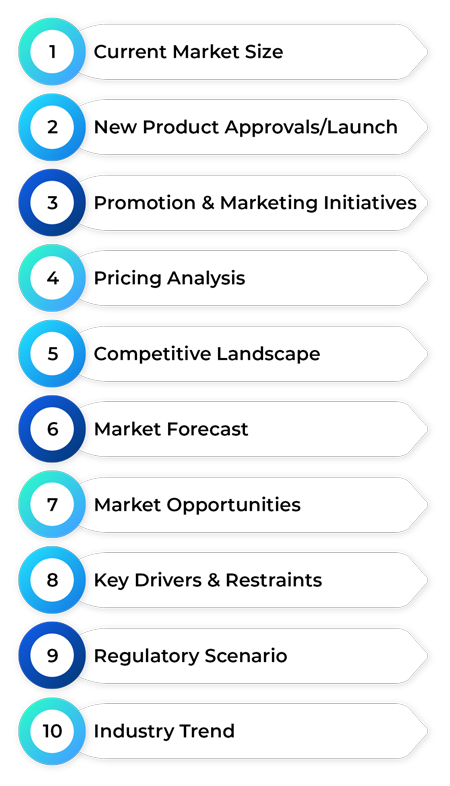
Research on the market is done by industry professionals who provide personalized insights on the industry structure, market segmentation, Type assessment, competitive landscape (CL), along with penetration, and emerging trends. In addition to years of professional experience in their various fields and sectors, their analysis is largely based on primary interview (60%) and secondary research (40%) as well as years of professional experience. In addition, our researchers forecast the market's direction over the following seven years by examining past trends and the market's current position. Additionally, various trends of segments and categories that are geographically portrayed are studied and estimated using primary and secondary research.
The key level executives (VP, CEO, Marketing Directors, and Business Development Managers) of the major industry participants who are active and prominent as well as mid-scale businesses operating in this market were interviewed in-depth for this supply-side report by overall Global Market Research.
Extensive primary research was conducted to gain a deeper grasp of the market and industry. Both primary and secondary research, as well as years of pertinent professional experience, are used to support the analysis. By analyzing past and present market patterns, our experts were able to forecast the market's course over the following seven years. For the geographically offered categories in the list of market tables, it differs per category. In connection with the Global Market research report, we also conducted a number of primary interviews with senior level executives (VP, CEO's, Directors, Marketing Directors, Business Development Managers, CFOs, Technical Consultants, Key Opinion Leaders, Industry Experts, Decision Matrix Authorities, and other crucial individuals) of the key industry players who dominated the Global market.
The primary purpose of secondary research was to gather, identify, and validate the information necessary for the thorough, technical, market-focused, and commercial analysis of the global market. With the use of this study, it was also possible to classify and segment the market in accordance with market trends, geographic markets, and regional considerations linked to market type. Analysts have gathered data in the Distribution Channel for the study of the market from reliable sources including annual reports, journals, white papers, corporate presentations, company websites, international organizations of Energy and Power manufacturers, credible paid databases, and many others to gather reliable intel.
Both top-down and bottom-up methodologies were employed to assess the accuracy of the global market size. The market for as a whole was estimated using these methods for a number of different dependent submarkets. Secondary research was used to address the major industry players, and primary and secondary research was used to calculate their market shares in the various regions. This complete intellectual process includes reading the annual and financial reports of the top market participants and conducting in-depth interviews with top industry executives (VP, CEO, Marketing Directors, and Business Development Managers) to gain important industry insights.
Through reliable secondary sources and validated primary sources, the classification of the global markets and their geographic percentage splits were established. To obtain the final qualitative and quantitative data, all relevant variables that might have an impact on the market under investigation have been taken into consideration, inspected in great depth, verified through primary research, and assessed. This information was collected, added to, and thoroughly examined by professional analysts before being provided in this report. The process used to estimate the overall market size for this study is depicted in the following image as an example.


Report Code :
RL65277
Published on :
Sep 2023
Request a Free Sample Report

 Speak to Analyst