
 +1 915 229 3004 (U.S.) |
  +44 7452 242832 (U.K.)
+1 915 229 3004 (U.S.) | +44 7452 242832 (U.K.)

Global Automotive Logistics Market Size was valued at USD 287.7 billion in 2022. The Automotive Logistics market industry is projected to grow from USD 311.5 Billion in 2023 to USD 590.08 Billion by 2032, exhibiting a compound annual growth rate (CAGR) of 8.40% during the forecast period (2023 - 2032). Globalization and trade, just-in-time production, an increase in e-commerce in the automotive industry, environmentally friendly and sustainable solutions, Urbanization and last-mile delivery issues, government rules and compliance, the move toward autonomous vehicles, and the distribution of aftermarket parts are the key market drivers enhancing the market growth
Download Free Sample to learn more about this report
Source: Secondary Research, Primary Research, RESEARCH LAYER Database and Analyst Review
By producing and delivering goods precisely when they are needed in the production process, just-in-time (JIT) manufacturing attempts to reduce inventory and production lead times. JIT has significantly altered the way that vehicles and automotive parts are built, transported, and delivered in the automotive logistics sector. This production approach has had a significant negative influence on the efficiency of the industry's supply chain, cost control, and overall competitiveness.
Another advantage of the JIT method is a supply chain that is more efficient and adaptable. Manufacturers and suppliers must collaborate to provide a continual flow of supply in order to guarantee that parts are delivered precisely when they are required. The adoption of effective logistics solutions has been impacted by the close collaboration and coordination between diverse supply chain participants. To support just-in-time delivery, the operations of transportation and logistics companies had to alter, with an emphasis on dependability, punctuality, and responsiveness.
Automotive logistics companies have made investments in cutting-edge technologies because JIT manufacturing requires accuracy and dependability. Logistics companies can precisely track shipments and plan routes for on-time deliveries thanks to telematics and real-time tracking systems. Automated warehouse management tools help to maintain precise stock levels and enable constant contact between manufacturers and suppliers. Because of JIT manufacturing, cost reduction is yet another vital factor influencing the automotive logistics market. Manufacturers can drastically lower the expenses associated with maintaining excess inventory by lowering inventory and the requirement for warehousing. To achieve cost-effective JIT delivery, logistics companies must optimize transportation expenses, route effectiveness, and load capacity.
To meet these customer goals, logistics service providers must ensure that the delivery and transportation processes are perfectly connected. JIT manufacturing poses considerable issues for the automotive logistics sector, which must be kept in mind. There is minimal space for error because more emphasis is being placed on exact delivery dates and low stock levels. Any bottleneck, delay, or weakness in the supply chain could have an adverse impact on the production procedure and cost you money in lost production time. To ensure reliability and prevent expensive disruptions, logistics companies must prioritize risk management, disaster planning, and maintaining solid relationships with suppliers and carriers. Thus, driving the Automotive Logistics market revenue.
The global Automotive Logistics market segmentation, based on Mode of Transport, includes roadways, Airways, Maritime, and Railway. The Roadways segment dominated the market in 2022. The state and growth of the road network directly affect the road transportation sector. Roadways are built and updated using funding from both the public and private sectors in order to accommodate rising traffic volumes, improve safety, and speed up travel. Transporting people and products is made easier and more effective with greater road infrastructure.
The global Automotive Logistics market segmentation,based on Activity, includesWarehousing & Handling and Transportation & Handling. The Transportation & Handling category generated the most income in 2022.Due to the growth of e-commerce and the adoption of Omni channel retailing, customer expectations for quicker and more reliable delivery have altered. The quantity of individual shipments is increasing, thus transportation and handling companies need to adapt and provide effective last-mile delivery services.
The global Automotive Logistics market segmentation, based on Logistics Solutions, includes inbound logistics, outbound logistics, Reverse logistics and Aftermarket logistics. The Reverse logistics category generated the most income in 2022. Reverse logistics refers to the process of moving used or damaged items back through the supply chain to recycling, remanufacturing, or disposal locations, such as returned vehicles, parts, and components. Several variables, like customer return policies, the frequency of product recalls, and environmental rules that support recycling and sustainable activities, may affect how dominant the reverse logistics industry is.
The global Automotive Logistics market segmentation, based on distribution, includes Domestic and International. The Domestic category generated the most income in 2022. Growing populations and urbanization are causes of increased consumption and the need for deliveries to metropolitan areas. Making sure that goods efficiently reach their intended destinations depends heavily on the home market.
Download Free Sample to learn more about this report
Source: Secondary Research, Primary Research, RESEARCH LAYER Database and Analyst Review
Insights into the markets in North America, Europe, Asia-Pacific, and the rest of the world are provided by the study. The Asia-Pacific Automotive Logistics Market dominated this market in 2022 (45.80%). Asia Pacific's automotive supply chains are usually long and complex because the region is home to a number of suppliers and production sites. Effective logistics strategies are required to guarantee the seamless transport of parts and components. Moreover, In the Asia-Pacific region, the Indian Automotive Logistics market had the quickest rate of growth while China's Automotive Logistics market had the greatest market share.
Further, the major countries studied in the market report are The U.S., Canada, German, France, the UK, Italy, Spain, China, Japan, India, Australia, South Korea, and Brazil.
Download Free Sample to learn more about this report
Source: Secondary Research, Primary Research, RESEARCH LAYER Database and Analyst Review
The second-largest market share is held by the automotive logistics market in Europe. The industry is prevalent across the entire continent of Europe and is home to many well-known automakers. Due of this diversity, the logistics environment is complex and necessitates efficient handling and transportation services.Further, In the European region, the German Automotive Logistics market had the biggest market share, and the U.K. Automotive Logistics market had the quickest rate of growth.
The North America Automotive Logistics Market is expected to grow at the fastest CAGR from 2023 to 2032. In North America, where car ownership is common, the automotive industry is well-established. The demand for effective local transportation and vehicle handling drives the automotive logistics sector. Further, In the North American area, the U.S. Automotive Logistics market had the biggest market share, while the Canada Automotive Logistics market had the quickest rate of expansion.
Leading industry companies are making significant R&D investments in order to diversify their product offerings, which will drive the Automotive Logistics market's expansion. Important market developments include new product releases, contractual agreements, mergers and acquisitions, greater investments, and collaboration with other organizations. Market participants are also engaging in a number of strategic actions to increase their global footprint. The Automotive Logistics sector needs to provide affordable products if it wants to grow and thrive in a more competitive and challenging market environment.
One of the primary business strategies employed by manufacturers in the worldwide Automotive logistics industry to assist customers and expand the market sector is local manufacturing to reduce operational costs. Some of the biggest benefits to medicine have recently come from the Automotive Logistics sector. Major players in the Automotive Logistics market, including DB Schenker (Essen, Germany), BLG LOGISTICS GROUP AG & Co. KG (Bremen, Germany), CEVA Logistics (Baar, Switzerland), Kuehne+Nagel (Feusisberg, Switzerland), Expeditors International (Washington, U.S.), DSV (Hedehusene, Denmark), XPO Logistics, Inc. (Connecticut, United States), Deutsche Post AG (Bonn, Germany), SINOTRANS Limited (Beijing, China), C.H. Robinson Worldwide, Inc. (Minnesota, United States), GEFCO (Paris, France), Ryder System, Inc. (Florida, U.S.), Schnellecke group ag & co. Kg (Wolfsburg, Germany), Penske Automotive Group, Inc. (Michigan, U.S.) and others, are attempting to increase market demand by investing in research and development operations.
A company that provides logistics services is Expeditors International of Washington Inc. Through air, maritime, and customs brokerage, it provides specialized and integrated solutions for worldwide transportation. In addition to providing international logistics services like order management, customs brokerage, time-definite shipping, warehousing, and distribution, the company also provides specialized consulting and logistics solutions. Other services offered by the company include cargo insurance, specialized monitoring and tracking of cargo, temperature-controlled shipping, and cargo insurance. Expeditors buy cargo space on a volumetric basis from transporters like airlines and shipping companies and then resell it to clients. It provides supply chain management and logistics solutions for a variety of businesses, including companies in the automotive, aerospace, beer, wine, and spirits, fashion, healthcare, manufacturing, retail consumer products, oil and energy, and technology industries. The business maintains full-service locations in the Middle East, Africa, North and South Asia, and the Americas. Seattle, Washington, in the US, is home to the company's headquarters.
Services for third-party logistics are offered by C.H. Robinson Worldwide Inc (CHRW). It provides services for moving freight by trucks, ships, trains, and aircraft. Its logistics services and freight transportation capabilities are available to companies of all sizes operating across a variety of industries. The three reportable business segments of the company are All Other and Corporate, Global Forwarding, and North American Surface Transportation (NAST). Asia, Oceania, South America, North America, and Europe are all serviced by it. In FY2022, CHRW used 96,000 contracted carriers to move 20 million shipments for 100,000 customers.
· DB Schenker (Essen, Germany)
· BLG LOGISTICS GROUP AG & Co. KG (Bremen, Germany)
· CEVA Logistics (Baar, Switzerland)
· Kuehne+Nagel (Feusisberg, Switzerland)
· Expeditors International (Washington, U.S.)
· DSV (Hedehusene, Denmark)
· XPO Logistics, Inc. (Connecticut, United States)
· Deutsche Post AG (Bonn, Germany)
· SINOTRANS Limited (Beijing, China)
· C.H. Robinson Worldwide, Inc. (Minnesota, United States)
· GEFCO (Paris, France)
· Ryder System, Inc. (Florida, U.S.)
· Schnellecke group ag & co. Kg (Wolfsburg, Germany)
· Penske Automotive Group, Inc. (Michigan, U.S.)
June 2021:For the management of its worldwide parts logistics center in Appleby Magna in the UK Midlands, Jaguar Land Rover (JLR) has hired Unipart Logistics on a five-year contract. When it opens in 2022, the 270,000 square meter plant will produce aftermarket parts. Distribution, parts packing, branded product operations, and customer support will all be under Unipart's management.
· Roadways
· Airways
· Maritime
· Railway
· Warehousing & Handling
· Transportation & Handling
· Inbound logistics
· Outbound logistics
· Reverse logistics
· Aftermarket logistics
· Domestic
· International
· North America
- U.S.
- Canada
· Europe
- Germany
- France
- UK
- Italy
- Spain
- Rest of Europe
· Asia-Pacific
- China
- Japan
- India
- Australia
- South Korea
- Australia
- Rest of Asia-Pacific
· Rest of the World
- Middle East
- Africa
- Latin America
Report Scope
|
Report Attribute/Metric |
Details |
|
Market Size 2022 |
USD 287.7 Billion |
|
Market Size 2023 |
USD 311.5 Billion |
|
Market Size 2032 |
USD 590.08 Billion |
|
Compound Annual Growth Rate (CAGR) |
8.40% (2023-2032) |
|
Base Year |
2022 |
|
Market Forecast Period |
2023-2032 |
|
Historical Data |
2018- 2022 |
|
Market Forecast Units |
Value (USDBillion) |
|
Report Coverage |
Revenue Forecast, Market Competitive Landscape, Growth Factors, and Trends |
|
Segments Covered |
Mode of Transport, Activity, Logistics Solutions, Distribution, and Region |
|
Geographies Covered |
North America, Europe, AsiaPacific, and the Rest of the World |
|
Countries Covered |
The U.S., Canada, German, France, UK, Italy, Spain, China, Japan, India, Australia, South Korea, and Brazil |
|
Key Companies Profiled |
DB Schenker (Essen, Germany), BLG LOGISTICS GROUP AG & Co. KG (Bremen, Germany), CEVA Logistics (Baar, Switzerland), Kuehne+Nagel (Feusisberg, Switzerland), Expeditors International (Washington, U.S.), DSV (Hedehusene, Denmark), XPO Logistics, Inc. (Connecticut, United States), Deutsche Post AG (Bonn, Germany), SINOTRANS Limited (Beijing, China), C.H. Robinson Worldwide, Inc. (Minnesota, United States), GEFCO (Paris, France), Ryder System, Inc. (Florida, U.S.), Schnellecke group ag & co. Kg (Wolfsburg, Germany), Penske Automotive Group, Inc. (Michigan, U.S.) |
|
Key Market Opportunities |
Market expansion will be fueled by improved finished vehicle logistics efficiency. |
|
Key Market Dynamics |
Operations should be digitalized to boost market growth. |
The global Automotive Logistics Market was valued at USD 287.7 billion in 2022, and it is estimated to reach USD 590.08 billion by 2032.
The global market is projected to grow at a CAGR of 8.40% during the forecast period, 2023-2032.
Asia-Pacific had the largest share in the global market
The key players in the market are DB Schenker (Essen, Germany), BLG LOGISTICS GROUP AG & Co. KG (Bremen, Germany), CEVA Logistics (Baar, Switzerland), Kuehne+Nagel (Feusisberg, Switzerland), Expeditors International (Washington, U.S.), DSV (Hedehusene, Denmark), XPO Logistics, Inc. (Connecticut, United States), Deutsche Post AG (Bonn, Germany), SINOTRANS Limited (Beijing, China), C.H. Robinson Worldwide, Inc. (Minnesota, United States), GEFCO (Paris, France), Ryder System, Inc. (Florida, U.S.), Schnellecke group ag & co. Kg (Wolfsburg, Germany), Penske Automotive Group, Inc. (Michigan, U.S.).
The roadways category dominated the market in 2022.
The domestichad the largest share in the global market.
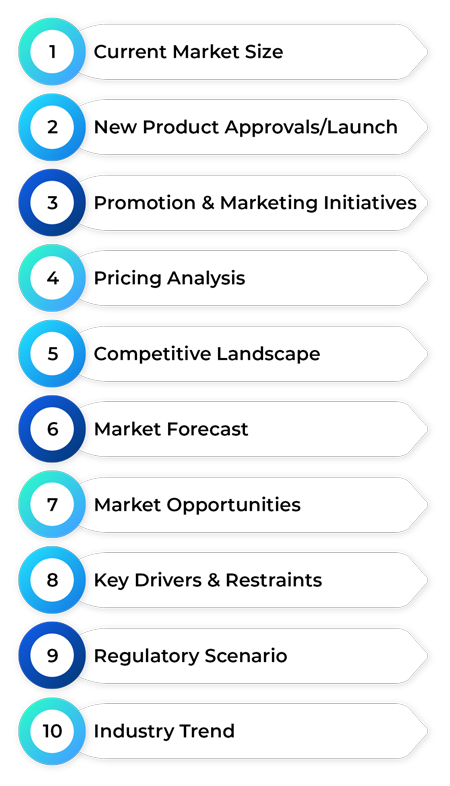
Research on the market is done by industry professionals who provide personalized insights on the industry structure, market segmentation, Type assessment, competitive landscape (CL), along with penetration, and emerging trends. In addition to years of professional experience in their various fields and sectors, their analysis is largely based on primary interview (60%) and secondary research (40%) as well as years of professional experience. In addition, our researchers forecast the market's direction over the following seven years by examining past trends and the market's current position. Additionally, various trends of segments and categories that are geographically portrayed are studied and estimated using primary and secondary research.
The key level executives (VP, CEO, Marketing Directors, and Business Development Managers) of the major industry participants who are active and prominent as well as mid-scale businesses operating in this market were interviewed in-depth for this supply-side report by overall Global Market Research.
Extensive primary research was conducted to gain a deeper grasp of the market and industry. Both primary and secondary research, as well as years of pertinent professional experience, are used to support the analysis. By analyzing past and present market patterns, our experts were able to forecast the market's course over the following seven years. For the geographically offered categories in the list of market tables, it differs per category. In connection with the Global Market research report, we also conducted a number of primary interviews with senior level executives (VP, CEO's, Directors, Marketing Directors, Business Development Managers, CFOs, Technical Consultants, Key Opinion Leaders, Industry Experts, Decision Matrix Authorities, and other crucial individuals) of the key industry players who dominated the Global market.
The primary purpose of secondary research was to gather, identify, and validate the information necessary for the thorough, technical, market-focused, and commercial analysis of the global market. With the use of this study, it was also possible to classify and segment the market in accordance with market trends, geographic markets, and regional considerations linked to market type. Analysts have gathered data in the Distribution Channel for the study of the market from reliable sources including annual reports, journals, white papers, corporate presentations, company websites, international organizations of Energy and Power manufacturers, credible paid databases, and many others to gather reliable intel.
Both top-down and bottom-up methodologies were employed to assess the accuracy of the global market size. The market for as a whole was estimated using these methods for a number of different dependent submarkets. Secondary research was used to address the major industry players, and primary and secondary research was used to calculate their market shares in the various regions. This complete intellectual process includes reading the annual and financial reports of the top market participants and conducting in-depth interviews with top industry executives (VP, CEO, Marketing Directors, and Business Development Managers) to gain important industry insights.
Through reliable secondary sources and validated primary sources, the classification of the global markets and their geographic percentage splits were established. To obtain the final qualitative and quantitative data, all relevant variables that might have an impact on the market under investigation have been taken into consideration, inspected in great depth, verified through primary research, and assessed. This information was collected, added to, and thoroughly examined by professional analysts before being provided in this report. The process used to estimate the overall market size for this study is depicted in the following image as an example.


Report Code :
RL65198
Published on :
Sep 2023
Request a Free Sample Report

 Speak to Analyst