
 +1 915 229 3004 (U.S.) |
  +44 7452 242832 (U.K.)
+1 915 229 3004 (U.S.) | +44 7452 242832 (U.K.)

As of 2022, the global azadirachtin market boasted a value of USD 104.83 million, with a forecasted growth to reach USD 123.67 million by 2031, exhibiting a steady CAGR of 1.95% during the forecast period spanning from 2023 to 2031.
Azadirachtin, an insecticide derived from the seed kernel of the Neem tree prevalent in India, functions as an ecdysone blocker, structurally akin to the insect hormone ecdysone. This compound effectively disrupts the growth of approximately 200 insect species, making it a versatile solution for pest control across various crops such as vegetables, tomatoes, protected crops, forestry, ornamentals, cotton, and tea. Furthermore, its biodegradable nature and low toxicity to mammals enhance its appeal. Azadirachtin is pivotal in the formulations of agricultural specialties, veterinary pest control, and textiles, aligning with the principles of Integrated Pest Management (IPM).
Extraction of azadirachtin occurs through two processes: solvent extraction and pressing of seeds. Neem seeds, containing 40% oil with the highest concentration of azadirachtin, serve as a primary source.
Increasing Demand for Natural and Organic Insecticides
Product Lifecycle
The escalating global population has driven a surge in food demand, prompting the agro industry to explore solutions for increased yield. Azadirachtin has gained prominence in this context, especially in the production of insect growth regulators, oviposition inhibitors, antifeedants, and repellents, contributing to the growth of the global Azadirachtin market.
The growing consumer demand for sustainable farming practices has led to the development of bio-pesticides with minimal impact on non-target organisms. Research and development efforts have resulted in products like Azadirachtin, with low re-entry and pre-harvest intervals, increasing its demand.
Integrated Pest Management (IPM) emphasizes ecological approaches to pest management, encouraging the use of biopesticides. This has provided a platform for farmers, especially in resource-limited regions like India, to opt for biopesticides, including Azadirachtin.
The rising global trend of consuming organic and healthy food has propelled the use of biopesticides like Azadirachtin, contributing to the expanding organic crop area.
Asia-Pacific, particularly India, Pakistan, and Myanmar, is expected to lead the Azadirachtin market. Azadirachtin, derived from neem, holds significance in organic farming practices and has historical usage among farmers. The region's agricultural practices, combined with a growing demand for organic products, contribute to Azadirachtin's dominance.
Africa plays a significant role in the global Azadirachtin market due to its agriculture sector. Recent advancements in plant hybridization have encouraged neem tree cultivation in North America and Europe, potentially aiding local biopesticide manufacturers.
Azadirachtin's natural origin makes it suitable for producing formulations like emulsifiable concentrate, meeting stringent standards for agriculture applications. This has positioned Azadirachtin as a preferred choice among the organic farming community.
Beyond its use as an insecticide, Azadirachtin is employed to understand biological and behavioral processes in insect physiology and neuro-endocrinology. Growing awareness among farmers and its low mammalian toxicity contribute to its applications in research institutes and the healthcare sector.
Leading players in the global Azadirachtin market include Certis USA L.L.C., OHP, Inc., Ozone Biotech, Merck KGaA, Fortune Biotech Ltd., Ecobiocides & Botanicals Pvt Ltd, Peptech Biosciences Ltd., Agri Life, Seema Finechem.
· Liquid
· Powder
· Insecticides
· Nematicides
· Pesticides
· Other applications
· Agriculture
· Horticulture
· Animal husbandry
· Other
· North America
· Europe
· APAC
· Middle East and Africa
· LATAM
As of 2022, the global azadirachtin market boasted a value of USD 104.83 million, with a forecasted growth to reach USD 123.67 million by 2031.
The global market is projected to grow at a CAGR of 1.95% during the forecast period, 2023-2031.
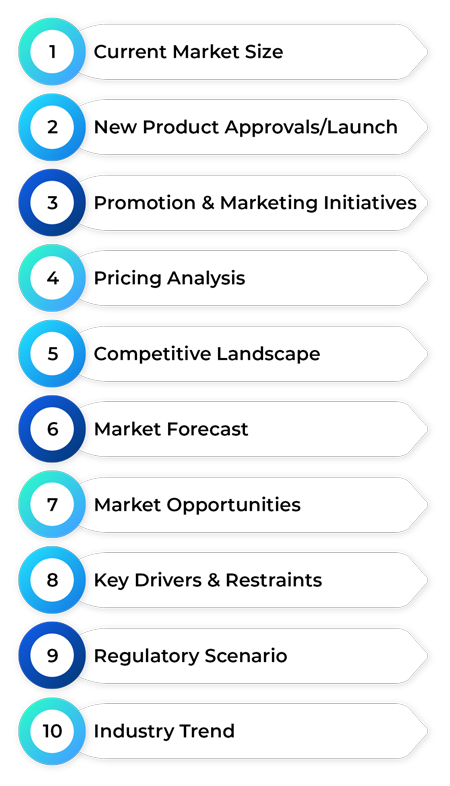
Research on the market is done by industry professionals who provide personalized insights on the industry structure, market segmentation, Type assessment, competitive landscape (CL), along with penetration, and emerging trends. In addition to years of professional experience in their various fields and sectors, their analysis is largely based on primary interview (60%) and secondary research (40%) as well as years of professional experience. In addition, our researchers forecast the market's direction over the following seven years by examining past trends and the market's current position. Additionally, various trends of segments and categories that are geographically portrayed are studied and estimated using primary and secondary research.
The key level executives (VP, CEO, Marketing Directors, and Business Development Managers) of the major industry participants who are active and prominent as well as mid-scale businesses operating in this market were interviewed in-depth for this supply-side report by overall Global Market Research.
Extensive primary research was conducted to gain a deeper grasp of the market and industry. Both primary and secondary research, as well as years of pertinent professional experience, are used to support the analysis. By analyzing past and present market patterns, our experts were able to forecast the market's course over the following seven years. For the geographically offered categories in the list of market tables, it differs per category. In connection with the Global Market research report, we also conducted a number of primary interviews with senior level executives (VP, CEO's, Directors, Marketing Directors, Business Development Managers, CFOs, Technical Consultants, Key Opinion Leaders, Industry Experts, Decision Matrix Authorities, and other crucial individuals) of the key industry players who dominated the Global market.
The primary purpose of secondary research was to gather, identify, and validate the information necessary for the thorough, technical, market-focused, and commercial analysis of the global market. With the use of this study, it was also possible to classify and segment the market in accordance with market trends, geographic markets, and regional considerations linked to market type. Analysts have gathered data in the Distribution Channel for the study of the market from reliable sources including annual reports, journals, white papers, corporate presentations, company websites, international organizations of Energy and Power manufacturers, credible paid databases, and many others to gather reliable intel.
Both top-down and bottom-up methodologies were employed to assess the accuracy of the global market size. The market for as a whole was estimated using these methods for a number of different dependent submarkets. Secondary research was used to address the major industry players, and primary and secondary research was used to calculate their market shares in the various regions. This complete intellectual process includes reading the annual and financial reports of the top market participants and conducting in-depth interviews with top industry executives (VP, CEO, Marketing Directors, and Business Development Managers) to gain important industry insights.
Through reliable secondary sources and validated primary sources, the classification of the global markets and their geographic percentage splits were established. To obtain the final qualitative and quantitative data, all relevant variables that might have an impact on the market under investigation have been taken into consideration, inspected in great depth, verified through primary research, and assessed. This information was collected, added to, and thoroughly examined by professional analysts before being provided in this report. The process used to estimate the overall market size for this study is depicted in the following image as an example.


Report Code :
RL65459
Published on :
Upcoming
Request a Free Sample Report

 Speak to Analyst