
 +1 915 229 3004 (U.S.) |
  +44 7452 242832 (U.K.)
+1 915 229 3004 (U.S.) | +44 7452 242832 (U.K.)

The market size of brand protection software is anticipated to witness a Compound Annual Growth Rate (CAGR) of 15.15% during the forecast period spanning from 2019 to 2026. The continuous evolution of the internet has significantly impacted business operations, presenting an unprecedented opportunity for third-party entities to exploit brands globally. Social media platforms have become vulnerable to issues such as phishing, piracy, fraud, counterfeiting, and impersonation, prompting businesses to seek brand protection solutions. These solutions play a crucial role in safeguarding consumers from counterfeit goods, preserving brand desirability, external perception, and market presence. The period between 2017 and 2018 witnessed substantial adoption of these solutions across various regions.
· Base Year: 2017
· Study Period: 2016-2026
· Forecast Period: 2024-2032
· CAGR: 15.15%
· Fastest Growing Market: North America
· Largest Market: Asia Pacific
· Report Coverage: Revenue Forecast, Competitive Landscape, Growth Factors, Environment & Regulatory Landscape, and Trends
· Geographies Covered: North America, Europe, APAC, Middle East and Africa, LATAM
The Asia Pacific (APAC) region is expected to register a robust 16.8% CAGR, driven by the evolving internet landscape and advancements in mobile technology. The significant growth of digital technology has shifted consumer buying behavior from offline to online, leading to a massive marketplace but also increasing the risk of counterfeiting. Chinese counterfeit products pose a substantial threat to North American brands, with Hong Kong and China accounting for 87.1% of counterfeit goods seized in U.S. e-commerce shipments. The influx of counterfeit products into North America continues to grow, emphasizing the need for brand protection solutions.
Rise in Unauthorized Access: The rise in unauthorized access from third-party developers creates opportunities for mobile app monitoring. Counterfeiters leverage consumer demand through counterfeit mobile platforms, with infringing activities shifting to mobile messaging apps such as WhatsApp and Viber. Mobile app monitoring solutions actively scan app stores to detect brand impersonation and associated malware.
Cost Savings in Cloud Deployment: Cloud deployment of brand protection software is gaining substantial market share due to cost savings. Large companies are more inclined to adopt cloud-based solutions, estimating that 51% of large and mid-sized companies plan to increase cloud spending, compared to 35% of smaller ones.
Several key players in the brand protection software market include Numerator, OpSec Security, PhishLabs, Red Points, Pointer Brand Protection, Resolver, RiskIQ, Ruvixx Inc., Yellow Brand Protection, Zacco, AppDetex, BrandVerity, CSC, Enablon, Fakr & Scout, Hubstream Inc., Incorpo, i-Sight, MarkMonitor, and Marketly. The report provides concise insights into these companies, covering recent developments, financial prospects, product portfolios, geographical strength, and business strategies.
· By Type: On-premise, Cloud
· By Application: Large enterprises, Small- & medium-sized enterprises
· By Channel: Direct sales, Distributors
· By Solution: Domain monitoring, Mobile-app monitoring, Anti-counterfeit, Others
· By Regions: North America, Europe, APAC, Middle East and Africa, LATAM.
The global market is projected to grow at a CAGR of 15.15% during the forecast period, 2023-2032.
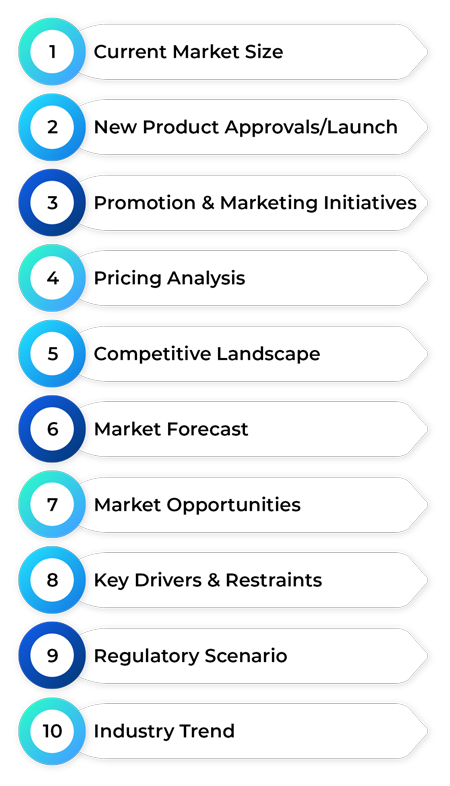
Research on the market is done by industry professionals who provide personalized insights on the industry structure, market segmentation, Type assessment, competitive landscape (CL), along with penetration, and emerging trends. In addition to years of professional experience in their various fields and sectors, their analysis is largely based on primary interview (60%) and secondary research (40%) as well as years of professional experience. In addition, our researchers forecast the market's direction over the following seven years by examining past trends and the market's current position. Additionally, various trends of segments and categories that are geographically portrayed are studied and estimated using primary and secondary research.
The key level executives (VP, CEO, Marketing Directors, and Business Development Managers) of the major industry participants who are active and prominent as well as mid-scale businesses operating in this market were interviewed in-depth for this supply-side report by overall Global Market Research.
Extensive primary research was conducted to gain a deeper grasp of the market and industry. Both primary and secondary research, as well as years of pertinent professional experience, are used to support the analysis. By analyzing past and present market patterns, our experts were able to forecast the market's course over the following seven years. For the geographically offered categories in the list of market tables, it differs per category. In connection with the Global Market research report, we also conducted a number of primary interviews with senior level executives (VP, CEO's, Directors, Marketing Directors, Business Development Managers, CFOs, Technical Consultants, Key Opinion Leaders, Industry Experts, Decision Matrix Authorities, and other crucial individuals) of the key industry players who dominated the Global market.
The primary purpose of secondary research was to gather, identify, and validate the information necessary for the thorough, technical, market-focused, and commercial analysis of the global market. With the use of this study, it was also possible to classify and segment the market in accordance with market trends, geographic markets, and regional considerations linked to market type. Analysts have gathered data in the Distribution Channel for the study of the market from reliable sources including annual reports, journals, white papers, corporate presentations, company websites, international organizations of Energy and Power manufacturers, credible paid databases, and many others to gather reliable intel.
Both top-down and bottom-up methodologies were employed to assess the accuracy of the global market size. The market for as a whole was estimated using these methods for a number of different dependent submarkets. Secondary research was used to address the major industry players, and primary and secondary research was used to calculate their market shares in the various regions. This complete intellectual process includes reading the annual and financial reports of the top market participants and conducting in-depth interviews with top industry executives (VP, CEO, Marketing Directors, and Business Development Managers) to gain important industry insights.
Through reliable secondary sources and validated primary sources, the classification of the global markets and their geographic percentage splits were established. To obtain the final qualitative and quantitative data, all relevant variables that might have an impact on the market under investigation have been taken into consideration, inspected in great depth, verified through primary research, and assessed. This information was collected, added to, and thoroughly examined by professional analysts before being provided in this report. The process used to estimate the overall market size for this study is depicted in the following image as an example.


Report Code :
RL65476
Published on :
Upcoming
Request a Free Sample Report

 Speak to Analyst