
 +1 915 229 3004 (U.S.) |
  +44 7452 242832 (U.K.)
+1 915 229 3004 (U.S.) | +44 7452 242832 (U.K.)

The global brewery equipment market exhibited a valuation of USD 16.53 billion in 2022, projecting a compound annual growth rate (CAGR) of 5.95% during the forecast period. The demand for brewery equipment is expected to surge due to a growing preference for craft breweries worldwide, driven by the unique flavors they offer.
The Covid-19 pandemic resulted in a decline in beer consumption due to brewery and alcohol retail closures during lockdowns. However, as breweries resumed operations in 2022 and beer demand increased, the market for brewing equipment is anticipated to experience a notable upswing globally.
The U.S. government's lockdown measures during the pandemic adversely impacted the brewing equipment market as breweries were forced to close. Nevertheless, the reopening of macro breweries and craft brewers in 2022 is expected to drive market demand.
With the global economy recovering, the food and beverage industry, including breweries, has substantial growth potential. Increased consumer demand is fueling expansion across various end-user verticals, such as healthcare, food & drinks, and chemicals, which is expected to boost market demand in the forecast period.
The rise of beer culture is prompting major global beer manufacturers to invest in the market. Market players are also focusing on activities like cellar equipment enhancement, outdoor expansion, advanced yeast management, energy recovery methods, and brewery expansion to strengthen their market presence. For example, in September 2019, Kaspar Schulz GmbH collaborated with G.E. Additive to integrate sophisticated additive technologies into brewing equipment manufacturing.
The modification of beer regulations in Europe and North America, including Germany, the U.S., and the U.K., is predicted to stimulate market growth. However, challenges such as high maintenance costs, energy consumption, and capital requirements may impede the expansion of the brewery equipment market.
Microbrewery equipment dominated the market in 2022, contributing to 82.3% of total revenue. This segment is expected to maintain its dominance as the demand for standard beer rises, driven by the availability of beer from various brands at different price points. Microbrewery machinery is advantageous for large-scale beer production.
The fermentation equipment sector is anticipated to maintain its dominant position in the macro brewery equipment market. The market expansion in this segment is expected to be fueled by the availability of high-quality fermentation equipment and the regular need for equipment replacement due to ongoing use.
Craft brewery equipment is projected to grow at a CAGR of 6.85% throughout the forecast period. The increasing popularity of craft beer worldwide, known for its distinct flavor and natural ingredients, is driving the demand for craft brewery equipment.
Compressors play a crucial role in craft breweries, providing compressed air for aeration during fermentation and serving various other purposes. The versatility of compressors is contributing to their increasing popularity.
The PDF report and online dashboard provide insights into competitive benchmarking, historical data, forecasts, company revenue shares, regional opportunities, and the latest trends. To gain more information, request a Free Sample Copy from The Grand Library - BI Enabled Market Research Database.
Automatic brewery equipment dominated the market, accounting for 54.35% of global revenue share in 2022. The increasing use of automation in the craft brewing process simplifies operations, with major players investing in the development of automated equipment for high-quality beer production.
Global Brewery Equipment Market Share, by mode of operation, 2022 (%)
To learn more about this report, request a free sample copy.
The semi-automatic segment is expected to grow at a CAGR of 5.7% during the projection period. Growing customer preference for artisanal and handcrafted beer is driving demand for high-quality and cost-effective brewing equipment in this segment.
The usage of manual brewing equipment is declining compared to automatic and semi-automatic equipment due to its slower production and lower beer output. Home brewers may still use manual equipment, but there is a rapid adoption of automation to eliminate labor-intensive brewing methods.
Europe dominated the market with a 47.75% share of global revenue in 2022. Key beer manufacturers in Europe, such as Carlsberg A/S, SABMiller, and Heineken N.V., produce beer on a large scale, leading to high usage of brewery equipment. The rising beer consumption in Europe is expected to drive market growth.
China led the Asia Pacific brewery equipment market, expecting rapid growth as consumer awareness of healthy lifestyles increases. Consumers in China are showing a preference for low-calorie or no-alcohol beer, contributing to the growth of the craft beer segment.
To gain insights into regional trends, request a free sample copy.
Brewery equipment demand is forecasted to grow at a CAGR of 6.75% in North America. Various manufacturers in the U.S. and Canada are focusing on providing premium-tasting drinks and new flavors, driving the demand for brewery equipment.
Central & South America, as well as the Middle East & Africa, are expected to witness significant market expansion. Relaxation of restrictions and norms governing brewery establishments in economies such as Brazil and Argentina is anticipated to benefit market growth.
The global brewery equipment market is highly fragmented, with numerous manufacturers operating in domestic and foreign markets. Strong distribution networks of equipment manufacturers contribute to a global consumer presence.
Rising regional market competitiveness and an increasing number of businesses offering cost-effective brewing equipment pose challenges for enterprises in the global market. Key market participants are investing in research & development to create and sell superior brewing equipment, acting as barriers for new entrants. Prominent players in the global brewery equipment market include:
Revenue forecast, company market position analysis, competitive landscape, growth factors, trends
Type, mode of operation, region
North America; Europe; Asia Pacific; Central & South America; Middle East & Africa
U.S.; Canada; Mexico; Germany; France; Italy; U.K.; China; Japan; India; Australia; Brazil; Argentina; UAE; South Africa
· ALFA LAVAL
· GEA Group Aktiengesellschaft
· Krones AG
· PAUL MUELLER COMPANY
· CRIVELLER GROUP
· DELLA TOFFOLA USA
· SCHULZ
· Hypro
· Praj Industries
· ABE Equipment
· Ampco Pumps Company
· BREWBILT MANUFACTURING INC
· LEHUI
· DEUTSCHE BEVERAGE TECHNOLOGY
· MEURA
This report forecasts revenue growth at global, regional & country levels and provides an analysis of the industry trends in each of the sub-segments from 2018 to 2030. For this study, Grand View Research has segmented the global brewery equipment market report based on the type, mode of operation, and region:
· Milling Equipment
· Brew House
· Cooling Equipment
· Fermentation Equipment
· Filtration & Filling Equipment
· Others
· Craft Brewery Equipment
· Mashing Equipment
· Fermentation Equipment
· Cooling Equipment
· Storage Equipment
· Compressors
· Others
· Automatic
· Semi-automatic
· Manual
· North America
· U.S.
· Canada
· Mexico
· Europe
· Germany
· France
· Italy
· UK
· Asia Pacific
· China
· Japan
· India
· Australia
· Central & South America
· Brazil
· Argentina
· Middle East & Africa
· UAE
· South Africa.
The global brewery equipment market exhibited a valuation of USD 16.53 billion in 2022.
The global market is projected to grow at a CAGR of 5.95% during the forecast period, 2023-2032.
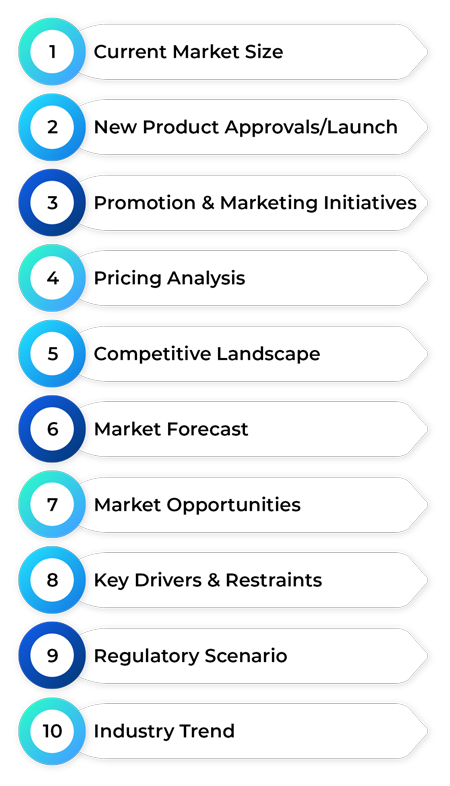
Research on the market is done by industry professionals who provide personalized insights on the industry structure, market segmentation, Type assessment, competitive landscape (CL), along with penetration, and emerging trends. In addition to years of professional experience in their various fields and sectors, their analysis is largely based on primary interview (60%) and secondary research (40%) as well as years of professional experience. In addition, our researchers forecast the market's direction over the following seven years by examining past trends and the market's current position. Additionally, various trends of segments and categories that are geographically portrayed are studied and estimated using primary and secondary research.
The key level executives (VP, CEO, Marketing Directors, and Business Development Managers) of the major industry participants who are active and prominent as well as mid-scale businesses operating in this market were interviewed in-depth for this supply-side report by overall Global Market Research.
Extensive primary research was conducted to gain a deeper grasp of the market and industry. Both primary and secondary research, as well as years of pertinent professional experience, are used to support the analysis. By analyzing past and present market patterns, our experts were able to forecast the market's course over the following seven years. For the geographically offered categories in the list of market tables, it differs per category. In connection with the Global Market research report, we also conducted a number of primary interviews with senior level executives (VP, CEO's, Directors, Marketing Directors, Business Development Managers, CFOs, Technical Consultants, Key Opinion Leaders, Industry Experts, Decision Matrix Authorities, and other crucial individuals) of the key industry players who dominated the Global market.
The primary purpose of secondary research was to gather, identify, and validate the information necessary for the thorough, technical, market-focused, and commercial analysis of the global market. With the use of this study, it was also possible to classify and segment the market in accordance with market trends, geographic markets, and regional considerations linked to market type. Analysts have gathered data in the Distribution Channel for the study of the market from reliable sources including annual reports, journals, white papers, corporate presentations, company websites, international organizations of Energy and Power manufacturers, credible paid databases, and many others to gather reliable intel.
Both top-down and bottom-up methodologies were employed to assess the accuracy of the global market size. The market for as a whole was estimated using these methods for a number of different dependent submarkets. Secondary research was used to address the major industry players, and primary and secondary research was used to calculate their market shares in the various regions. This complete intellectual process includes reading the annual and financial reports of the top market participants and conducting in-depth interviews with top industry executives (VP, CEO, Marketing Directors, and Business Development Managers) to gain important industry insights.
Through reliable secondary sources and validated primary sources, the classification of the global markets and their geographic percentage splits were established. To obtain the final qualitative and quantitative data, all relevant variables that might have an impact on the market under investigation have been taken into consideration, inspected in great depth, verified through primary research, and assessed. This information was collected, added to, and thoroughly examined by professional analysts before being provided in this report. The process used to estimate the overall market size for this study is depicted in the following image as an example.


Report Code :
RL65477
Published on :
Upcoming
Request a Free Sample Report

 Speak to Analyst