
 +1 915 229 3004 (U.S.) |
  +44 7452 242832 (U.K.)
+1 915 229 3004 (U.S.) | +44 7452 242832 (U.K.)

In 2022, the Cancer Cachexia Market recorded a valuation of USD 2.77 Billion, with a projected increase to USD 4.13 Billion by 2030, growing at a steady compound annual growth rate (CAGR) of 4.10% from 2023 to 2030.
Cancer cachexia is a debilitating syndrome often experienced by individuals battling cancer. Characterized by muscle loss, fatigue, and anorexia, this condition has seen a surge in prevalence in recent years, consequently driving market demand.
Cancer Cachexia Market Size, 2022-2032 (USD Billion)
Download Free Sample to learn more about this report
This syndrome can affect up to 80% of cancer patients and may persist even after cancer remission. Prolonged cancer-related cachexia can significantly impact one's quality of life, increase mortality and morbidity risks, and hinder the effectiveness of chemotherapy.
To address this challenging condition, patients are prescribed a range of treatments, including pharmacological, nutritional, exercise, and psychological interventions. Consequently, the Cancer Cachexia Market is witnessing a surge in demand due to the diverse treatment options available.
The Asia Pacific region is anticipated to be the fastest-growing market, attributed to rising cancer prevalence rates and increased healthcare expenditure. Additionally, advancements in cancer cachexia treatment, government initiatives, and expanded healthcare access in emerging markets are fueling market growth.
Increasing Cancer Prevalence: Cancer remains a leading global cause of death, with rising cases linked to an aging population, increased tobacco use, and unhealthy lifestyles. These factors drive the demand for cancer cachexia treatments.
Patent Expiry of Cancer Cachexia Drugs: The expiration of patents on key cancer cachexia drugs is facilitating market growth. Notably, the patent expiration of Fycompa (Perampanel) in 2020 has opened opportunities for generic drugs in the market.
Growing Adoption of Targeted Cancer Therapy: With a focus on improving patient survival and prognosis, coupled with increased adoption of targeted therapies, this segment is poised for substantial growth in the near future.
Government Initiatives: Governments worldwide are launching awareness campaigns, funding research, and providing medical professional training to enhance the diagnosis and treatment of cancer cachexia, positively impacting market growth.
The global cancer cachexia market is categorized into drug therapy, lifestyle management, supportive and palliative care, and other therapies. Drug therapy dominated the market in 2020 and is expected to witness rapid growth. This growth is attributed to increased awareness of cancer and drug therapy-related cachexia side effects, along with the availability of a wide range of drugs to address the condition.
Geographically, North America held the largest market share in 2020, owing to a high prevalence of cancer and access to advanced treatments, such as nutrition therapy and oral drugs. However, the Asia Pacific region is set to experience the fastest growth during the forecast period, thanks to increased healthcare spending, a growing geriatric population, the presence of major generic drug manufacturers, and improved healthcare access.
Prominent players in the global cancer cachexia market include Amgen, Inc., Bristol-Myers Squibb Company, Eli Lilly and Company, Gilead Sciences, Inc., Merck and Co., Inc., Novartis AG, Pfizer Inc., GlaxoSmithKline Plc, Teva Pharmaceuticals Industries Ltd., and Sun Pharmaceutical Industries Ltd.
Leading companies are actively engaged in collaborations, mergers, acquisitions, product launches, and geographical expansions to fortify their market presence. For example, in May 2019, Eli Lilly and Company acquired Armo Biosciences, Inc., a biotechnology company specializing in oncology treatments, to expand its footprint in the cancer cachexia market.
Major manufacturers are allocating resources to research and development to introduce innovative treatment options and drugs for cancer-related cachexia. These companies are also expanding their product portfolios and global presence to capture a larger market share.
Furthermore, leading firms are initiating strategic endeavors, including collaborations and partnerships with regional and local players, to tap into previously untapped markets.
In October 2019, Bristol-Myers Squibb Company announced a collaboration with Liquid Biosciences, Inc., a biotechnology firm, to jointly develop and commercialize a range of immunotherapies for cancer cachexia treatment.
In October 2017, XBiotech acquired Exir Pharmaceuticals and its oncology program focused on cancer cachexia, paving the way for the development of an innovative new drug target for cancer-related cachexia.
Report Scope
|
Report Attribute/Metric |
Details |
|
Market Size 2022 |
USD 1.95 Billion |
|
Market Size 2023 |
USD 2.77 Billion |
|
Market Size 2030 |
USD 4.13 Billion |
|
Compound Annual Growth Rate (CAGR) |
4.10% (2023-2030) |
|
Base Year |
2022 |
|
Market Forecast Period |
2023-2030 |
|
Historical Data |
2018- 2022 |
|
Market Forecast Units |
Value (USD Billion) |
|
Report Coverage |
Revenue Forecast, Market Competitive Landscape, Growth Factors, and Trends |
|
Segments Covered |
Product Type, Finish, Distribution Channel, and Region |
|
Geographies Covered |
North America, Europe, Asia Pacific, and the Rest of the World |
|
Countries Covered |
The US, Canada, German, France, U.K., Italy, Spain, China, Japan, India, Australia, South Korea, and Brazil |
|
Key Companies Profiled |
Amgen Inc., Bristol-Myers Squibb Company, Eli Lilly and Company, Gilead Sciences, Inc., Merck and Co., Inc., Novartis AG, Pfizer Inc., GlaxoSmithKline Plc, Teva Pharmaceuticals Industries Ltd., and Sun Pharmaceutical Industries Ltd |
The global Cancer Cachexia Market size is projected to hit at USD 4.13 billion by 2030
The global Cancer Cachexia Market is projected to grow at a CAGR of 4.10% during the forecast period, 2023-2030.
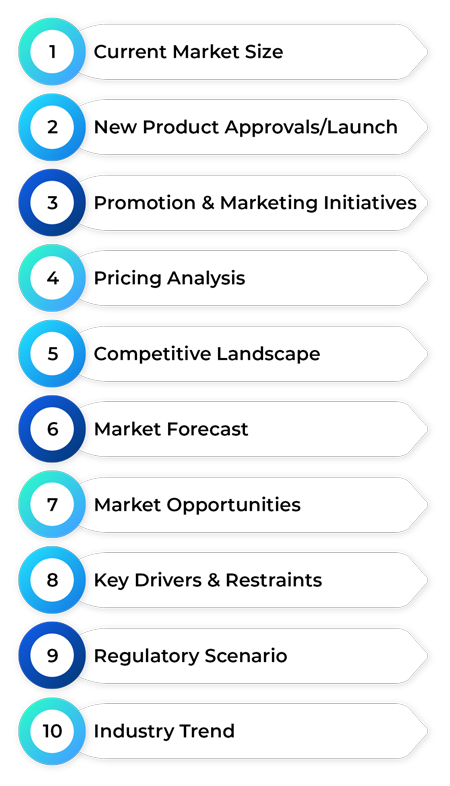
Research on the market is done by industry professionals who provide personalized insights on the industry structure, market segmentation, Type assessment, competitive landscape (CL), along with penetration, and emerging trends. In addition to years of professional experience in their various fields and sectors, their analysis is largely based on primary interview (60%) and secondary research (40%) as well as years of professional experience. In addition, our researchers forecast the market's direction over the following seven years by examining past trends and the market's current position. Additionally, various trends of segments and categories that are geographically portrayed are studied and estimated using primary and secondary research.
The key level executives (VP, CEO, Marketing Directors, and Business Development Managers) of the major industry participants who are active and prominent as well as mid-scale businesses operating in this market were interviewed in-depth for this supply-side report by overall Global Market Research.
Extensive primary research was conducted to gain a deeper grasp of the market and industry. Both primary and secondary research, as well as years of pertinent professional experience, are used to support the analysis. By analyzing past and present market patterns, our experts were able to forecast the market's course over the following seven years. For the geographically offered categories in the list of market tables, it differs per category. In connection with the Global Market research report, we also conducted a number of primary interviews with senior level executives (VP, CEO's, Directors, Marketing Directors, Business Development Managers, CFOs, Technical Consultants, Key Opinion Leaders, Industry Experts, Decision Matrix Authorities, and other crucial individuals) of the key industry players who dominated the Global market.
The primary purpose of secondary research was to gather, identify, and validate the information necessary for the thorough, technical, market-focused, and commercial analysis of the global market. With the use of this study, it was also possible to classify and segment the market in accordance with market trends, geographic markets, and regional considerations linked to market type. Analysts have gathered data in the Distribution Channel for the study of the market from reliable sources including annual reports, journals, white papers, corporate presentations, company websites, international organizations of Energy and Power manufacturers, credible paid databases, and many others to gather reliable intel.
Both top-down and bottom-up methodologies were employed to assess the accuracy of the global market size. The market for as a whole was estimated using these methods for a number of different dependent submarkets. Secondary research was used to address the major industry players, and primary and secondary research was used to calculate their market shares in the various regions. This complete intellectual process includes reading the annual and financial reports of the top market participants and conducting in-depth interviews with top industry executives (VP, CEO, Marketing Directors, and Business Development Managers) to gain important industry insights.
Through reliable secondary sources and validated primary sources, the classification of the global markets and their geographic percentage splits were established. To obtain the final qualitative and quantitative data, all relevant variables that might have an impact on the market under investigation have been taken into consideration, inspected in great depth, verified through primary research, and assessed. This information was collected, added to, and thoroughly examined by professional analysts before being provided in this report. The process used to estimate the overall market size for this study is depicted in the following image as an example.


Report Code :
RL65351
Published on :
Sep 2023
Request a Free Sample Report

 Speak to Analyst