
 +1 915 229 3004 (U.S.) |
  +44 7452 242832 (U.K.)
+1 915 229 3004 (U.S.) | +44 7452 242832 (U.K.)

The Cellulose Acetate Market Size reached USD 6.21 billion in 2022 and is projected to grow from USD 6.41 billion in 2023 to USD 9.31 billion by 2032, with a compound annual growth rate (CAGR) of 4.75% during the forecast period (2023 - 2032). Key drivers of market growth include the increasing consumer demand for low-tar cigarettes worldwide and the unique properties of cellulose acetate that enhance the shelf life of food products.
The rise in cigarette usage is a significant factor propelling the market growth. The surge in cigarette consumption is anticipated, especially in low- and middle-income countries, driven by rapid economic development and population growth. Cellulose acetate, extensively used in cigarette filters globally, aids in removing tar and nicotine while preserving a pleasant taste for smokers.
According to the Centers for Disease Control and Prevention, nearly 40 million U.S. adults smoked cigarettes in March 2022, and around 2.55 million middle and high school students used tobacco products, including e-cigarettes. The increasing prevalence of cigarette use contributes to the growth of the cellulose acetate market.
Additionally, the textile and apparel industries are expected to drive future growth, as cellulose acetate's soft and absorbent characteristics make it suitable for various textile applications. The material's versatility and ability to be colored in various shades cater to changing consumer preferences in the apparel sector, further boosting demand.
Furthermore, advancements by key companies, such as Eastman updating its Naia fiber line, contribute to industry growth. Eastman's introduction of a new cellulose staple fiber in February 2020, catering to sustainable fashion, exemplifies such advancements, driving cellulose acetate market revenue.
Cellulose Acetate Type Insights:
The market segmentation by type includes fiber and plastic, with the fiber segment dominating the industry. The extensive market share of fiber-based cellulose acetate is attributed to increased demand in the textile industry. Used in the production of various consumer goods like apparel, carpets, and cigarette filters, cellulose acetate fiber's affordability and draping capabilities contribute to its significant market presence.
The market segmentation by application encompasses textiles & apparels, cigarette filters, photographic films, tapes & labels, spectacle frames, and others. Cigarette filters hold the largest market share in 2022 and are expected to lead in the coming years due to cellulose acetate's filtration qualities and biodegradability. The growth is fueled by an increasing number of smokers in developing economies, although awareness of the health risks associated with smoking may impede segment expansion.
The Asia-Pacific region holds the largest market share, expected to be the fastest-growing region during the projection period. The region's growth is driven by cellulose acetate's diverse applications, strong government initiatives, and ongoing projects. Key countries studied include the U.S., Canada, Germany, France, the UK, Italy, Spain, China, Japan, India, Australia, South Korea, and Brazil.
Leading market players, such as Solvay, Celanese Corporation, Daicel Corporation, China National Tobacco Corporation, SK Chemicals, and Eastman Chemical Company, are heavily investing in research and development to expand their product lines. Strategic activities, including new product launches, contractual agreements, mergers and acquisitions, and collaborations, are undertaken to enhance market presence.
Local manufacturing to minimize operational costs is a key tactic used by manufacturers in the cellulose acetate industry. Notable developments include Eastman's collaboration with Rotuba to produce face shields during the COVID-19 pandemic, utilizing cellulose acetate.
· Solvay (Belgium)
· Celanese Corporation (U.S.)
· Daicel Corporation (Japan)
· Accords Cellulosic Fibers Inc. (U.S.)
· China National Tobacco Corporation (China)
· SK Chemicals (South Korea)
· Sappi (South Africa)
· Rayonier Advanced Materials (U.S.)
· Sichuan Push Acetate Co. Ltd.(China)
· Borregaard (Norway)
· Eastman Chemical Company (U.S.)
· In November 2020, Celanese Corporation established Blue Ridge, a cellulose acetate product for making compostable items such as straws.
· In November 2020, Sappi collaborated with Birla Cellulose to provide a forest-to-garment traceability solution, enhancing sustainability in the textile industry.
· In February 2020, Mazzucchelli 1849 S.p.A. collaborated with Eastman Chemical Company to develop acetate sheets using Eastman Acetate Renew, a cellulose diacetate with 60% bio-based and 40% recycled material.
· In August 2023, Eastman Chemical Company announced the development of a new grade of cellulose acetate designed for 3D printing applications, set to be commercially available in 2024.
· Fiber
· Plastic
· Textiles & Apparels
· Cigarette Filters
· Photographic Films
· Tapes & Labels
· Spectacle Frames
· Others
· North America
· US
· Canada
· Europe
· Germany
· France
· UK
· Italy
· Spain
· Rest of Europe
· Asia-Pacific
· China
· Japan
· India
· Australia
· South Korea
· Australia
· Rest of Asia-Pacific
· Rest of the World
· Middle East
· Africa
· Latin America
Market Size:
· 2022: USD 6.21 billion
· 2023: USD 6.41 billion
· 2032: USD 9.31 billion
· CAGR (2023-2032): 4.75%
· Base Year: 2022
· Forecast Period: 2023-2032
· Historical Data: 2019-2021
· Market Forecast Units: Value (USD Billion)
· Report Coverage: Revenue Forecast, Market Competitive Landscape, Growth Factors, and Trends
· Segments Covered: Type, Application, and Region
· Geographies Covered: North America, Europe, Asia Pacific, and the Rest of the World
· Countries Covered: The U.S., Canada, Germany, France, the UK, Italy, Spain, China, Japan, India, Australia, South Korea, and Brazil.
The Cellulose Acetate Market Size reached USD 6.21 billion in 2022 and is projected to grow from USD 6.41 billion in 2023 to USD 9.31 billion by 2032.
The global market is projected to grow at a CAGR of 4.75% during the forecast period, 2023-2032.
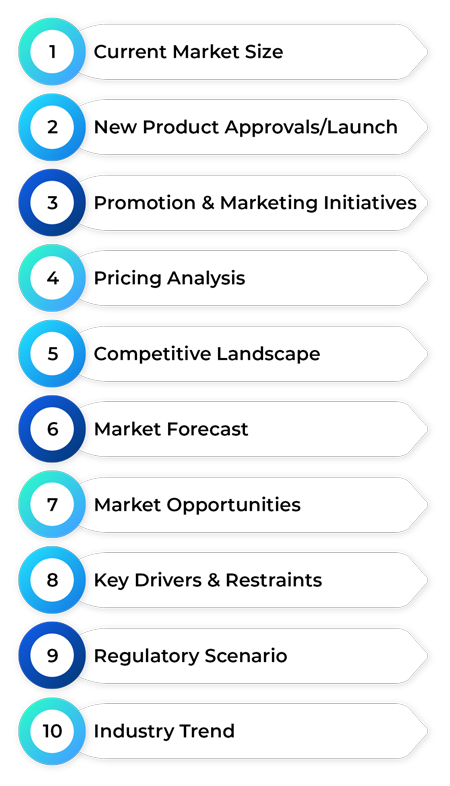
Research on the market is done by industry professionals who provide personalized insights on the industry structure, market segmentation, Type assessment, competitive landscape (CL), along with penetration, and emerging trends. In addition to years of professional experience in their various fields and sectors, their analysis is largely based on primary interview (60%) and secondary research (40%) as well as years of professional experience. In addition, our researchers forecast the market's direction over the following seven years by examining past trends and the market's current position. Additionally, various trends of segments and categories that are geographically portrayed are studied and estimated using primary and secondary research.
The key level executives (VP, CEO, Marketing Directors, and Business Development Managers) of the major industry participants who are active and prominent as well as mid-scale businesses operating in this market were interviewed in-depth for this supply-side report by overall Global Market Research.
Extensive primary research was conducted to gain a deeper grasp of the market and industry. Both primary and secondary research, as well as years of pertinent professional experience, are used to support the analysis. By analyzing past and present market patterns, our experts were able to forecast the market's course over the following seven years. For the geographically offered categories in the list of market tables, it differs per category. In connection with the Global Market research report, we also conducted a number of primary interviews with senior level executives (VP, CEO's, Directors, Marketing Directors, Business Development Managers, CFOs, Technical Consultants, Key Opinion Leaders, Industry Experts, Decision Matrix Authorities, and other crucial individuals) of the key industry players who dominated the Global market.
The primary purpose of secondary research was to gather, identify, and validate the information necessary for the thorough, technical, market-focused, and commercial analysis of the global market. With the use of this study, it was also possible to classify and segment the market in accordance with market trends, geographic markets, and regional considerations linked to market type. Analysts have gathered data in the Distribution Channel for the study of the market from reliable sources including annual reports, journals, white papers, corporate presentations, company websites, international organizations of Energy and Power manufacturers, credible paid databases, and many others to gather reliable intel.
Both top-down and bottom-up methodologies were employed to assess the accuracy of the global market size. The market for as a whole was estimated using these methods for a number of different dependent submarkets. Secondary research was used to address the major industry players, and primary and secondary research was used to calculate their market shares in the various regions. This complete intellectual process includes reading the annual and financial reports of the top market participants and conducting in-depth interviews with top industry executives (VP, CEO, Marketing Directors, and Business Development Managers) to gain important industry insights.
Through reliable secondary sources and validated primary sources, the classification of the global markets and their geographic percentage splits were established. To obtain the final qualitative and quantitative data, all relevant variables that might have an impact on the market under investigation have been taken into consideration, inspected in great depth, verified through primary research, and assessed. This information was collected, added to, and thoroughly examined by professional analysts before being provided in this report. The process used to estimate the overall market size for this study is depicted in the following image as an example.


Report Code :
RL65487
Published on :
Jan 2024
Request a Free Sample Report

 Speak to Analyst