
 +1 915 229 3004 (U.S.) |
  +44 7452 242832 (U.K.)
+1 915 229 3004 (U.S.) | +44 7452 242832 (U.K.)

Software testing is the systematic process of running a program or system to identify errors, defects, or bugs. Integral to the software development and maintenance life cycle, its purpose is to ensure the software's fitness for use and to detect and rectify errors before releasing it to the market. This critical function can be carried out by in-house staff or outsourced to a third-party organization specializing in technology testing. The trend of outsourcing software testing is gaining momentum, creating an expanding market.
The Outsourced Software Testing Market reached a valuation of USD 3.60 Billion in 2022. Projections indicate industry growth from USD 3.75 Billion in 2023 to USD 5.30 Billion by 2032, displaying a compound annual growth rate (CAGR) of 4.10% during the forecast period (2023-2032). A significant driver of this growth is the digital transformation initiatives undertaken by various companies seeking to maximize their productivity. Such initiatives often necessitate software testing, leading to an increased reliance on outsourcing due to its cost-effectiveness.
The increasing digitalization of businesses, coupled with a rising demand for automated quality assurance, is prompting a shift toward outsourced software testing services. The surge in demand for mobile applications, particularly those requiring integration with the cloud, further fuels the need for outsourcing. Moreover, companies are actively seeking cost-effective approaches to test their software components, making outsourcing a strategic element of their cost-containment strategies.
The market is segmented based on deployment type into cloud and on-premise. The cloud deployment type segment is expected to witness the highest growth during the forecast period, driven by the widespread adoption of cloud computing by businesses globally. This adoption is anticipated to contribute significantly to the growth of the outsourced software testing market.
The Asia Pacific claimed the largest share of the global outsourced software testing market in 2020, attributed to the region's increasing digitalization. India leads the market in the region, boasting a large pool of qualified engineers and technicians providing cost-effective services. The escalating use of digital currencies, e-commerce, and mobile applications has further heightened the demand for outsourced software testing services.
Major players in the global outsourced software testing market include:
· Wipro Ltd
· Cognizant
· Accenture
· Infosys Ltd
· Hexaware Technologies Ltd.
· Tata Consultancy Services
· Capgemini
· Tech Mahindra Ltd.,
· HCL Technologies.
The industry is characterized by intense competition, with companies striving to expand their market share through continuous innovation, strategic acquisitions, partnerships, and collaborations.
The global outsourced software testing market is fiercely competitive, with companies continuously introducing new features and services to capture a larger market share. Investment in research and development activities is prevalent to develop innovative software testing tools, enhancing overall effectiveness. Additionally, companies are expanding their market presence through the launch of new products and services. For example, Wipro introduced 'Wipro CloudTest,' a fully automated cloud-based software testing platform in October 2020. Similarly, TCS launched 'QCoder,' a comprehensive quality assurance platform for testing and validating digital products in November 2020.
Overall, the anticipated growth of the outsourced software testing market is propelled by global digital transformation initiatives and the increasing demand for automated quality assurance.
The global Outsourced Software Testing Market size is projected to hit at USD 5.30 billion by 2032
The global Outsourced Software Testing Market is projected to grow at a CAGR of 4.10% during the forecast period, 2023-2032.
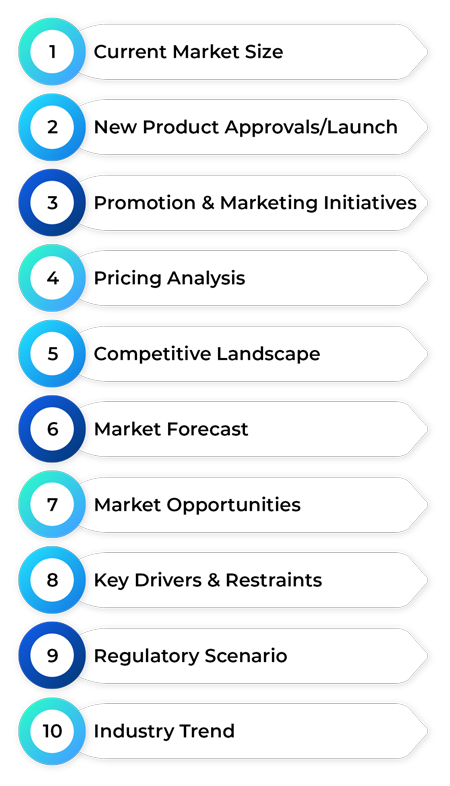
Research on the market is done by industry professionals who provide personalized insights on the industry structure, market segmentation, Type assessment, competitive landscape (CL), along with penetration, and emerging trends. In addition to years of professional experience in their various fields and sectors, their analysis is largely based on primary interview (60%) and secondary research (40%) as well as years of professional experience. In addition, our researchers forecast the market's direction over the following seven years by examining past trends and the market's current position. Additionally, various trends of segments and categories that are geographically portrayed are studied and estimated using primary and secondary research.
The key level executives (VP, CEO, Marketing Directors, and Business Development Managers) of the major industry participants who are active and prominent as well as mid-scale businesses operating in this market were interviewed in-depth for this supply-side report by overall Global Market Research.
Extensive primary research was conducted to gain a deeper grasp of the market and industry. Both primary and secondary research, as well as years of pertinent professional experience, are used to support the analysis. By analyzing past and present market patterns, our experts were able to forecast the market's course over the following seven years. For the geographically offered categories in the list of market tables, it differs per category. In connection with the Global Market research report, we also conducted a number of primary interviews with senior level executives (VP, CEO's, Directors, Marketing Directors, Business Development Managers, CFOs, Technical Consultants, Key Opinion Leaders, Industry Experts, Decision Matrix Authorities, and other crucial individuals) of the key industry players who dominated the Global market.
The primary purpose of secondary research was to gather, identify, and validate the information necessary for the thorough, technical, market-focused, and commercial analysis of the global market. With the use of this study, it was also possible to classify and segment the market in accordance with market trends, geographic markets, and regional considerations linked to market type. Analysts have gathered data in the Distribution Channel for the study of the market from reliable sources including annual reports, journals, white papers, corporate presentations, company websites, international organizations of Energy and Power manufacturers, credible paid databases, and many others to gather reliable intel.
Both top-down and bottom-up methodologies were employed to assess the accuracy of the global market size. The market for as a whole was estimated using these methods for a number of different dependent submarkets. Secondary research was used to address the major industry players, and primary and secondary research was used to calculate their market shares in the various regions. This complete intellectual process includes reading the annual and financial reports of the top market participants and conducting in-depth interviews with top industry executives (VP, CEO, Marketing Directors, and Business Development Managers) to gain important industry insights.
Through reliable secondary sources and validated primary sources, the classification of the global markets and their geographic percentage splits were established. To obtain the final qualitative and quantitative data, all relevant variables that might have an impact on the market under investigation have been taken into consideration, inspected in great depth, verified through primary research, and assessed. This information was collected, added to, and thoroughly examined by professional analysts before being provided in this report. The process used to estimate the overall market size for this study is depicted in the following image as an example.


Report Code :
RL65372
Published on :
Upcoming
Request a Free Sample Report

 Speak to Analyst