
 +1 915 229 3004 (U.S.) |
  +44 7452 242832 (U.K.)
+1 915 229 3004 (U.S.) | +44 7452 242832 (U.K.)

Global Passenger Vehicle Telematics Market Size was valued at USD 8.6 Billion in 2022. The Passenger Vehicle Telematics market industry is projected to grow from USD 9.7 Billion in 2023 to USD 25.6 Billion by 2032, exhibiting a compound annual growth rate (CAGR) of 12.60% during the forecast period (2023 - 2032). The demand for smartphone applications in cars, autonomous driving, and passenger safety features is rising as government efforts to develop an intelligent transportation system step up, are the key market drivers enhancing the market growth.
Download Free Sample to learn more about this report
Source: Secondary Research, Primary Research, MRFR Database and Analyst Review
Fleet managers can create more efficient routes by using some telemetry tools. Tracking a vehicle's location and operations can improve driver productivity, dispatching, and customer delivery times. Managers can boost vehicle availability and reduce unneeded costs associated with unlawful use by tracking the cars. Telematics tools can help reduce fuel use by keeping track of idle time and boosting output at client stops. This component supports the company's initiatives to minimize emissions and seek sustainability. These factors will promote market growth.
Additionally, the proportion of telematics systems in navigation and logistical tools is rather small. Fleet managers may assess risks using the information provided by these technologies, and they can also clearly see how drivers typically perform in terms of safety. Fleets that use the aforementioned information and techniques to spot unsafe driving habits typically experience few losses and mishaps. Fleet management can give useful driver feedback to lower hazards using the telematics data. When a risky driving maneuver occurs, drivers will immediately hear an auditory alarm so they can promptly change their driving style.
Telematics tools can also be used to spot expensive or inefficient driving practices that add unnecessary wear and tear to vehicles. Reducing vehicle downtime can be accomplished by informing fleet managers about unfinished scheduled maintenance and other potential problems. Fleet managers can have pricey assets with a longer usable life since they can be more pro-active with maintenance and repairs. Therefore, the growth of the market will be fueled by these factors. Thus, driving the Passenger Vehicle Telematics market revenue.
The global Passenger Vehicle Telematics market segmentation, based on Service, includes automatic crash notification, emergency calling, navigation, on-road assistance, remote diagnostics, on-road assistance, vehicle tracking/recovery (fleet management), insurance risk assessment, driver behavior, billing services, and others (fuel efficiency guidance, geo-fencing, eco driving). Due to the increasing acceptance of this system by fleet operators, the vehicle tracking/recovery (fleet management) segment is anticipated to increase at a quicker revenue growth rate throughout the projected period.
The global Passenger Vehicle Telematics market segmentation, based on Hardware, includes telematic control unit, navigation systems, communication devices, audio/video interface, and CAN bus. Due to rising global demand, the telematic control unit segment led the market in 2022.
The global Passenger Vehicle Telematics market segmentation, based on Form Type, includes embedded, tethered, and integrated. The embedded segment held the largest market share in 2022. In embedded systems, communication is provided via a built-in telematics control module, ensuring a reliable connection and enhancing user experience.
The global Passenger Vehicle Telematics market segmentation, based on Vehicle Type, includes passenger car, LCV, truck, and bus. Passenger car segment is expected to account for a highest revenue share over the forecast period. Numerous opportunities for passenger vehicle telematics are anticipated to arise as transportation and logistics continue to develop.
The global Passenger Vehicle Telematics market segmentation, based on Connectivity, includes satellite and cellular. The automotive telematics market is anticipated to have the greatest market in cellular connectivity. The rise of cloud-based services, the government's push for 5G, and the expansion of cellular connectivity in APAC countries are some of the disruptive forces that have contributed to the growth of cellular connectivity car telematics.
The global Passenger Vehicle Telematics market segmentation, based on Aftermarket, includes passenger car/aftermarket, LCV aftermarket, and HCV aftermarket. The passenger car/aftermarket category led the passenger vehicle telematics market in 2022. The desire for aftermarket passenger car telematics is the cause of this.
The global Passenger Vehicle Telematics market segmentation, based on Service Type, includes consulting, implementation, and maintenance. Due to the ignorance of many car owners, the consulting sector held the highest proportion in 2022.
Download Free Sample to learn more about this report
Source: Secondary Research, Primary Research, MRFR Database and Analyst Review
Insights into the markets in North America, Europe, Asia-Pacific, and the rest of the world are provided by the study. This market will be dominated by the Asia Pacific Passenger Vehicle Telematics market sector. The increased demand for fleet management telematics solutions is the cause of this. Moreover, In the Asia-Pacific region, the Indian Passenger Vehicle Telematics market had the quickest rate of growth while China's Passenger Vehicle Telematics market had the greatest market share.
Further, the major countries studied in the market report are The US, Canada, German, France, the UK, Italy, Spain, China, Japan, India, Australia, South Korea, and Brazil.
Download Free Sample to learn more about this report
Source: Secondary Research, Primary Research, MRFR Database and Analyst Review
Europe Passenger Vehicle Telematics market accounts for the second-largest market share, due to government-imposed tight car safety requirements and increased public awareness of road safety. Further, In the European region, the German Passenger Vehicle Telematics market had the biggest market share, and the U.K. Passenger Vehicle Telematics market had the quickest rate of growth.
The North America Passenger Vehicle Telematics Market is expected to register significant growth from 2023 to 2032. This can be attributed to an increase in driver and passenger security and safety concerns as well as an increase in the need for telematics in the region because of accident prevention. Further, In the North American area, the U.S. Passenger Vehicle Telematics market had the biggest market share, while the Canada Passenger Vehicle Telematics market had the quickest rate of expansion.
Leading industry companies are making significant R&D investments in order to diversify their product offerings, which will drive the Passenger Vehicle Telematics market's expansion. Important market developments include new product releases, contractual agreements, mergers and acquisitions, greater investments, and collaboration with other organizations. Market participants are also engaging in a number of strategic actions to increase their global footprint. The Passenger Vehicle Telematics sector needs to provide affordable products if it wants to grow and thrive in a more competitive and challenging market environment.
One of the primary business strategies employed by manufacturers in the worldwide Passenger Vehicle Telematics industry to assist customers and expand the market sector is local manufacturing to reduce operational costs. Some of the biggest benefits to medicine have recently come from the Passenger Vehicle Telematics sector. Major players in the Passenger Vehicle Telematics market, including Robert Bosch GmbH, Continental AG, OnStar Corporation, AirIQ Inc., Agero, Inc., Qualcomm Incorporated, ETAS Group, Zonar Systems, Omnitracs, LLC, Bridgestone Mobility Solutions B.V., Masternaut Limited, and MiX Telematics, are attempting to increase market demand by investing in research and development operations.
Bayerische Motoren Werke AG (BMW) is a provider of services to the automotive industry. Along with engines, it designs, fabricates, and markets bicycles, automobiles, spare parts, and other vehicles. The company also offers services for auto leasing, fleet management, retail customer and dealer financing, deposit business, and insurance. Under the brands Motorrad, BMW, MINI, Rolls-Royce, Alphabet, John Cooper Works, and YOUR NOW, it offers products for sale. In October 2022, the BMW Group and Amazon Web Services announced a strategic alliance to work together to develop new cloud technologies with the goal of maximizing the data potential of forthcoming auto generations. Additionally, it is envisaged that both companies would collaborate on the development of commercially viable cloud solutions for the secure management of vehicle data.
Continental AG (Continental), a manufacturer of automobiles, manufactures and markets brake systems, engine and chassis systems, instrumentation, infotainment systems, tires, and technical elastomers. The company also provides tire replacement services and tire sales to a range of clients, including those who own passenger cars, trucks, buses, and vehicles used on construction sites, as well as specialty vehicles, bicycles, and motorbikes. In January 2022, Continental partnered with the commercial vehicle maker IVECO to promote a tachograph data management system. It is envisaged that this collaboration will allow IVECO to enhance its fleet management services using Continental's VDO Fleet TIS-Web system. Fleet managers may streamline their operations with the help of TIS-Web, which makes it simpler to manage tachograph data and provides intelligent analysis and greater efficiency.
· Robert Bosch GmbH
· Continental AG
· OnStar Corporation
· AirIQ Inc.
· Agero, Inc.
· Qualcomm Incorporated
· ETAS Group
· Zonar Systems
· Omnitracs, LLC
· Bridgestone Mobility Solutions B.V.
· Masternaut Limited
· MiX Telematics
March 2021: To increase productivity for Ford commercial vehicle operators, Ford created "Ford Liive," a linked uptime solution. The system reduces the number of breaks, uptime, and maintenance requirements for vehicles.
January 2021: Qualcomm Technologies Inc. joined forces with General Motors to deliver cutting-edge technical solutions for its upcoming automobiles. The collaboration necessitated the execution of a wide range of automotive solutions due to the integration of advanced driver assistance systems and next-generation digital cockpit & telematics technologies from General Motor.
· Automatic Crash Notification
· Emergency Calling
· Navigation
· On-Road Assistance
· Remote Diagnostics
· On-Road Assistance
· Vehicle Tracking/Recovery (Fleet Management)
· Insurance Risk Assessment
· Driver Behavior
· Billing Services
· Others (Fuel efficiency Guidance, Geo-Fencing, Eco Driving)
· Telematic Control Unit
· Navigation Systems
· Communication Devices
· Audio/Video Interface
· CAN Bus
· Embedded
· Tethered
· Integrated
· Passenger Car
· LCV
· Truck
· Bus
· Satellite
· Cellular
· Passenger Car/Aftermarket
· LCV Aftermarket
· HCV Aftermarket
· Consulting
· Implementation
· Maintenance
· North America
- US
- Canada
· Europe
- Germany
- France
- UK
- Italy
- Spain
- Rest of Europe
· Asia-Pacific
- China
- Japan
- India
- Australia
- South Korea
- Australia
- Rest of Asia-Pacific
· Rest of the World
- Middle East
- Africa
- Latin America
|
Report Attribute/Metric |
Details |
|
Market Size 2022 |
USD 8.6 Billion |
|
Market Size 2023 |
USD 9.7 Billion |
|
Market Size 2032 |
USD 25.6 Billion |
|
Compound Annual Growth Rate (CAGR) |
12.60% (2023-2032) |
|
Base Year |
2022 |
|
Market Forecast Period |
2023-2032 |
|
Historical Data |
2018- 2022 |
|
Market Forecast Units |
Value (USD Billion) |
|
Report Coverage |
Revenue Forecast, Market Competitive Landscape, Growth Factors, and Trends |
|
Segments Covered |
Service, Hardware, Form Type, Vehicle Type, Connectivity, Aftermarket, Service Type, and Region |
|
Geographies Covered |
North America, Europe, Asia Pacific, and the Rest of the World |
|
Countries Covered |
The US, Canada, German, France, UK, Italy, Spain, China, Japan, India, Australia, South Korea, and Brazil |
|
Key Companies Profiled |
Robert Bosch GmbH, Continental AG, OnStar Corporation, AirIQ Inc., Agero, Inc., Qualcomm Incorporated, ETAS Group, Zonar Systems, Omnitracs, LLC, Bridgestone Mobility Solutions B.V., Masternaut Limited, and MiX Telematics |
|
Key Market Opportunities |
Potential of 5G and AI |
|
Key Market Dynamics |
Increase in efforts by the government for developing an intelligent transportation system, increasing demand for smartphone features in the car, and automated driving technologies along with passenger safety features |
The global Passenger Vehicle Telematics market size was valued at USD 8.6 Billion in 2022.
The global market is projected to grow at a CAGR of 12.60% during the forecast period, 2023-2032.
Asia Pacific had the largest share in the global market
The key players in the market are Robert Bosch GmbH, Continental AG, OnStar Corporation, AirIQ Inc., Agero, Inc., Qualcomm Incorporated, ETAS Group, Zonar Systems, Omnitracs, LLC, Bridgestone Mobility Solutions B.V., Masternaut Limited, and MiX Telematics
The Vehicle Tracking/Recovery (Fleet Management) Service dominated the market in 2022.
The Telematic Control Unit Hardware had the largest share in the global market.
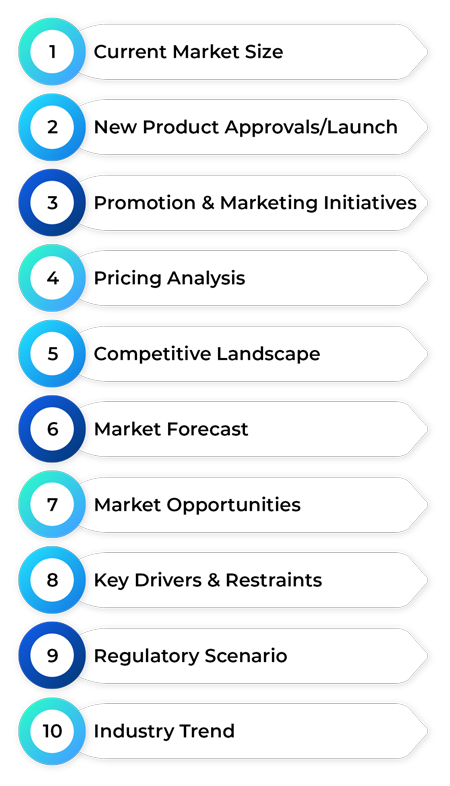
Research on the market is done by industry professionals who provide personalized insights on the industry structure, market segmentation, Type assessment, competitive landscape (CL), along with penetration, and emerging trends. In addition to years of professional experience in their various fields and sectors, their analysis is largely based on primary interview (60%) and secondary research (40%) as well as years of professional experience. In addition, our researchers forecast the market's direction over the following seven years by examining past trends and the market's current position. Additionally, various trends of segments and categories that are geographically portrayed are studied and estimated using primary and secondary research.
The key level executives (VP, CEO, Marketing Directors, and Business Development Managers) of the major industry participants who are active and prominent as well as mid-scale businesses operating in this market were interviewed in-depth for this supply-side report by overall Global Market Research.
Extensive primary research was conducted to gain a deeper grasp of the market and industry. Both primary and secondary research, as well as years of pertinent professional experience, are used to support the analysis. By analyzing past and present market patterns, our experts were able to forecast the market's course over the following seven years. For the geographically offered categories in the list of market tables, it differs per category. In connection with the Global Market research report, we also conducted a number of primary interviews with senior level executives (VP, CEO's, Directors, Marketing Directors, Business Development Managers, CFOs, Technical Consultants, Key Opinion Leaders, Industry Experts, Decision Matrix Authorities, and other crucial individuals) of the key industry players who dominated the Global market.
The primary purpose of secondary research was to gather, identify, and validate the information necessary for the thorough, technical, market-focused, and commercial analysis of the global market. With the use of this study, it was also possible to classify and segment the market in accordance with market trends, geographic markets, and regional considerations linked to market type. Analysts have gathered data in the Distribution Channel for the study of the market from reliable sources including annual reports, journals, white papers, corporate presentations, company websites, international organizations of Energy and Power manufacturers, credible paid databases, and many others to gather reliable intel.
Both top-down and bottom-up methodologies were employed to assess the accuracy of the global market size. The market for as a whole was estimated using these methods for a number of different dependent submarkets. Secondary research was used to address the major industry players, and primary and secondary research was used to calculate their market shares in the various regions. This complete intellectual process includes reading the annual and financial reports of the top market participants and conducting in-depth interviews with top industry executives (VP, CEO, Marketing Directors, and Business Development Managers) to gain important industry insights.
Through reliable secondary sources and validated primary sources, the classification of the global markets and their geographic percentage splits were established. To obtain the final qualitative and quantitative data, all relevant variables that might have an impact on the market under investigation have been taken into consideration, inspected in great depth, verified through primary research, and assessed. This information was collected, added to, and thoroughly examined by professional analysts before being provided in this report. The process used to estimate the overall market size for this study is depicted in the following image as an example.


Report Code :
RL65314
Published on :
Sep 2023
Request a Free Sample Report

 Speak to Analyst