
 +1 915 229 3004 (U.S.) |
  +44 7452 242832 (U.K.)
+1 915 229 3004 (U.S.) | +44 7452 242832 (U.K.)

Global Polymer Nanocomposites Market Size was valued at USD 8.6 Billion in 2022. The Polymer Nanocomposites market industry is projected to grow from USD 10.5 Billion in 2023 to USD 44.3 Billion by 2032, exhibiting a compound annual growth rate (CAGR) of 19.50% during the forecast period (2023 - 2032). Growing applications across a variety of end-user industries as well as increasing uses in electronics, particularly semiconductor applications, are the key market drivers enhancing the market growth.
Download Free Sample to learn more about this report
Source: Secondary Research, Primary Research, RESEARCH LAYER Database and Analyst Review
The expanding product applications across various end-use industries are the primary drivers of market expansion. PNC, for example, is frequently utilized in the automotive sector to create lightweight car parts like tires, exhaust systems, suspension and braking systems, and catalytic converters that enhance overall performance, lighten vehicles, and lower carbon emissions. Along with the implementation of tight regulatory restrictions addressing car emissions, this is growing demand for the commodity. Due to PNC's extensive application in the defense sector for the creation of electromagnetic shielding, sensors, electrically conductive fabrics, ballistic and corrosion protection, and fire retardation, the market is growing. Additionally, the growing use of carbon nanotube (CNT) conductors and tiles for power generation is speeding up the rate of product acceptance. Due to PNC's advancements in tissue engineering, bone reconstruction, biological imaging, nanomedicine, cell tracking, and magnetic bioseparation, the market is growing. Additional factors that contribute to an optimistic market forecast include ongoing nanotechnology research and development, favorable government regulations, skyrocketing sales of consumer electronics, and rising vehicle production.
The market is expanding quickly thanks to important factors like the tremendous demand for lightweight cars and the expanding research and development efforts in the area of nanotechnology. The market for polymer nanocomposites has significantly grown as a result of rising demand from end-use industries such aerospace engineering, automotive, construction, renewable power generation, and food & packaging. Due to the rising demand for polymer nanocomposites in the semiconductor manufacturing industry as a consequence of its superior properties, such as compactness, lightweight design, and electrical conductivity, the market is predicted to expand over the coming years. For well-known manufacturers on the global market, the rising demand for bio-based nanocomposite materials from a variety of industries should be helpful.
Polymer nanocomposites are widely used in the aircraft sector for electronics, anti-lightning and anti-radar shields, and sandwich constructions. To preserve flavor in a variety of foods and beverages, they are also frequently employed in food packaging materials.
A material that has had its structural and functional properties enhanced to perform better in a number of unique applications is referred to as a nanocomposite. The industry is experiencing increasing demand due to the multifunctionality of nanocomposites. Nanoparticles are perfect for use in polymeric materials due to their exceptionally high surface-to-volume and aspect ratios. For cutting-edge applications, these structures combine the best elements of each component to enhance their mechanical and superconducting qualities. Thus, driving the Polymer Nanocomposites market revenue.
The global Polymer Nanocomposites market segmentation, based on Application, includes packaging, automotive, electronics & semiconductor, aerospace & defense, coatings, energy, and others (sports, healthcare). The automotive sector had the largest market share in 2022. In the automotive and aerospace sectors, polymer nanocomposite materials are generally used to replace heavy metal composites in order to considerably reduce weight and improve the fuel efficiency of the automobile or aircraft system. The material is employed by the auto industry to make tires, parts for cars including doors and fuel lubricants, and other internal components. Important characteristics of these materials include their light weight, UV resistance, low wear and corrosion, low friction, and low engine pollution.
The automobile sector will expand faster thanks to the rapid increase in output. By 2030, the number of automobiles is expected to quadruple, rising from 700 million in 2019 to roughly 1.5 billion.
The global Polymer Nanocomposites market segmentation, based on Type, includes carbon nanotubes, metal oxide, nanofiber, nanoclay, graphene, and others (expanded graphite, recycled paper, wood, recycled fibers). The market segment for nanoclay had the most market share in 2022. Nanoclays and their composites have been studied for biomedical applications including bone cement, tissue engineering, medication delivery, wound healing, and enzyme immobilization, among others, due to their non-toxic nature. Based on the form and chemical composition of nanomaterials, nanoclays are categorized as bentonite montmorillonite, halloysite, kaolinite, and hectorite.
Download Free Sample to learn more about this report
Source: Secondary Research, Primary Research, RESEARCH LAYER Database and Analyst Review
By region, Insights into the markets in North America, Europe, Asia-Pacific, and the rest of the world are provided by the study. The North America Polymer Nanocomposites Market dominated this market in 2022 (45.80%). The presence of biomedical and packaging producers in the area will fuel product demand in the approaching years. The business's expansion is being further boosted by changes in the American aerospace and automobile industries. Additionally, the expansion of regional government initiatives to reduce carbon footprints will encourage the market growth of polymer nanocomposites. Further, In the North American area, the U.S. Polymer Nanocomposites market had the biggest market share, while the Canada Polymer Nanocomposites market had the quickest rate of expansion.
Further, the major countries studied in the market report are The US, Canada, German, France, the UK, Italy, Spain, China, Japan, India, Australia, South Korea, and Brazil.
Download Free Sample to learn more about this report
Source: Secondary Research, Primary Research, RESEARCH LAYER Database and Analyst Review
Europe Polymer Nanocomposites market accounts for the significant market share. This is a result of growing demand from both the developed and developing world, including Germany, the U.K., Spain, Italy, and other sectors of the automotive industry and other industries. Further, In the European region, the German Polymer Nanocomposites market had the biggest market share, and the U.K. Polymer Nanocomposites market had the quickest rate of growth.
The Asia Pacific Polymer Nanocomposites market is expected to register fastest growth from 2023 to 2032. This is a result of their widespread use in the manufacturing and automotive industries in countries like China and India. China's aviation industry is projected to buy over 6,000 new aircraft between 2016 and 2033. China's domestic air passenger sector experienced the biggest incremental growth in passenger travels when compared to past years. The government is encouraged by the increase in travelers to spend more money on increasing airline capacity, which in turn drives up the need for polymer nanocomposites. Moreover, In the Asia-Pacific region, the Indian Polymer Nanocomposites market had the quickest rate of growth while China's Polymer Nanocomposites market had the greatest market share.
Leading industry companies are making significant R&D investments in order to diversify their product offerings, which will drive the Polymer Nanocomposites market's expansion. Important market developments include new product releases, contractual agreements, mergers and acquisitions, greater investments, and collaboration with other organizations. Market participants are also engaging in a number of strategic actions to increase their global footprint. The Polymer Nanocomposites sector needs to provide affordable products if it wants to grow and thrive in a more competitive and challenging market environment.
One of the primary business strategies employed by manufacturers in the worldwide Aerospace Foam industry to assist customers and expand the market sector is local manufacturing to reduce operational costs. Some of the biggest benefits to medicine have recently come from the Polymer Nanocomposites sector. Major players in the Polymer Nanocomposites market, including Nanophase Technologies Corporation, The Arkema Group, E. I. Du Pont De Nemours And Company, RTP Company, Showa Denko Carbon, Inc., Inframat Corporation, Powdermet, Inc., Evonik Industries AG, Nanocor, Inc., and Nanocyl S.A., are attempting to increase market demand by investing in research and development operations.
In addition to other cutting-edge nanocomposite formulae that provide outstanding mechanical, thermal, environmental, and processability features, Alpine is a leader in the creation of lightweight, reasonably priced structural thermoplastic nanocomposites. Alpine Advanced Materials revealed in 2019 the commercial licensing and sales of thermoplastic nanocomposites created by Lockheed Martin Aeronautics. This new material will replace a lot of the metal in an airplane's seats, cabin, galley, and tray tables.
Arkema SA (Arkema) specializes in the production of innovative materials and specialized chemicals. Adhesives, biobased materials, coatings, composites, health care, and athletic goods are among the industries for which the company offers solutions. The company's products include technical polymers, filtration and adsorption, organic peroxides, thiochemicals, fluorogases, hydrogen peroxide, acrylics, coating resins, photocure resins, and rheology additives. Agriculture, air conditioning, automotive, chemicals, coating, consumer goods, electrical, oil, health, packaging, plastics, pulp, rubber, sports, and water treatment are a few more industries that use the company's products. The company has operations in North America, Europe, Asia, Canada, and Mexico. France's Colombes is home to Arkema's corporate headquarters. The Arkema Group and RTP Company are the most successful companies in 2021 because they prioritized product introduction and expansion.
The RTP Company was founded in 1982, and Winona, Minnesota serves as its corporate headquarters. RTP is a well-known thermoplastics business that specializes in creating unique materials. The experts at RTP Company use more than 60 different technical resin systems to manufacture specialized thermoplastic composites.
· Nanophase Technologies Corporation
· The Arkema Group
· E. I. Du Pont De Nemours And Company
· RTP Company
· Showa Denko Carbon, Inc.
· Inframat Corporation
· Powdermet, Inc.
· Evonik Industries AG
· Nanocor, Inc
· Nanocyl S.A.
May 2023: The India Brand Equity Foundation (IBEF) projects that by 2025–2026, the country's food processing sector will produce US$ 535 billion. The Indian government, on the other hand, has approved spending USD 15.25 million on 28 food processing projects, helping to reduce food waste and increase consumer demand for recyclable packaging and biodegradable materials.
· Carbon Nanotubes
· Metal Oxide
· Nanofiber
· Nanoclay
· Graphene
· Others (Expanded graphite, Recycled paper, Wood, Recycled fibers)
· Packaging
· Automotive
· Electronics & Semiconductor
· Aerospace & Defense
· Coatings
· Energy
· Others (Sports, Healthcare)
· North America
- US
- Canada
· Europe
- Germany
- France
- UK
- Italy
- Spain
- Rest of Europe
· Asia-Pacific
- China
- Japan
- India
- Australia
- South Korea
- Australia
- Rest of Asia-Pacific
· Rest of the World
- Middle East
- Africa
- Latin America
Report Scope
|
Report Attribute/Metric |
Details |
|
Market Size 2022 |
USD 8.6 Billion |
|
Market Size 2023 |
USD 10.5 Billion |
|
Market Size 2032 |
USD 44.3 Billion |
|
Compound Annual Growth Rate (CAGR) |
19.50% (2023-2032) |
|
Base Year |
2022 |
|
Market Forecast Period |
2023-2032 |
|
Historical Data |
2018- 2022 |
|
Market Forecast Units |
Value (USD Billion) |
|
Report Coverage |
Revenue Forecast, Market Competitive Landscape, Growth Factors, and Trends |
|
Segments Covered |
Type, Application, and Region |
|
Geographies Covered |
North America, Europe, Asia Pacific, and the Rest of the World |
|
Countries Covered |
The US, Canada, German, France, UK, Italy, Spain, China, Japan, India, Australia, South Korea, and Brazil |
|
Key Companies Profiled |
Nanophase Technologies Corporation, The Arkema Group, E. I. Du Pont De Nemours And Company, RTP Company, Showa Denko Carbon, Inc., Inframat Corporation, Powdermet, Inc., Evonik Industries AG, Nanocor, Inc., and Nanocyl S.A. |
|
Key Market Opportunities |
Extensive R&D activities |
|
Key Market Dynamics |
The increasing adoption of engineering plastics across industries and adoption of Polymer Nanocomposites in the aerospace and automotive industries |
The global Polymer Nanocomposites Market was valued at USD 8.6 billion in 2022, and it is estimated to reach USD 44.3 billion by 2032.
exhibiting a compound annual growth rate (CAGR) of 19.50% during the forecast period (2023 - 2032)
North America had the largest share in the global market
The key players in the market are Nanophase Technologies Corporation, The Arkema Group, E. I. Du Pont De Nemours And Company, RTP Company, Showa Denko Carbon, Inc., Inframat Corporation, Powdermet, Inc., Evonik Industries AG, Nanocor, Inc., and Nanocyl S.A.
The Nanoclay Type dominated the market in 2022.
The Automotive Application had the largest share in the global market.
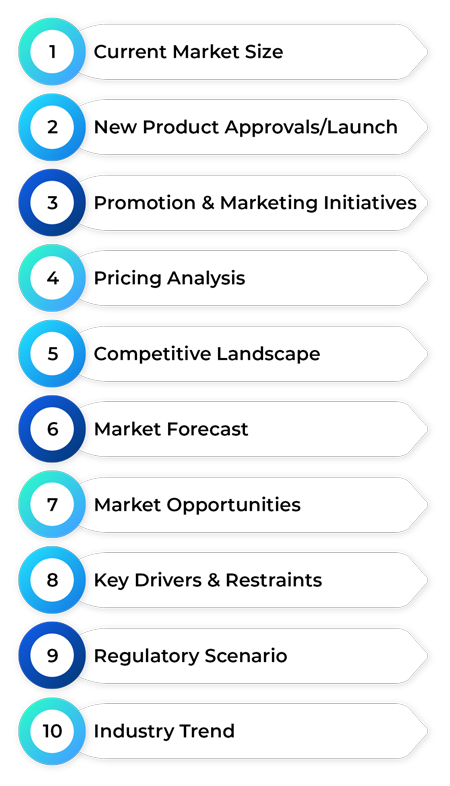
Research on the market is done by industry professionals who provide personalized insights on the industry structure, market segmentation, Type assessment, competitive landscape (CL), along with penetration, and emerging trends. In addition to years of professional experience in their various fields and sectors, their analysis is largely based on primary interview (60%) and secondary research (40%) as well as years of professional experience. In addition, our researchers forecast the market's direction over the following seven years by examining past trends and the market's current position. Additionally, various trends of segments and categories that are geographically portrayed are studied and estimated using primary and secondary research.
The key level executives (VP, CEO, Marketing Directors, and Business Development Managers) of the major industry participants who are active and prominent as well as mid-scale businesses operating in this market were interviewed in-depth for this supply-side report by overall Global Market Research.
Extensive primary research was conducted to gain a deeper grasp of the market and industry. Both primary and secondary research, as well as years of pertinent professional experience, are used to support the analysis. By analyzing past and present market patterns, our experts were able to forecast the market's course over the following seven years. For the geographically offered categories in the list of market tables, it differs per category. In connection with the Global Market research report, we also conducted a number of primary interviews with senior level executives (VP, CEO's, Directors, Marketing Directors, Business Development Managers, CFOs, Technical Consultants, Key Opinion Leaders, Industry Experts, Decision Matrix Authorities, and other crucial individuals) of the key industry players who dominated the Global market.
The primary purpose of secondary research was to gather, identify, and validate the information necessary for the thorough, technical, market-focused, and commercial analysis of the global market. With the use of this study, it was also possible to classify and segment the market in accordance with market trends, geographic markets, and regional considerations linked to market type. Analysts have gathered data in the Distribution Channel for the study of the market from reliable sources including annual reports, journals, white papers, corporate presentations, company websites, international organizations of Energy and Power manufacturers, credible paid databases, and many others to gather reliable intel.
Both top-down and bottom-up methodologies were employed to assess the accuracy of the global market size. The market for as a whole was estimated using these methods for a number of different dependent submarkets. Secondary research was used to address the major industry players, and primary and secondary research was used to calculate their market shares in the various regions. This complete intellectual process includes reading the annual and financial reports of the top market participants and conducting in-depth interviews with top industry executives (VP, CEO, Marketing Directors, and Business Development Managers) to gain important industry insights.
Through reliable secondary sources and validated primary sources, the classification of the global markets and their geographic percentage splits were established. To obtain the final qualitative and quantitative data, all relevant variables that might have an impact on the market under investigation have been taken into consideration, inspected in great depth, verified through primary research, and assessed. This information was collected, added to, and thoroughly examined by professional analysts before being provided in this report. The process used to estimate the overall market size for this study is depicted in the following image as an example.


Report Code :
RL6566
Published on :
Aug 2023
Request a Free Sample Report

 Speak to Analyst