
 +1 915 229 3004 (U.S.) |
  +44 7452 242832 (U.K.)
+1 915 229 3004 (U.S.) | +44 7452 242832 (U.K.)

Global Restaurant Delivery Robot Market Size was valued at USD 11.7 Billion in 2022. The Restaurant Delivery Robot Market industry is projected to grow from USD 13.9 Billion in 2023 to USD 99.6 Billion by 2032, exhibiting a compound annual growth rate (CAGR) of 24.2% during the forecast period (2023 - 2032). Growth in the need for delivery services, cost effectiveness and operational advantages, addressing labor shortages, contactless delivery and hygiene, technological advancements, customer experience, and novelty, Sustainability of the Environment, Regulatory Acceptance, and Support, are the key market drivers enhancing the market growth.
Download Free Sample to learn more about this report
Source: Secondary Research, Primary Research, RESEARCH LAYER Database and Analyst Review
Robotic restaurant delivery systems' potential to reduce labor costs is one of its key operational benefits. Restaurants invest a significant amount of money on labor, especially when it comes to hiring and managing delivery staff. By using delivery robots, restaurants can do away with the need for human delivery staff and the accompanying expenditures, such as pay, benefits, and training fees. This cost-saving potential is particularly appealing for restaurants with high delivery volumes or those situated in regions with high labor costs. Because they are designed to work autonomously, delivery robots can plan the optimal routes, avoid congested roads, and make on-time deliveries. Robots are not subject to the same physical limitations, rest periods, or tiredness as human delivery personnel. This results in quicker order fulfillment, more efficient shipping, and more customer satisfaction. By streamlining their operations and completing a greater number of orders in a shorter amount of time, restaurants may increase their overall efficiency and revenue potential.
While human delivery personnel have regular hours, restaurant delivery robots may operate around-the-clock. This ensures a consistent caliber of service. This capability is especially helpful for eateries who give options for delivery in the early morning or late at night. By using delivery robots, restaurants may extend their delivery times without incurring additional labor expenditures for overtime or overnight shifts. The ease of 24-hour delivery benefits the customer while increasing order volume and generating income for the company. Robotic delivery services are scalable and responsive to demand changes. To meet the increased order volume during busy periods or peak hours, restaurants can employ extra robots. This scalability allows restaurants to maintain efficient delivery operations, cut down on order delays, and prevent bottlenecks. Additionally, restaurants may reach a larger customer base without having to open several physical locations because to delivery robots' versatility.
Customer dissatisfaction can be negatively impacted by incorrect addresses or order mix-ups during delivery, which can also raise expenses for restaurants. Modern technology, including barcode scanners, GPS, and mapping systems, is installed on robots that bring food from restaurants to ensure accurate and error-free deliveries. By reducing order errors and increasing delivery accuracy, restaurants can save money on redelivery fees, order replacement fees, and customer compensation. Thus, driving the Restaurant Delivery Robot Market revenue.
The global Restaurant Delivery Robot Market segmentation, based on Robot type, includes Semi-Autonomous and Fully Autonomous. The Semi-Autonomous robot type dominated the market in 2022. Semi-autonomous robots frequently require some level of human control or help, but fully autonomous robots are designed to operate independently without any human intervention.
The global Restaurant Delivery Robot Market segmentation, based on Service Type, includes limited and Full-Service. The limited segment generated the most income in 2022. Limited service establishments are frequently used to describe fast food or quick service businesses where the focus is on providing efficient, timely service and delivery.
The global Restaurant Delivery Robot Market segmentation, based on Restaurant Type, includes Independent and Chained. In 2022, the Independent type held the biggest market share, and it is anticipated that it would maintain its dominance for the remainder of the forecast. Restaurants that are not a part of any large corporate chains are said to be independently owned and run. All decisions relating to the operation of the restaurant must be made by the owner.
The global Restaurant Delivery Robot Market segmentation, based on Load Capacity, includes 10 KG, 10-50 KG and more than 50 KG. Due to the fact that robots in this market can satisfy the needs of restaurants, which frequently need to deliver a variety of culinary products, including meals, beverages, and side dishes, the 10-50 kg category had the biggest share of the market in 2022 at 47.90%.
Download Free Sample to learn more about this report
Source: Secondary Research, Primary Research, RESEARCH LAYER Database and Analyst Review
Insights into the markets in North America, Europe, Asia-Pacific, and the rest of the world are provided by the study. The North America Restaurant Delivery Robot Market dominated this market in 2022 (45.80%). In North America, the meal delivery market is well-established, with a sizable network of restaurants, delivery platforms, and logistics firms. The implementation of robotic restaurant delivery services is made possible by this technology. Further, In the North American area, the U.S. Restaurant Delivery Robot market had the biggest market share, while the Canada Restaurant Delivery Robot market had the quickest rate of expansion.
Further, the major countries studied in the market report are The U.S., Canada, German, France, the UK, Italy, Spain, China, Japan, India, Australia, South Korea, and Brazil.
Download Free Sample to learn more about this report
Source: Secondary Research, Primary Research, RESEARCH LAYER Database and Analyst Review
Restaurant Delivery in Europe The second-largest market share belongs to Robot Market. Numerous European countries have strict labor rules that include high minimum wages and employment time restrictions. These variables have increased the cost of hiring and keeping delivery personnel. Robotic restaurant delivery services offer an alternative method for addressing these staffing shortages and reducing operating costs. Further, In the European region, the German Restaurant Delivery Robot market had the biggest market share, and the U.K. Restaurant Delivery Robot market had the quickest rate of growth.
From 2023 to 2032, the Asia-Pacific Restaurant Delivery Robot Market is anticipated to experience the quickest CAGR growth. A large client base that produces a high demand for food delivery services makes the use of restaurant delivery robots possible. The enormous scale of the market in the Asia-Pacific region contributes to its dominance in the restaurant delivery robot industry. Moreover, In the Asia-Pacific region, the Indian Restaurant Delivery Robot market had the quickest rate of growth while China's Restaurant Delivery Robot market had the greatest market share.
Leading industry companies are making significant R&D investments in order to diversify their product offerings, which will drive the Restaurant Delivery Robot market's expansion. Important market developments include new product releases, contractual agreements, mergers and acquisitions, greater investments, and collaboration with other organizations. Market participants are also engaging in a number of strategic actions to increase their global footprint. The Restaurant Delivery Robot sector needs to provide affordable products if it wants to grow and thrive in a more competitive and challenging market environment.
One of the primary business strategies employed by manufacturers in the worldwide Restaurant Delivery Robot industry to assist customers and expand the market sector is local manufacturing to reduce operational costs. Some of the biggest benefits to medicine have recently come from the Restaurant Delivery Robot sector. Major players in the Restaurant Delivery Robot Market, including Amazon Robotics, Robby Technologies, Boston Dynamics Eliport, Starship Technologies, Cleveron, Miso Robotics, Kitchen Robotics, Bear Robotics Inc., Cyan Robotics, and others, are attempting to increase market demand by investing in research and development operations.
prestigious robotics industry Robotic deliveries are a specialty of Starship Technologies. The business, founded in 2014 by Ahti Heinla and Janus Friis, aims to upend the last-mile delivery industry by deploying autonomous robots to provide efficient and competitive delivery services. The Starship Technologies delivery robots are designed to maneuver through neighborhood streets and sidewalks while delivering products to customers within a set range. These robots use a range of sensors, cameras, and cutting-edge machine learning algorithms to move autonomously, avoid obstacles, and interact safely with pedestrians and other urban characteristics. The robots are designed to carry a payload of food, packages, and other items, so they can be utilized for a variety of delivery tasks. Customers can make purchases through the Starship mobile app, and the robots are then dispatched to pick up the products from neighboring stores and deliver them right to the customers' doorsteps. The business has developed a robust infrastructure to support its delivery operations. This includes real-time monitoring tools, mapping software, and remote controllers that can take control of the robots in an emergency. Thanks to the secure chambers that Starship Technologies' robots are equipped with, the delivery materials are safe and secure. Starship Technologies has partnered with a variety of companies and organizations, including well-known stores, restaurants, and universities, to put its delivery robot services into action.
A business called Amazon Robotics focuses in creating cutting-edge techniques for automating fulfillment processes including picking, packing, sorting, and transferring products in warehouses. In order to increase production and speed up procedures, their robotic equipment work in tandem with human workers. The core of Amazon Robotics' technology is the use of autonomous mobile robots (AMRs). These robots are designed to navigate warehouse settings on their own, dodging hazards and interacting with humans in a safe way. Modern computer vision, sensor fusion, and machine learning techniques are used to accomplish this. AMRs can transport goods inside warehouses, move storage pods to workstations, and enhance inventory flow. The software and control systems built into the robotic systems developed by Amazon Robotics enable seamless coordination and synchronization with Amazon's fulfillment processes. The systems can adapt to shifting demand, optimize routes, and dynamically distribute resources to boost output and decrease processing times.
· Amazon Robotics
· Robby Technologies
· Boston Dynamics Eliport
· Starship Technologies
· Cleveron
· Miso Robotics
· Kitchen Robotics
· Bear Robotics, Inc.
· Cyan Robotics
June 2022: Miso Robotics will put Flippy 2, a robotic arm, to the test in order to evaluate its machine learning and artificial intelligence skills. The Wimpy restaurant at the Dubai Mall will be reached by a robotic arm. This robotic arm can whip up a variety of dishes in a flash.
May 2022: Cyan Robotics, doing business as Coco, is giving the market for home delivery robots a 15-minute restaurant delivery boost. Coco the robot will be driven by a professional "pilot" to the restaurant where customers may place orders and pick them up. The delivery bot leaves towards the customer's house when the restaurant enters the order.
· Semi-Autonomous
· Fully Autonomous
· Limited
· Full-Service
· Independent
· Chained
· 10 KG
· 10-50 KG
· more than 50 KG
· North America
- U.S.
- Canada
· Europe
- Germany
- France
- UK
- Italy
- Spain
- Rest of Europe
· Asia-Pacific
- China
- Japan
- India
- Australia
- South Korea
- Australia
- Rest of Asia-Pacific
· Rest of the World
- Middle East
- Africa
- Latin America
|
Report Attribute/Metric |
Details |
|
Market Size 2022 |
USD 11.7 Billion |
|
Market Size 2023 |
USD 13.9 Billion |
|
Market Size 2032 |
USD 99.6 Billion |
|
Compound Annual Growth Rate (CAGR) |
24.2% (2023-2032) |
|
Base Year |
2022 |
|
Market Forecast Period |
2023-2032 |
|
Historical Data |
2018- 2022 |
|
Market Forecast Units |
Value (USD Billion) |
|
Report Coverage |
Revenue Forecast, Market Competitive Landscape, Growth Factors, and Trends |
|
Segments Covered |
Robot Type , Service Type , Restaurant Type , Load Capacity, and Region |
|
Geographies Covered |
North America, Europe, Asia Pacific, and the Rest of the World |
|
Countries Covered |
The U.S., Canada, German, France, UK, Italy, Spain, China, Japan, India, Australia, South Korea, and Brazil |
|
Key Companies Profiled |
Amazon Robotics, Robby Technologies, Boston Dynamics Eliport, Starship Technologies, Cleveron, Miso Robotics, Kitchen Robotics, Bear Robotics Inc., Cyan Robotics |
|
Key Market Opportunities |
Technological Progress |
|
Key Market Dynamics |
Regulatory Acceptance and Support |
The global Restaurant Delivery Robot Market was valued at USD 11.7 billion in 2022, and it is estimated to reach USD 99.6 billion by 2032.
The global market is projected to grow at a CAGR of 24.2% during the forecast period, 2023-2032.
North America had the largest share in the global market
The key players in the market are Amazon Robotics, Robby Technologies, Boston Dynamics Eliport, Starship Technologies, Cleveron, Miso Robotics, Kitchen Robotics, Bear Robotics Inc., Cyan Robotics.
The Semi-Autonomous category dominated the market in 2022.
The 10-50 KG had the largest share in the global market.
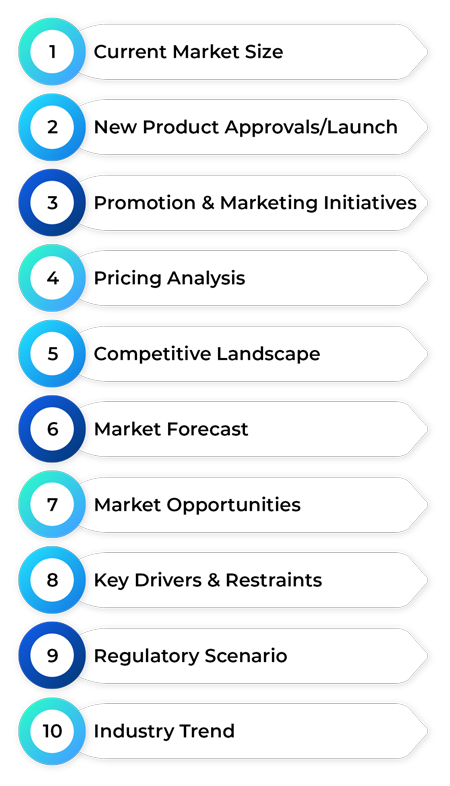
Research on the market is done by industry professionals who provide personalized insights on the industry structure, market segmentation, Type assessment, competitive landscape (CL), along with penetration, and emerging trends. In addition to years of professional experience in their various fields and sectors, their analysis is largely based on primary interview (60%) and secondary research (40%) as well as years of professional experience. In addition, our researchers forecast the market's direction over the following seven years by examining past trends and the market's current position. Additionally, various trends of segments and categories that are geographically portrayed are studied and estimated using primary and secondary research.
The key level executives (VP, CEO, Marketing Directors, and Business Development Managers) of the major industry participants who are active and prominent as well as mid-scale businesses operating in this market were interviewed in-depth for this supply-side report by overall Global Market Research.
Extensive primary research was conducted to gain a deeper grasp of the market and industry. Both primary and secondary research, as well as years of pertinent professional experience, are used to support the analysis. By analyzing past and present market patterns, our experts were able to forecast the market's course over the following seven years. For the geographically offered categories in the list of market tables, it differs per category. In connection with the Global Market research report, we also conducted a number of primary interviews with senior level executives (VP, CEO's, Directors, Marketing Directors, Business Development Managers, CFOs, Technical Consultants, Key Opinion Leaders, Industry Experts, Decision Matrix Authorities, and other crucial individuals) of the key industry players who dominated the Global market.
The primary purpose of secondary research was to gather, identify, and validate the information necessary for the thorough, technical, market-focused, and commercial analysis of the global market. With the use of this study, it was also possible to classify and segment the market in accordance with market trends, geographic markets, and regional considerations linked to market type. Analysts have gathered data in the Distribution Channel for the study of the market from reliable sources including annual reports, journals, white papers, corporate presentations, company websites, international organizations of Energy and Power manufacturers, credible paid databases, and many others to gather reliable intel.
Both top-down and bottom-up methodologies were employed to assess the accuracy of the global market size. The market for as a whole was estimated using these methods for a number of different dependent submarkets. Secondary research was used to address the major industry players, and primary and secondary research was used to calculate their market shares in the various regions. This complete intellectual process includes reading the annual and financial reports of the top market participants and conducting in-depth interviews with top industry executives (VP, CEO, Marketing Directors, and Business Development Managers) to gain important industry insights.
Through reliable secondary sources and validated primary sources, the classification of the global markets and their geographic percentage splits were established. To obtain the final qualitative and quantitative data, all relevant variables that might have an impact on the market under investigation have been taken into consideration, inspected in great depth, verified through primary research, and assessed. This information was collected, added to, and thoroughly examined by professional analysts before being provided in this report. The process used to estimate the overall market size for this study is depicted in the following image as an example.


Report Code :
RL65181
Published on :
Sep 2023
Request a Free Sample Report

 Speak to Analyst