
 +1 915 229 3004 (U.S.) |
  +44 7452 242832 (U.K.)
+1 915 229 3004 (U.S.) | +44 7452 242832 (U.K.)

Global Sensor Data Analytics Market Size was valued at USD 1.2 Billion in 2022. The Sensor Data Analytics market Component is projected to grow from USD 1.6 Billion in 2023 to USD 7.7 Billion by 2032, exhibiting a compound annual growth rate (CAGR) of 24.54% during the forecast period (2023 - 2032). Applications in the smart grid, fleet management, healthcare sensing, smart appliances, and other areas, along with a surge in the usage of high-tech sensors, are the key market drivers enhancing the market growth.
Download Free Sample to learn more about this report.
Source: Secondary Research, Primary Research, RESEARCH LAYER Database and Analyst Review
The market for sensor data analytics is being driven by a rising number of applications in the smart grid, fleet management, healthcare sensing, smart appliances, and other industries. One of the main factors driving the market's growth is the rising use of sensors for rapid processes. Due to the increasing demand for accuracy in data process management and growing concern over the necessity to convert data into measurable form, sensor data analytics are becoming more and more necessary. Other significant factors, such as increased urbanization and rising levels of disposable income, will cause the market for sensor data analytics to grow more slowly. The market for sensor data analytics will be fueled by the growing popularity of real-time sensor data visualization. The market for sensor data analytics will also be impacted by the rising popularity of big data analytics for the aforementioned projected period. Additionally, the rising adoption of the internet of things (IoT) and the introduction of better sensors would raise the likelihood that the market for sensor data analytics will grow favorably. Due to technological development and the creation of new markets, it is projected that the sensor data analytics market would expand over the next years.
As demand for wearable technology rises and more sophisticated sensors are developed, the market for sensor data analytics is growing. The demand for various forms of visualised real-time sensor data and information is increasing, which is driving the market for sensor data analytics. However, the market's growth is constrained by high installation costs, a lack of skilled labor, and a lack of consumer awareness of sensor data analytics. On the other hand, improved sensors and increased IoT usage are likely to offer attractive opportunities for market expansion in sensor data analytics throughout the course of the projected timeframe.
A few crucial factors can be used to summarize the underlying causes of the unavoidable Sensor Data Analytics Market Trends and expanding sales. The expansion of industrial lots and other types of lots in use is the main driver. Consumer electronics are evolving and developing at a major and fundamental rate. As a result, there is a greater need for Sensor Data Analytics Market Forecast. Recent years have seen a substantial advancement in sensors themselves. Additionally, as more and more common sensors of all kinds are being employed in the most recent and technologically advanced cellphones, the requirement has increased. Demand in the primary automation industry (Industry 4.0) is enormous and strong, which surely helped the market expand. Rising trends and growth are being experienced in the steadfast automotive industry, which is one of the key factors driving the Sensor Data Analytics Market Insights. Additionally, wearables are in higher demand.
According to recent data from the Sensor Market Report for the year 2016, the APAC region has contributed around more than 45% to the global demand for sensor data analytics. The global market for sensor data analytics is divided into North America, Europe, Asia Pacific, and the Rest of the World (ROW). All of the big companies play crucial roles in the rapidly expanding industry for sensor data analytics. Despite the COVID 19 lockout that has been put in place, there is no doubt that the traction transformer industry trends and future chances will see significant rising potential. The newest breakthrough, the Internet of Things (IoT), is expanding swiftly and continuously. Thus, driving the Sensor Data Analytics market revenue.
The global Sensor Data Analytics market segmentation, based on Component, includes hardware and software. Hardware segment dominated the global market in 2022. The rise of the market is directly related to the rising use of IoT, smart, and connected devices for various industrial operations. The rapid expansion of the use of sensor nodes, routers, and gateways to build network infrastructure for diverse client segments has a significant impact on the need for hardware platforms.
The global Sensor Data Analytics market segmentation, based on Services, includes managed and professional. Professional segment dominated the global market in 2022. The increasing efforts made by small and medium-sized firms to speed up their own expansion are primarily responsible for the spike in category growth. Sensor data analytics can be used by SMEs to organize and analyze a sizable amount of complicated data, which is now solely managed by professional services.
The global Sensor Data Analytics market segmentation, based on Application, includes manufacturing, healthcare, automotive, BFSI, telecommunication, and others. Healthcare segment dominated the global Sensor Data Analytics market in 2022. The need for better patient care, increased expectations for improved clinical results, and other factors have all contributed to an increase in demand for sensor data analytics.
Download Free Sample to learn more about this report.
Source: Secondary Research, Primary Research, RESEARCH LAYER Database and Analyst Review
Insights into the markets in North America, Europe, Asia-Pacific, and the rest of the world are provided by the study. The Asia Pacific Sensor Data Analytics market dominated this market in 2022 (45.80%). The market for sensor data analytics in the Asia Pacific region has been largely boosted by the significant presence of large manufacturing companies in countries like China and India. Moreover, In the Asia-Pacific region, the Indian Sensor Data Analytics market had the quickest rate of growth while China's Sensor Data Analytics market had the greatest market share.
Further, the major countries studied in the market report are The US, Canada, German, France, the UK, Italy, Spain, China, Japan, India, Australia, South Korea, and Brazil.
Download Free Sample to learn more about this report.
Source: Secondary Research, Primary Research, RESEARCH LAYER Database and Analyst Review
From 2023 to 2032, the North American Sensor Data Analytics Market is anticipated to experience rapid expansion. This is a result of the information and communication technology (ICT) sector's technological advancements as well as the industry-wide rapid expansion of artificial intelligence (AI) and the internet of things (IoT). The growing demand for predictive analytics in many industries for forecasting and machine learning, as well as research and innovation in the creation of wireless sensors for use in consumer electronics and healthcare, are all having a positive impact on the growth of the sensor data analytics industry. Further, In the North American area, the U.S. Sensor Data Analytics market had the biggest market share, while the Canada Sensor Data Analytics market had the quickest rate of expansion.
In 2022, the Europe Sensor Data Analytics market held a sizable market share. This development can be linked to the area's ongoing technological improvements, which have assisted in driving up demand for and sales of sensor data analytics. Further, In the European region, the German Sensor Data Analytics market had the biggest market share, and the U.K. Sensor Data Analytics market had the quickest rate of growth.
Leading industry companies are making significant R&D investments in order to diversify their product offerings, which will drive the Sensor Data Analytics market's expansion. Important market developments include new product releases, contractual agreements, mergers and acquisitions, greater investments, and collaboration with other organizations. Market participants are also engaging in a number of strategic actions to increase their global footprint. The Sensor Data Analytics sector needs to provide affordable products if it wants to grow and thrive in a more competitive and challenging market environment.
One of the primary business strategies employed by manufacturers in the worldwide Sensor Data Analytics industry to assist customers and expand the market sector is local manufacturing to reduce operational costs. Some of the biggest benefits to medicine have recently come from the Sensor Data Analytics sector. Major players in the Sensor Data Analytics market, including Tata Consultancy Services, International Business Machines Corporation, SAP AG, Cisco Systems Inc., Microsoft Corporation, Hewlett Packard Enterprise Company, Qualcomm Inc., Schneider Electric SE, Verizon Communications, and Talend, are attempting to increase market demand by investing in research and development operations.
Microsoft Corp. (Microsoft) offers a variety of software-related services, including development, licensing, and support. The company offers a wide range of server applications, desktop and server administration tools, video games, cross-device productivity tools, business solution tools, and operating systems. It also offers training and certification services. It also develops, manufactures, and sells hardware products like PCs, tablets, game consoles, and other cutting-edge technology. In May 2022, Microsoft and Itron, an American technology company, partnered. This alliance intends to make cloud computing technology available to enterprises and smart cities, accelerating the shift to cloud-native architecture.
Qualcomm Inc. creates and develops wireless telecommunications equipment and services. System software and integrated circuits for mobile phones and other wireless products are sold by the company. Its product portfolio consists of integrated circuits for radio frequency transceivers, cellular modems, consumer wireless devices, power management, and wireless connection. Mobile phones, laptops, tablets, cellular handsets, cameras, servers, routers, access points, wearable technology, voice and music devices, gateway equipment, consumer electronics, desktop computers, and Internet of Things (IoT) devices are just a few of the devices that use the company's products. Among the markets the company operates in are Brazil, China, Germany, Singapore, India, Japan, Taiwan, South Korea, and the US. Qualcomm's global headquarters are in San Diego, California. In April 2022, Qualcomm successfully bought Arriver, a subsidiary of SSW Partners.
· Tata Consultancy Services
· International Business Machines Corporation
· SAP AG
· Cisco Systems Inc.
· Microsoft Corporation
· Hewlett Packard Enterprise Company
· Qualcomm Inc.
· Schneider Electric SE
· Verizon Communications
· Talend
October 2021: Cisco purchased Epsagon, a modern observability vendor. The company thought that this acquisition will enhance its efforts on full-stack observability for cloud-native environments. These metrics, events, metrics, traces, and logs make up the telemetry.
· Hardware
· Software
· Managed
· Professional
· Manufacturing
· Healthcare
· Automotive
· BFSI
· Telecommunication
· Others
· North America
- US
- Canada
· Europe
- Germany
- France
- UK
- Italy
- Spain
- Rest of Europe
· Asia-Pacific
- China
- Japan
- India
- Australia
- South Korea
- Australia
- Rest of Asia-Pacific
· Rest of the World
- Middle East
- Africa
- Latin America
Report Scope
|
Report Attribute/Metric |
Details |
|
Market Size 2022 |
USD 1.2 Billion |
|
Market Size 2023 |
USD 1.6 Billion |
|
Market Size 2032 |
USD 7.7 Billion |
|
Compound Annual Growth Rate (CAGR) |
24.54% (2023-2032) |
|
Base Year |
2022 |
|
Market Forecast Period |
2023-2032 |
|
Historical Data |
2018- 2022 |
|
Market Forecast Units |
Value (USD Billion) |
|
Report Coverage |
Revenue Forecast, Market Competitive Landscape, Growth Factors, and Trends |
|
Segments Covered |
Component, Services, Application, and Region |
|
Geographies Covered |
North America, Europe, Asia Pacific, and the Rest of the World |
|
Countries Covered |
The U.S., Canada, German, France, U.K, Italy, Spain, China, Japan, India, Australia, South Korea, and Brazil |
|
Key Companies Profiled |
Tata Consultancy Services, International Business Machines Corporation, SAP AG, Cisco Systems Inc., Microsoft Corporation, Hewlett Packard Enterprise Company, Qualcomm Inc., Schneider Electric SE, Verizon Communications, and Talend |
|
Key Market Opportunities |
Increased usage of internet of things (IoT) |
|
Key Market Dynamics |
The rising number of applications in smart grid, fleet management, healthcare sensing, smart appliances and others and increase in introduction of advanced sensors |
The global Sensor Data Analytics market size was valued at USD 1.2 Billion in 2022 and is expected to reach USD 7.7 billion in 2032
The global market is projected to grow at a CAGR of 24.54% during the forecast period, 2023-2032.
Asia Pacific had the largest share in the global market
The key players in the market are Tata Consultancy Services, International Business Machines Corporation, SAP AG, Cisco Systems Inc., Microsoft Corporation, Hewlett Packard Enterprise Company, Qualcomm Inc., Schneider Electric SE, Verizon Communications, and Talend
The Hardware Component dominated the market in 2022.
The Professional Services had the largest share in the global market.
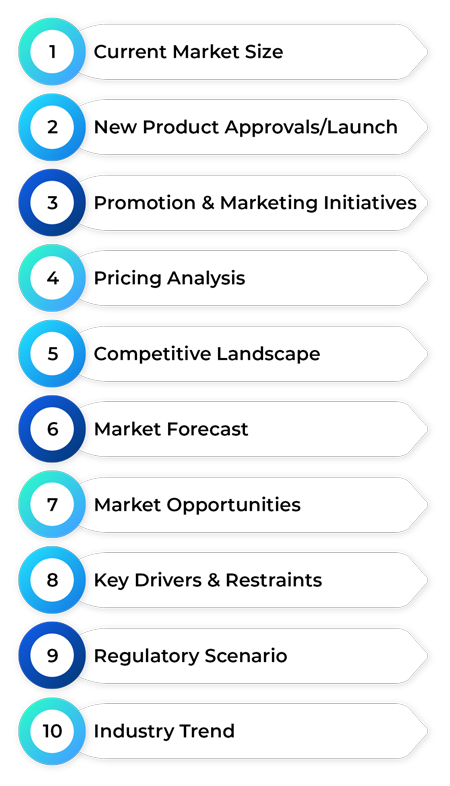
Research on the market is done by industry professionals who provide personalized insights on the industry structure, market segmentation, Type assessment, competitive landscape (CL), along with penetration, and emerging trends. In addition to years of professional experience in their various fields and sectors, their analysis is largely based on primary interview (60%) and secondary research (40%) as well as years of professional experience. In addition, our researchers forecast the market's direction over the following seven years by examining past trends and the market's current position. Additionally, various trends of segments and categories that are geographically portrayed are studied and estimated using primary and secondary research.
The key level executives (VP, CEO, Marketing Directors, and Business Development Managers) of the major industry participants who are active and prominent as well as mid-scale businesses operating in this market were interviewed in-depth for this supply-side report by overall Global Market Research.
Extensive primary research was conducted to gain a deeper grasp of the market and industry. Both primary and secondary research, as well as years of pertinent professional experience, are used to support the analysis. By analyzing past and present market patterns, our experts were able to forecast the market's course over the following seven years. For the geographically offered categories in the list of market tables, it differs per category. In connection with the Global Market research report, we also conducted a number of primary interviews with senior level executives (VP, CEO's, Directors, Marketing Directors, Business Development Managers, CFOs, Technical Consultants, Key Opinion Leaders, Industry Experts, Decision Matrix Authorities, and other crucial individuals) of the key industry players who dominated the Global market.
The primary purpose of secondary research was to gather, identify, and validate the information necessary for the thorough, technical, market-focused, and commercial analysis of the global market. With the use of this study, it was also possible to classify and segment the market in accordance with market trends, geographic markets, and regional considerations linked to market type. Analysts have gathered data in the Distribution Channel for the study of the market from reliable sources including annual reports, journals, white papers, corporate presentations, company websites, international organizations of Energy and Power manufacturers, credible paid databases, and many others to gather reliable intel.
Both top-down and bottom-up methodologies were employed to assess the accuracy of the global market size. The market for as a whole was estimated using these methods for a number of different dependent submarkets. Secondary research was used to address the major industry players, and primary and secondary research was used to calculate their market shares in the various regions. This complete intellectual process includes reading the annual and financial reports of the top market participants and conducting in-depth interviews with top industry executives (VP, CEO, Marketing Directors, and Business Development Managers) to gain important industry insights.
Through reliable secondary sources and validated primary sources, the classification of the global markets and their geographic percentage splits were established. To obtain the final qualitative and quantitative data, all relevant variables that might have an impact on the market under investigation have been taken into consideration, inspected in great depth, verified through primary research, and assessed. This information was collected, added to, and thoroughly examined by professional analysts before being provided in this report. The process used to estimate the overall market size for this study is depicted in the following image as an example.


Report Code :
RL65231
Published on :
Sep 2023
Request a Free Sample Report

 Speak to Analyst