
 +1 915 229 3004 (U.S.) |
  +44 7452 242832 (U.K.)
+1 915 229 3004 (U.S.) | +44 7452 242832 (U.K.)

In 2022, the Stroke Assistive Devices Market was valued at USD 0.78 billion. The stroke assistive devices market industry is projected to grow from USD 0.82 billion in 2023, reaching USD 1.46 billion by 2032, demonstrating a robust compound annual growth rate (CAGR) of 7.30% during the forecast period from 2023 to 2032. The surge in stroke disorders worldwide and increased investments in research and development are the key drivers behind this market expansion.
Download Free Sample to learn more about this report
Rising Stroke Cases Globally: The prevalence of strokes has been on the rise due to factors such as blocked arteries and vascular leakage. In 2022, the World Stroke Organization reported 12.2 million new stroke cases annually, with one in four people over 25 experiencing a stroke in their lifetime. Moreover, over 101 million individuals worldwide have encountered strokes. The demand for stroke assistive devices is surging, prompting major players like Health Robotics S.R.L. (Italy), Mazor Robotics Ltd (Israel), and Intuitive Surgical Inc (US) to invest in advanced technology solutions to meet the needs of stroke patients and positively impact market growth.
The market segments based on type include mobility assistive devices, fixed assistive devices, communication devices, and cognitive devices. Mobility assistive devices dominated in 2022 due to their ability to enhance mobility and enable individuals to perform daily tasks independently.
In May 2019, ReWalk received the CE mark for its "ReStore Exo-Suit Stroke Rehabilitation Device," allowing its sale in the European Union. This innovative medical device caters to a diverse patient population suffering from mobility issues.
The market segments by application encompass hospitals, specialty clinics, physiotherapy centers, ambulatory surgical centers, home care settings, rehabilitation centers, and others. Home care settings held the largest share in 2022, driven by patient preference for in-home treatment to avoid hospitalization risks. The growing elderly population and rising stroke incidents further boost demand for stroke assistive devices in home care settings. Hospitals, however, remain crucial for initial stroke patient recovery.
The market segments by distribution channel include direct sales, online sales, retail pharmacies, and medical stores. Retail pharmacies dominated the market in 2022 due to the availability of knowledgeable medical retail staff who can provide guidance on product application and usage.
The market is segmented by region into North America, Europe, Asia-Pacific, and the Rest of the World.
North America: In 2022, the North American Stroke Assistive Devices market was valued at USD 0.4 billion, and it is expected to exhibit a 6.9% CAGR during the study period. Factors driving growth include top-notch healthcare infrastructure, high stroke-related research investment, and a rising incidence of strokes.
Europe: Europe's stroke assistive devices market holds the second-largest market share due to advanced medical facilities, increasing research and development activities, and a growing presence of manufacturers. Germany and the UK are key players in this region.
Asia-Pacific: The Asia-Pacific market is poised for high growth from 2023 to 2032, driven by an aging population, a preference for better treatment options, increasing awareness of advanced stroke assistive medical devices, and improved economic conditions. China and India are major contributors to this growth.
Rest of the World: This region includes the Middle East, Africa, and Latin America. Latin America leads in this region due to improving medical facilities, increased medical education, and government support for healthcare infrastructure development.
The Stroke Assistive Devices Market features numerous international, regional, and local players. Competition centers on factors such as cost, product quality, reliability, and post-sales services. Manufacturers are heavily investing in research and development to expand their product portfolios. Local manufacturing is a key strategy to reduce operating costs.
· AnthroTronix (US)
· ReWalk Robotics (US)
· Bionik Laboratories (US)
· Saebo (US)
· Ekso Bionics (US)
· Bioxtreme Robotics Rehabilitation (Israel)
· Mazor Robotics Ltd. (Israel)
· Intuitive Surgical Inc. (US)
· Interactive Motion Technologies (US)
· Accuray, Inc (US)
In August 2023, ReWalk (US) announced its acquisition of AlterG, a leading developer and supplier of Anti-Gravity systems for neurological rehabilitation and physical therapy. This acquisition enhances ReWalk's product portfolio, customer-facing expertise, and growth prospects.
In May 2023, Bionik Laboratories entered into a distribution agreement with Pro-Med Technology for the distribution of InMotion Robotic Devices in Hong Kong, boosting its business growth in the region.
Market Segmentation for Stroke Assistive Devices:
Types of Stroke Assistive Devices:
· Mobility Assistive Devices
· Fixed Assistive Devices
· Communication Devices
· Cognitive Devices
Applications of Stroke Assistive Devices:
· Hospitals
· Specialty Clinics
· Physiotherapy Centers
· Ambulatory Surgical Centers
· Home Care Settings
· Rehabilitation Centers
· Others
Distribution Channels for Stroke Assistive Devices:
· Direct Sales
· Online Sales
· Retail Pharmacies
· Medical Stores
Regional Outlook for Stroke Assistive Devices:
· North America (US, Canada)
· Europe (Germany, France, UK, Italy, Spain, Rest of Europe)
· Asia-Pacific (China, Japan, India, Australia, South Korea, Rest of Asia-Pacific)
· Rest of the World (Middle East, Africa, Latin America)
The global Stroke Assistive Devices Market size is projected to hit at USD 1.46 billion by 2032
The global Stroke Assistive Devices Market is projected to grow at a CAGR of 7.30% during the forecast period, 2023-2032.
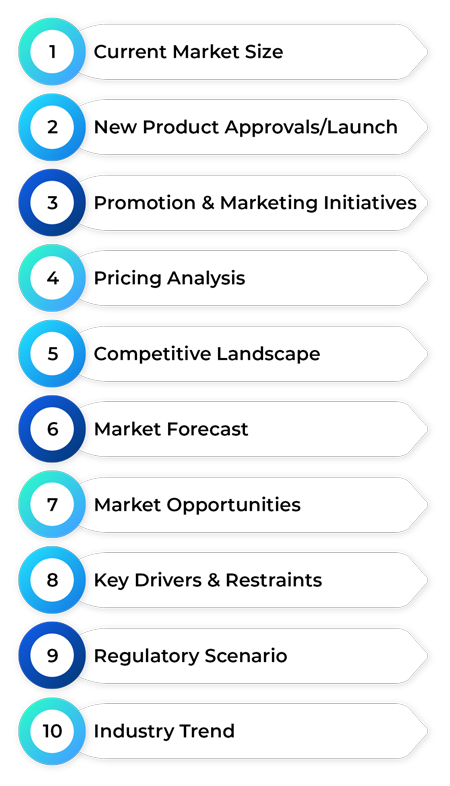
Research on the market is done by industry professionals who provide personalized insights on the industry structure, market segmentation, Type assessment, competitive landscape (CL), along with penetration, and emerging trends. In addition to years of professional experience in their various fields and sectors, their analysis is largely based on primary interview (60%) and secondary research (40%) as well as years of professional experience. In addition, our researchers forecast the market's direction over the following seven years by examining past trends and the market's current position. Additionally, various trends of segments and categories that are geographically portrayed are studied and estimated using primary and secondary research.
The key level executives (VP, CEO, Marketing Directors, and Business Development Managers) of the major industry participants who are active and prominent as well as mid-scale businesses operating in this market were interviewed in-depth for this supply-side report by overall Global Market Research.
Extensive primary research was conducted to gain a deeper grasp of the market and industry. Both primary and secondary research, as well as years of pertinent professional experience, are used to support the analysis. By analyzing past and present market patterns, our experts were able to forecast the market's course over the following seven years. For the geographically offered categories in the list of market tables, it differs per category. In connection with the Global Market research report, we also conducted a number of primary interviews with senior level executives (VP, CEO's, Directors, Marketing Directors, Business Development Managers, CFOs, Technical Consultants, Key Opinion Leaders, Industry Experts, Decision Matrix Authorities, and other crucial individuals) of the key industry players who dominated the Global market.
The primary purpose of secondary research was to gather, identify, and validate the information necessary for the thorough, technical, market-focused, and commercial analysis of the global market. With the use of this study, it was also possible to classify and segment the market in accordance with market trends, geographic markets, and regional considerations linked to market type. Analysts have gathered data in the Distribution Channel for the study of the market from reliable sources including annual reports, journals, white papers, corporate presentations, company websites, international organizations of Energy and Power manufacturers, credible paid databases, and many others to gather reliable intel.
Both top-down and bottom-up methodologies were employed to assess the accuracy of the global market size. The market for as a whole was estimated using these methods for a number of different dependent submarkets. Secondary research was used to address the major industry players, and primary and secondary research was used to calculate their market shares in the various regions. This complete intellectual process includes reading the annual and financial reports of the top market participants and conducting in-depth interviews with top industry executives (VP, CEO, Marketing Directors, and Business Development Managers) to gain important industry insights.
Through reliable secondary sources and validated primary sources, the classification of the global markets and their geographic percentage splits were established. To obtain the final qualitative and quantitative data, all relevant variables that might have an impact on the market under investigation have been taken into consideration, inspected in great depth, verified through primary research, and assessed. This information was collected, added to, and thoroughly examined by professional analysts before being provided in this report. The process used to estimate the overall market size for this study is depicted in the following image as an example.


Report Code :
RL65361
Published on :
Sep 2023
Request a Free Sample Report

 Speak to Analyst