
 +1 915 229 3004 (U.S.) |
  +44 7452 242832 (U.K.)
+1 915 229 3004 (U.S.) | +44 7452 242832 (U.K.)

Global 3D Printing Medical Device Software Market Size was valued at USD 0.2 Billion in 2022. The 3D Printing Medical Device Software market industry is projected to grow from USD 0.3 Billion in 2023 to USD 0.5 Billion by 2032, exhibiting a compound annual growth rate (CAGR) of 18.60% during the forecast period (2023 - 2032). Increasing demand for reasonably priced 3D-printed medical equipment, advancements in software, and rise in popularity of personalized medical items, are the key market drivers enhancing the market growth.
Download Free Sample to learn more about this report
Source: Secondary Research, Primary Research, RESEARCH LAYER Database and Analyst Review
Medical equipment Software for 3D printing performs a variety of activities, including printing, analysis, visualizing, planning, and designing. Due to continual technological developments in software solutions, the market for 3D printing medical device software is growing. For a very long period, the 3D printing industry has focused on developing hardware and materials. The development of software for 3D printing medical equipment has significantly increased recently. Software compatibility has been extremely profitable for the 3D printer industry. It has helped to reduce the steps, materials, and labor needed to generate a model for printing. New 3D-printed products may now be produced thanks to technological advancements, helping to address the growing need for 3D-printed medical equipment in the healthcare industry. Because typical production processes take a long time, major companies in the 3D printing medical device software industry are focusing on creating unique products.
The increasing frequency of surgical procedures due to various causes worldwide is one of the major factors propelling the market's growth. In other words, the market is growing as a direct result of rising kidney stone, auto accident, and other problem rates. Rising R&D expenditures, particularly in established and developing countries, will create more enticing opportunities for market expansion. Research and development capabilities are facilitating the development of medical devices, which is increasing market expansion. The market is growing as a result of the rise in PPPs, particularly in developing countries, for the development of healthcare infrastructure. The industry is also growing as new methods for stem cell storage and preservation are being introduced more frequently as a consequence of partnerships between public and private businesses.
As a result of these developments, the market for 3D printed medical equipment is continually growing and developing in order to boost its efficiency, speed, and affordability. Additionally, it is anticipated that the incidence of cardiovascular and neurological problems, as well as the growth in bone and musculoskeletal injuries, will lead to an increase in demand for 3D anatomical parts, opening up a sizable market opportunity for 3D printing medical devices globally. Thus, driving the 3D Printing Medical Device Software market revenue.
The global 3D Printing Medical Device Software market segmentation, based on Type, includes integrated and standalone. Integrated segment dominated the global market in 2022. This refers to combining software solutions with other CAD tools for a more efficient workflow. Customizing medical devices to meet commercial demands is easy with integrated software. There is no need for tools or time-consuming assembly because the design components of such software are already existent. As a result, significant time and money savings are realized. For instance, GrabCAD 3D printing software from Stratasys Ltd. expedites the CAD-to-print process.
The global 3D Printing Medical Device Software market segmentation, based on Function, includes printing, analysis, planning, design, visualization, navigation, and others. The printing segment dominated the global market in 2022. To assist patients visualize and understand how to use medical gadgets, doctors and other healthcare professionals print genuine copies of the devices. Layers are stacked on top of one another during printing to produce objects. The program would add "Support" during printing processes if the model was created with an extruded-based plastic printer and included regions that weren't resting on the printing bed. These so-called "Supports" serve as a base for features that can deform during printing and are essentially reusable printing waste products.
The global 3D Printing Medical Device Software market segmentation, based on Application, includes medical imaging, dental, surgery, research, physical therapy, aesthetic medicine, and others. Medical imaging segment dominated the global 3D Printing Medical Device Software market in 2022. Medical imaging is the practice of visualizing internal body regions prior to medical intervention. Among other things, it uses X-ray radiography, magnetic resonance imaging, and fluoroscopy. Medical imaging and 3D printing are connected in a variety of ways. It aids in supplying information for the development of 3D medical models.
The global 3D Printing Medical Device Software market segmentation, based on End User, includes medical device companies, dental laboratories, hospitals & clinics, research institutes, and others. The medical device companies segment dominated the global 3D Printing Medical Device Software market in 2022. Medical device manufacturers have the biggest market share in 2019. Medical equipment manufacturers created powerful 3D printing software specifically for their products. The pharmaceutical and biotechnology industries have a significant impact on the manufacture of 3D-printed medical equipment.
Download Free Sample to learn more about this report
Source: Secondary Research, Primary Research, RESEARCH LAYER Database and Analyst Review
Insights into the markets in North America, Europe, Asia-Pacific, and the rest of the world are provided by the study. The North America 3D Printing Medical Device Software Market dominated this market in 2022 (45.80%). This is due to the arrival and rapid adoption of cutting-edge technologies as well as the presence of large enterprises in the area. Further, In the North American area, the U.S. 3D Printing Medical Device Software market had the biggest market share, while the Canada 3D Printing Medical Device Software market had the quickest rate of expansion.
Further, the major countries studied in the market report are The US, Canada, German, France, the UK, Italy, Spain, China, Japan, India, Australia, South Korea, and Brazil.
Download Free Sample to learn more about this report
Source: Secondary Research, Primary Research, RESEARCH LAYER Database and Analyst Review
In 2022, the Europe 3D Printing Medical Device Software market held a sizable market share. The largest markets for 3D printing medical device software are in Germany, the United Kingdom, Italy, and France. The surge in funding from private players and the expanding number of enterprises in the field of 3D printing medical device software are aiding entrepreneurs in the development of cutting-edge products. Further, In the European region, the German 3D Printing Medical Device Software market had the biggest market share, and the U.K. 3D Printing Medical Device Software market had the quickest rate of growth.
From 2023 to 2032, the Asia Pacific 3D Printing Medical Device Software market is anticipated to grow significantly. Because of the talent pool there, international corporations are concentrating on collaboration and setting up new operations. Moreover, In the Asia-Pacific region, the Indian 3D Printing Medical Device Software market had the quickest rate of growth while China's 3D Printing Medical Device Software market had the greatest market share.
Leading industry companies are making significant R&D investments in order to diversify their product offerings, which will drive the 3D Printing Medical Device Software market's expansion. Important market developments include new product releases, contractual agreements, mergers and acquisitions, greater investments, and collaboration with other organizations. Market participants are also engaging in a number of strategic actions to increase their global footprint. The 3D Printing Medical Device Software sector needs to provide affordable products if it wants to grow and thrive in a more competitive and challenging market environment.
One of the primary business strategies employed by manufacturers in the worldwide 3D Printing Medical Device Software industry to assist customers and expand the market sector is local manufacturing to reduce operational costs. Some of the biggest benefits to medicine have recently come from the 3D Printing Medical Device Software sector. Major players in the 3D Printing Medical Device Software market, including Stratasys Ltd, Nemotec, PS-Medtech, DWS Systems, 3D Systems Corporation, Carima, Real Dimension Inc, Regenhu, 3D Totem, Ackuretta Technologies, and Materialise NV, are attempting to increase market demand by investing in research and development Types.
3D Systems Corp (3D Systems) offers comprehensive 3D printing solutions. The company develops, produces, and markets 3D printers, software, plastic and metal materials, and digital design tools. 3D Systems sells printers for stereolithography (SLA), selective laser sintering (SLS), direct metal printing (DMP), multijet printing (MJP), and color jet printing (CJP). There are also a variety of 3D printers, 3D scanners, materials, software, digitizers, and healthcare simulators available. The company also offers dental, individualized healthcare, medical equipment, and services related to regenerative medicine. Its products are available for purchase by businesses in the automotive, aerospace, government, defense, technology, electronics, education, consumer goods, energy, and healthcare sectors. 3D Systems sells its products through distributors, channel partners, and direct sales representatives. The corporation has operations in the Americas, the Asia-Pacific, Europe, the Middle East, and Oceania. The headquarters of 3D Systems are located in Rock Hill, South Carolina, in the United States. In April 2021, 3D Systems (US) unveiled VSP Hybrid Guides for maxillofacial procedures made of titanium and nylon and customized for each patient.
The business Stratasys Ltd. (Stratasys) offers additive manufacturing and 3D printing services. The company offers 3D printers, accessories, and operating system bundles for sale. Additionally, it provides other services such as tactical guidance, swift prototyping, contract engineering, on-site installation, customer support and warranty, direct manufacture paid-parts services, maintenance, and training. Beginning in March 2021, dental laboratories will have access to Stratasys Ltd.'s (US) J5 DentaJet 3D Printer PolyJet printer.
· Stratasys Ltd
· Nemotec
· PS-Medtech
· DWS Systems
· 3D Systems Corporation
· Carima
· Real Dimension Inc
· Regenhu
· 3D Totem
· Ackuretta Technologies
· Materialise NV
February 2021: Desktop Metal, Inc. (US) acquired EnvisionTEC from Germany. The current customer base of the 3D printing medical equipment company will grow as a result of this acquisition.
· Integrated
· Standalone
· Printing
· Analysis
· Planning
· Design
· Visualization
· Navigation
· Others
· Medical Imaging
· Dental
· Surgery
· Research
· Physical Therapy
· Aesthetic Medicine
· Others
· Medical Device Companies
· Dental Laboratories
· Hospitals & Clinics
· Research Institutes
· Others
· North America
- U.S.
- Canada
· Europe
- Germany
- France
- UK
- Italy
- Spain
- Rest of Europe
· Asia-Pacific
- China
- Japan
- India
- Australia
- South Korea
- Australia
- Rest of Asia-Pacific
· Rest of the World
- Middle East
- Africa
- Latin America
|
Report Attribute/Metric |
Details |
|
Market Size 2022 |
USD 0.2 Billion |
|
Market Size 2023 |
USD 0.3 Billion |
|
Market Size 2032 |
USD 0.5 Billion |
|
Compound Annual Growth Rate (CAGR) |
18.60% (2023-2032) |
|
Base Year |
2022 |
|
Market Forecast Period |
2023-2032 |
|
Historical Data |
2018- 2022 |
|
Market Forecast Units |
Value (USD Billion) |
|
Report Coverage |
Revenue Forecast, Market Competitive Landscape, Growth Factors, and Trends |
|
Segments Covered |
Type, Function, Application, End User, and Region |
|
Geographies Covered |
North America, Europe, Asia Pacific, and the Rest of the World |
|
Countries Covered |
The U.S., Canada, German, France, U.K, Italy, Spain, China, Japan, India, Australia, South Korea, and Brazil |
|
Key Companies Profiled |
Stratasys Ltd, Nemotec, PS-Medtech, DWS Systems, 3D Systems Corporation, Carima, Real Dimension Inc, Regenhu, 3D Totem, Ackuretta Technologies, and Materialise NV |
|
Key Market Opportunities |
Increasing demand in the dental industry |
|
Key Market Dynamics |
Technological advancements in software solutions, increasing demand for low-cost 3D printed medical devices, and rise in demand for customized medical devices |
The global 3D Printing Medical Device Software Market was valued at USD 0.2 billion in 2022, and it is estimated to reach USD 0.5 billion by 2032.
The global market is projected to grow at a CAGR of 18.60% during the forecast period, 2023-2032.
North America had the largest share in the global market
The key players in the market are Stratasys Ltd, Nemotec, PS-Medtech, DWS Systems, 3D Systems Corporation, Carima, Real Dimension Inc, Regenhu, 3D Totem, Ackuretta Technologies, and Materialise NV
The Integrated Type dominated the market in 2022.
The Printing Function had the largest share in the global market.
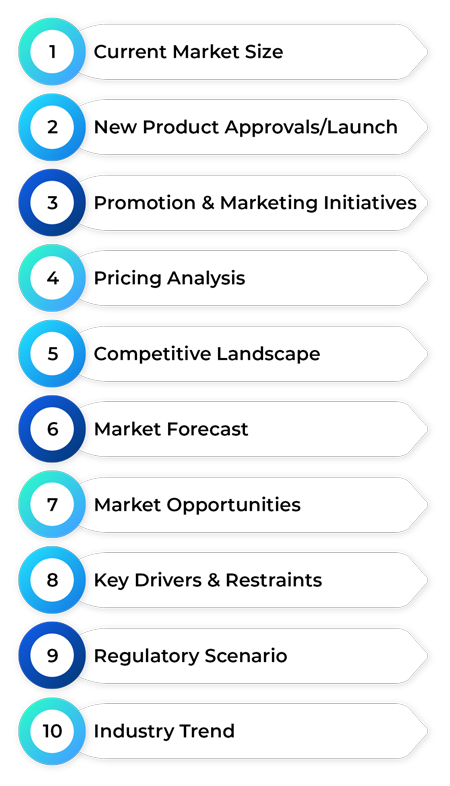
Research on the market is done by industry professionals who provide personalized insights on the industry structure, market segmentation, Type assessment, competitive landscape (CL), along with penetration, and emerging trends. In addition to years of professional experience in their various fields and sectors, their analysis is largely based on primary interview (60%) and secondary research (40%) as well as years of professional experience. In addition, our researchers forecast the market's direction over the following seven years by examining past trends and the market's current position. Additionally, various trends of segments and categories that are geographically portrayed are studied and estimated using primary and secondary research.
The key level executives (VP, CEO, Marketing Directors, and Business Development Managers) of the major industry participants who are active and prominent as well as mid-scale businesses operating in this market were interviewed in-depth for this supply-side report by overall Global Market Research.
Extensive primary research was conducted to gain a deeper grasp of the market and industry. Both primary and secondary research, as well as years of pertinent professional experience, are used to support the analysis. By analyzing past and present market patterns, our experts were able to forecast the market's course over the following seven years. For the geographically offered categories in the list of market tables, it differs per category. In connection with the Global Market research report, we also conducted a number of primary interviews with senior level executives (VP, CEO's, Directors, Marketing Directors, Business Development Managers, CFOs, Technical Consultants, Key Opinion Leaders, Industry Experts, Decision Matrix Authorities, and other crucial individuals) of the key industry players who dominated the Global market.
The primary purpose of secondary research was to gather, identify, and validate the information necessary for the thorough, technical, market-focused, and commercial analysis of the global market. With the use of this study, it was also possible to classify and segment the market in accordance with market trends, geographic markets, and regional considerations linked to market type. Analysts have gathered data in the Distribution Channel for the study of the market from reliable sources including annual reports, journals, white papers, corporate presentations, company websites, international organizations of Energy and Power manufacturers, credible paid databases, and many others to gather reliable intel.
Both top-down and bottom-up methodologies were employed to assess the accuracy of the global market size. The market for as a whole was estimated using these methods for a number of different dependent submarkets. Secondary research was used to address the major industry players, and primary and secondary research was used to calculate their market shares in the various regions. This complete intellectual process includes reading the annual and financial reports of the top market participants and conducting in-depth interviews with top industry executives (VP, CEO, Marketing Directors, and Business Development Managers) to gain important industry insights.
Through reliable secondary sources and validated primary sources, the classification of the global markets and their geographic percentage splits were established. To obtain the final qualitative and quantitative data, all relevant variables that might have an impact on the market under investigation have been taken into consideration, inspected in great depth, verified through primary research, and assessed. This information was collected, added to, and thoroughly examined by professional analysts before being provided in this report. The process used to estimate the overall market size for this study is depicted in the following image as an example.


Report Code :
RL65238
Published on :
Sep 2023
Request a Free Sample Report

 Speak to Analyst