
 +1 915 229 3004 (U.S.) |
  +44 7452 242832 (U.K.)
+1 915 229 3004 (U.S.) | +44 7452 242832 (U.K.)

Ancestry testing, also referred to as genetic genealogy, is a method used to explore family history (genealogy) and verify an individual's ancestral relationships. By assessing DNA variations, detailed information about the origins of ancestors can be obtained. While genealogical DNA tests are primarily intended for tracing family history, autosomal DNA testing can also be employed to assess the risk of numerous heritable medical conditions influenced by genetics. This information can then be used by physicians to recommend primary healthcare and design personalized medicines to address specific conditions. For example, Hemophilia, a bleeding disorder, traces its ancestral origin back to Queen Victoria, who passed the hemophilia gene to male heirs in royal families across Russia, Spain, and Germany. Ancestry testing has played a crucial role in helping the British royal family prevent bleeding incidents.
Base Year: 2021
Study Period: 2020-2030
Forecast Period: 2023-2031
CAGR: 10.10%
Market Size:
Fastest Growing Market: North America
Largest Market: Asia-Pacific
Report Coverage: Revenue Forecast, Competitive Landscape, Growth Factors, Environment & Regulatory Landscape, and Trends
Get more information on this report Download Sample Report
Ancestral genetic testing is experiencing significant global popularity, valued at around USD 460.1 million in 2019. Genealogical enthusiasts are willing to pay over USD 20,200 per year to expand their family trees. This rising demand for ancestry testing is attracting numerous emerging players. For instance, MyHeritage, a genealogy site, records about 80.1 million members performing ancestral testing monthly. In the U.S., genealogical enthusiasts spend between USD 1,010 to USD 18,100 annually on genealogy. By the end of 2019, around 26.1 million consumers added their DNA to leading ancestry and health databases, further propelling market growth. The market is mainly driven by a growing desire to explore family history, identify genetic diseases, solve paternity cases, and understand regional ethnicity and place of origin.
The growing popularity of ancestral testing has significantly reduced the costs of genealogical DNA testing products, expanding the consumer base. Key factors driving the market include smaller DNA test kits, ease of use, and increased FDA approval. Various genealogical DNA testing kits, such as AncestryDNA, FamilyTreeDNA, MyHeritage, and HomeDNA, are now available in the market, costing around USD 100.1, USD 79.2, USD 79.1, and USD 59.1, respectively. These tests are safe, painless, and can be performed with a simple saliva swab, further boosting market growth.
Ancestral testing is gaining popularity in the healthcare sector for determining genetic variations before designing personalized medicines. This application has given rise to pharmacogenomics, optimizing drug therapies to reduce adverse reactions and enabling physicians to predict conditions in advance using unique genetic profiles. Key players in the market, such as 23andMe, offer genetic blueprints of customers' ancestry and health traits, contributing to biomedical research for developing personalized medications.
Globally, the prevalence of genetic disorders, such as Down syndrome, sickle cell anemia, and hemochromatosis, is increasing, driving demand for ancestral testing to assess detailed information about an individual's unique genetic profile. The market is fueled by the emphasis on early disease detection, prevention, and the application of ancestry tests in genetic disorders. According to WHO, 10 per 1000 people globally suffer from genetic disorders. In the U.S., around 6000 babies are born with Down syndrome annually, and over 70,000 people suffer from sickle cell anemia. Certain genetic disorders are more prevalent in specific ethnic groups, such as sickle cell anemia in people living in the Mediterranean and African Americans. Ancestry testing is crucial for identifying and addressing around 36 genetic disorders related to the ancestry relationship with North Eastern Finns.
The ancestry testing market uses technologies like single nucleotide polymorphism, targeted analysis, and whole-genome sequencing. Single nucleotide polymorphism testing, examining genetic variations (SNPs) across an individual's entire genome, is extensively used in forensic ancestry to identify suspects or victims in criminal cases. Since July 2019, the use of ancestry testing in forensics, such as GEDMatch, has confirmed the presence of over 40 murder and sexual assault suspects in the U.S. The Federal Bureau of Investigation's Combined DNA Index System (CODIS) database, comprised of forensic genetic profiles of around 18 million people, has revealed that around 57% of serial killers share their ancestry with the white race, and about 29% are African American.
The ancestry testing market is segmented into ancestry test types, genealogic DNA testing, and distribution channels.
Ancestry test segment: Carrier testing, Predictive testing, Ancestry & Relationship Testing, Nutrigenomic Testing, and Others.
Genealogic DNA testing: Y chromosome testing, Mitochondrial DNA testing, Autosomal DNA testing, and Single nucleotide polymorphism testing.
Distribution channels: Online platforms, Over-the-counter, Direct to consumer.
By genealogical DNA testing, single nucleotide polymorphism testing is expected to hold a significant market share due to its extensive use in determining genetic variations associated with various genetic diseases, fast genotyping, and accuracy in detecting mutations using high-performance technologies. The online platform segment is expected to dominate the market share based on distribution channels, thanks to the easy availability of DNA test kits online.
North America
North America leads the ancestry testing market, driven by a growing number of genealogical enthusiasts, robust digital marketing, high spending power, increasing prevalence of genetic disorders, and rising awareness of personalized medicine. The U.S. alone has seen about 26 million people undergo ancestry testing, a number expected to double in the coming years. Leading players in the region, such as Ancestry and 23andMe Inc., actively develop technologically advanced products to gain a competitive edge, further driving market growth.
Europe
Europe is second in the global ancestry testing market due to increasing awareness of genetic testing and disorders, demand for personalized medicines, the presence of leading players, technological advancements, and government support. In the U.K, about 80 million ancestry tests were performed by AncestryDNA. The rising prevalence of genetic disorders in Europe, such as over 30,000 people suffering from genetic cystic fibrosis, is contributing to market growth.
Asia Pacific
Asia Pacific is expected to witness significant growth, attributed to the growing burden of genetic diseases among infants, increasing fertility rates, developing healthcare sectors, and rising awareness of the benefits of ancestral testing. The market is also driven by new product launches, geographic expansion by local players, and government initiatives, especially in China and Japan.
South America
South America is anticipated to experience considerable growth due to the rising burden of chronic genetic diseases, increased demand for personalized medicines and forensic testing, and the growing prevalence of genetic disorders and congenital anomalies. Brazil dominates the regional market.
Ancestral genetic testing is experiencing significant global popularity, valued at around USD 460.1 million in 2019. Genealogical enthusiasts are willing to pay over USD 20,200 per year to expand their family trees.
The global market is projected to grow at a CAGR of 10.10% during the forecast period, 2023-2031.
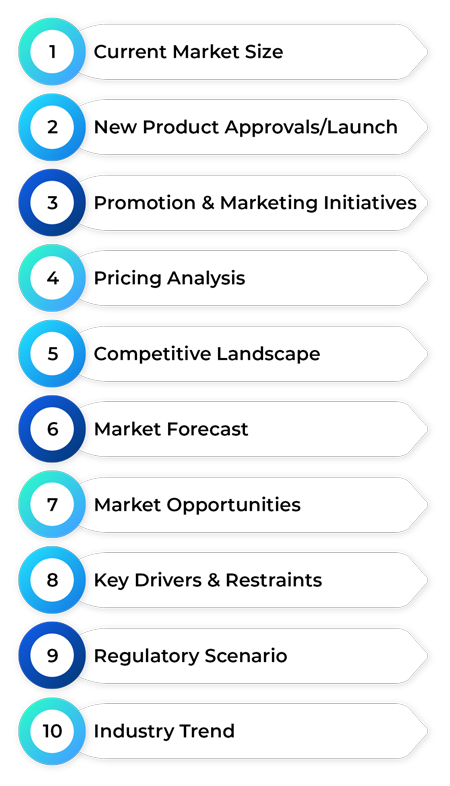
Research on the market is done by industry professionals who provide personalized insights on the industry structure, market segmentation, Type assessment, competitive landscape (CL), along with penetration, and emerging trends. In addition to years of professional experience in their various fields and sectors, their analysis is largely based on primary interview (60%) and secondary research (40%) as well as years of professional experience. In addition, our researchers forecast the market's direction over the following seven years by examining past trends and the market's current position. Additionally, various trends of segments and categories that are geographically portrayed are studied and estimated using primary and secondary research.
The key level executives (VP, CEO, Marketing Directors, and Business Development Managers) of the major industry participants who are active and prominent as well as mid-scale businesses operating in this market were interviewed in-depth for this supply-side report by overall Global Market Research.
Extensive primary research was conducted to gain a deeper grasp of the market and industry. Both primary and secondary research, as well as years of pertinent professional experience, are used to support the analysis. By analyzing past and present market patterns, our experts were able to forecast the market's course over the following seven years. For the geographically offered categories in the list of market tables, it differs per category. In connection with the Global Market research report, we also conducted a number of primary interviews with senior level executives (VP, CEO's, Directors, Marketing Directors, Business Development Managers, CFOs, Technical Consultants, Key Opinion Leaders, Industry Experts, Decision Matrix Authorities, and other crucial individuals) of the key industry players who dominated the Global market.
The primary purpose of secondary research was to gather, identify, and validate the information necessary for the thorough, technical, market-focused, and commercial analysis of the global market. With the use of this study, it was also possible to classify and segment the market in accordance with market trends, geographic markets, and regional considerations linked to market type. Analysts have gathered data in the Distribution Channel for the study of the market from reliable sources including annual reports, journals, white papers, corporate presentations, company websites, international organizations of Energy and Power manufacturers, credible paid databases, and many others to gather reliable intel.
Both top-down and bottom-up methodologies were employed to assess the accuracy of the global market size. The market for as a whole was estimated using these methods for a number of different dependent submarkets. Secondary research was used to address the major industry players, and primary and secondary research was used to calculate their market shares in the various regions. This complete intellectual process includes reading the annual and financial reports of the top market participants and conducting in-depth interviews with top industry executives (VP, CEO, Marketing Directors, and Business Development Managers) to gain important industry insights.
Through reliable secondary sources and validated primary sources, the classification of the global markets and their geographic percentage splits were established. To obtain the final qualitative and quantitative data, all relevant variables that might have an impact on the market under investigation have been taken into consideration, inspected in great depth, verified through primary research, and assessed. This information was collected, added to, and thoroughly examined by professional analysts before being provided in this report. The process used to estimate the overall market size for this study is depicted in the following image as an example.


Report Code :
RL65433
Published on :
Upcoming
Request a Free Sample Report

 Speak to Analyst